
It’s getting warm outside and many of us will be getting outdoors: walking, hiking, playing golf, playing pickleball and enjoying the outdoors but one thing to be aware of are the ticks that might be carrying a bacteria that could cause you to get Lyme Disease. Early diagnosis is essential to preventing long term side effects.
Lyme disease is an infectious disease caused by bacteria, specifically Borrelia burgdorferi. It is spread to humans through the bite of an infected blacklegged tick (often called a deer tick).
When I was publishing Kentuckiana HealthFiness Magazine, we did a story about a physician who had been hiking with his kids and got a tick bite of which he was unaware of. He got very sick and unfortunately for him it took months to be diagnosed with Lyme Disease. He had become completely unable to walk eventually unable to practice medicine and experienced lots of long term side effects but if he had been diagnosed early on all these long term side effects would have disappeared. In fact, when one of my sons were in Medical School, he said the physician, who was a neurologist, was rolled into the medical school lecture hall and gave a great lecture from a hospital bed. Don’t be that guy and take prevention of Lyme Disease serious.
What Causes It
- Caused by bacteria (NOT a virus)
- Transmitted through tick bites
- Ticks become infected by feeding on animals like:
- Mice
- Deer
- Birds
Where It’s Found
- Most common in:
- Northeast U.S.
- Upper Midwest (including nearby states to Indiana)
- Parts of Northern California
- Ticks live in:
- Wooded areas
- Tall grass
- Leaf piles
Common Symptoms
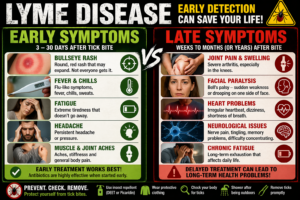
Early (3–30 days after bite)
- “Bullseye” rash (not always present)
- Fever, chills
- Fatigue
- Headache
- Muscle & joint aches
Disseminated (weeks later if untreated)
- Severe joint pain
- Facial paralysis (Bell’s palsy)
- Heart rhythm issues
- Nerve pain
Late Stage (months later)
- Arthritis (especially knees)
- Neurological problems
- Chronic fatigue in some cases
How It’s Diagnosed
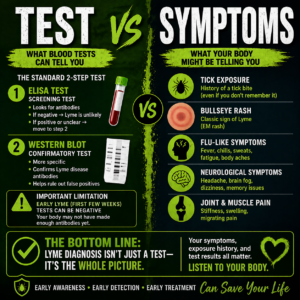
- Based on:
- Symptoms
- History of tick exposure
- Blood tests may be used (but can be less accurate early on)
Treatment
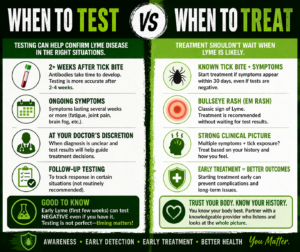
- Antibiotics are very effective, especially when started early
- Common options: doxycycline, amoxicillin
- Most people recover fully with early treatment
- Late-stage cases may require longer treatment
Prevention Basics
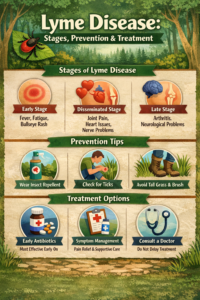
- Use insect repellent (DEET or permethrin-treated clothing)
- Check skin after being outdoors
- Shower soon after exposure
- Remove ticks promptly (within 24 hours reduces risk)
Bottom Line
- Lyme disease is a bacterial infection spread by ticks
- It is treatable and often curable, especially when caught early
- Prevention and early detection are key
https://www.mayoclinic.org/diseases-conditions/lyme-disease/symptoms-causes/syc-20374651
https://www.webmd.com/rheumatoid-arthritis/understanding-lyme-disease-symptoms
Note: I used ChatGPT for the graphics and pulling this blog together for this topic, but I also check the information carefully to ensure the health information is correct. In order to get the right answers & the development of these health blogs when using ChatGPT effectively, you must know how to pose the correct questions.
This content was generated with assistance from ChatGPT, an AI language model by OpenAI

is a registered dietitian with a Master’s Degree in clinical nutrition. She is the Chief Blog Organizer for www.DayByDayLiving.net
Barbara worked as a research nutritionist with the military’s tri-service medical school collaborating with Department of Defense, National Health Institutes (NIH), and also United States Department of Agriculture (USDA). Barbara worked as a performance nutrition consultant to Navy SEALS’ BUD/S Training Program and West Coast Navy SEAL Teams. Barbara is the former nutrition performance consultant to the University of Louisville Athletic Department. She is the author of Fast Facts on Fast Food for Fast People and High Energy Eating Sports Nutrition Workbook for Active People used by the University of Louisville, University of Tennessee Lady Vols and the Tennessee football program, the LSU basketball program, the Buffalo Bills, the Cleveland Browns and by the United States Navy SEALs.
Barbara is the former publisher of Kentuckiana HealthFitness Magazine, Kentuckiana Healthy Woman magazine and radio show host of Health News You Can Use. Barbara has over 50 years of experience in promoting healthy lifestyles to consumers. Barbara is a former runner who walks, a spinner, hiker, a pickleball player, a mother and grandmother to 13 grandchildren.
Barbara also serves on the Leadership Team for Moms for America as the Grammy Grizzlies National Group Leader. (www.momsforamerica.us).