
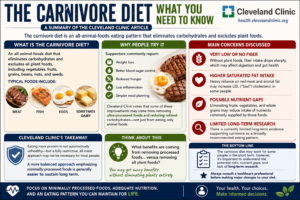
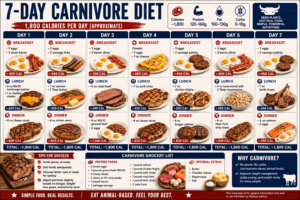
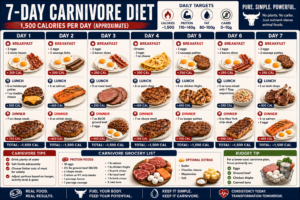
The carnivore diet is an all-animal-foods eating pattern that eliminates carbohydrates and excludes plant foods such as vegetables, fruits, grains, beans, nuts, and seeds. Typical foods include meat, fish, eggs, and sometimes dairy. Why people often try it for weight loss, better blood sugar control, reduced hunger, less inflammation and simpler meal planning.
But long-term use concerns are it is very low or no dietary fiber. Without plant foods, fiber intake drops sharply, which may affect digestion and gut health. Eating only foods on the Carnivore Diet there will be a higher saturated fat intake and heavy reliance on red meat and animal fat may increase LDL (“bad”) cholesterol in some people. Plue there are nutrient gaps by eliminating fruits, vegetables, and whole grains may reduce intake of nutrients commonly supplied by those foods. Limited long-term research as to eating a carnivore for the long term.
https://health.clevelandclinic.org/the-carnivore-diet
https://www.health.harvard.edu/diet-and-nutrition/what-is-the-carnivore-diet
A Physician’s Weight Loss Take on a Carnivore Diet
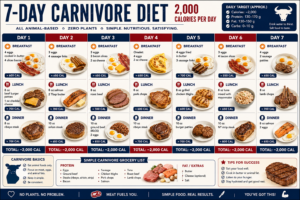
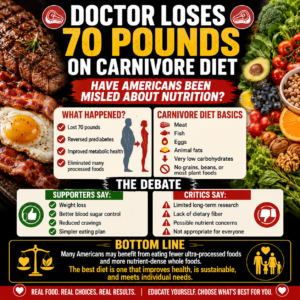
According to a June 1, 2026 article in the New York Post, Tennessee physician Ken Berry argues that many Americans have been given poor nutritional advice for decades and that a meat-based diet can dramatically improve health. Dr. Berry says he personally lost 70 pounds, reversed prediabetes, and improved several health problems after switching from a standard diet to a carnivore diet about nine years ago. Dr. Berry’s version of the carnivore diet consists mainly of beef, butter, bacon, and eggs. He claims many commonly recommended foods—including some whole grains, legumes, and fruit juices—can contribute to inflammation or blood sugar problems in certain people. Berry argues that nutrition science has sometimes been influenced by industry funding and conflicts of interest, leading to confusing dietary recommendations. He believes humans are biologically adapted to diets centered on animal foods and that meat should make up most or all of the diet.
A physician friend of mine, who is a cardiologist, told me about a patient he recently saw in his office. The man is a middle-aged man who is 6’5” and when he saw him in 2024, he weighed 473 pounds. He had diabetes, high blood pressure, heart disease, depression, a-fib, and a number of other health issues. He could barely move and had at least one knee replacement. He saw this patient on May 23, 2026. His patient had gone on a STRICT CARNIVORE DIET, he now weighs 273 pounds. All of his long-term health numbers, according to the physician, are much improved and actually looking great. The patient said he walks 6 miles per day. He went from being on 15 prescription drugs to only 3 prescription drugs now. He still has a-fib. The physician admitted he still needed to lose more weight but…he was impressed. He said his patient has lots of loose skin as a result of the weight loss and that was one of his chief complaints of the weight loss. The physician asked the patient how he felt overall. The patient said he never felt better and had lots of energy.
In discussion about this remarkable patient’s weight loss, the physician knew about the Carnivore Diet’s long-term problems nutritionally: like the lack of dietary fiber, potential vitamin and mineral deficiencies, higher cholesterol levels in some individuals, increased risk of kidney stones and digestive problems, possible increased risk of colon cancer from high processed meat intake. The physician said he encouraged him to take a vitamin/mineral supplement and get out in the early morning sun for 20 minutes per day if he could for his Vitamin D uptake naturally.
A Dietitian’s Recommendation Regarding a Carnivore Diet
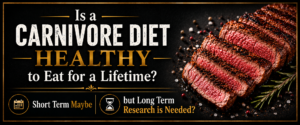
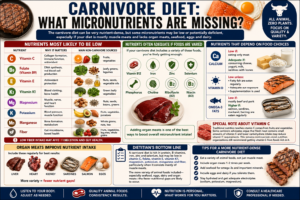
Their overall message is not that eating more protein is automatically unhealthy—but that a fully restrictive, all-meat approach may not be necessary for most people. A more balanced approach emphasizing minimally processed foods is generally easier to sustain long term. But sometimes we can’t see the forest for the trees…maybe the taking the obesity shot is not the only answer to weight loss. Plus more effective research on the long-term effects of a Carnivore Diet is necessary.
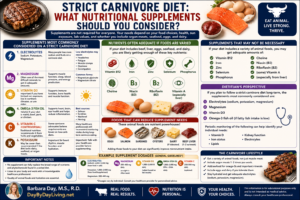
Carnivore Variations
Some versions are:
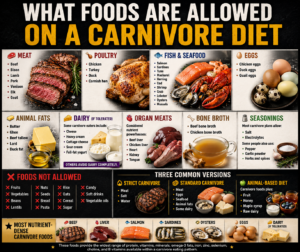
- Strict carnivore: only meat, salt, and water
- Animal-based diet: mostly meat but includes fruit, honey, or dairy
- Ketovore: carnivore plus some low-carb plant foods
What you eat on a Carnivore Diet vs a Keto Diet
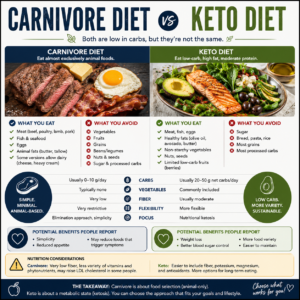
Carnivore
 Beef, poultry, fish, eggs Butter, animal fats Some versions allow cheese/dairy
 Vegetables Fruit Beans Grains
Keto
Meat, fish, eggs Healthy fats (olive oil, avocado, butter) Non-starchy vegetables Nuts, seeds Limited berries
Sugar Bread, pasta, rice Most processed carbs
Potential advantages of a Carnivore Diet vs the Keto Diet
Carnivore
- Simpler eating
- Appetite reduction
- Eliminates foods that may trigger symptoms in some people
Keto
- Weight loss
- Better blood sugar control for some people
- More food variety
- Easier to maintain long term for many people
Nutrition considerations
Carnivore
- Very low fiber
- Less variety of vitamins and phytonutrients
- May raise LDL cholesterol in some people
Keto
- Usually easier to include fiber, potassium, magnesium, and antioxidants
- More options for long-term eating
As a dietitian, I would probably recommend a Keto Diet over the Carnivore diet just because they are fewer nutritional deficiencies and a it contains some dietary fiber from the non-starchy vegetables, nuts, seeds, and berries

Note: I used ChatGPT for the graphics and pulling this blog together for this topic, but I also check the information carefully to ensure the health information is correct. In order to get the right answers & the development of these health blogs when using ChatGPT effectively, you must know how to pose the correct questions.
This content was generated with assistance from ChatGPT, an AI language model by OpenAI

is a registered dietitian with a Master’s Degree in clinical nutrition. She is the Chief Blog Organizer for www.DayByDayLiving.net
Barbara worked as a research nutritionist with the military’s tri-service medical school collaborating with Department of Defense, National Health Institutes (NIH), and also United States Department of Agriculture (USDA). Barbara worked as a performance nutrition consultant to Navy SEALS’ BUD/S Training Program and West Coast Navy SEAL Teams. Barbara is the former nutrition performance consultant to the University of Louisville Athletic Department.
She is the author of Fast Facts on Fast Food for Fast People and High Energy Eating Sports Nutrition Workbook for Active People used by the University of Louisville, University of Tennessee Lady Vols and the Tennessee football program, the LSU basketball program, the Buffalo Bills, the Cleveland Browns and by the United States Navy SEALs.
Barbara is the former publisher of Kentuckiana HealthFitness Magazine, Kentuckiana Healthy Woman magazine and radio show host of Health News You Can Use and a TV segment on the Local ABC station called Barbara’s Right Bite.
Barbara has over 50 years of experience in promoting healthy lifestyles to consumers. Barbara is a former runner who walks, a spinner, hiker, a pickleball player, a mother and grandmother to 13 grandchildren.
Barbara also serves on the Leadership Team for Moms for America as the Grammy Grizzlies National Group Leader. (www.momsforamerica.us).