
To say Exercise is Medicine is an understatement and needs to be stressed more. In fact, Exercise is important for both physical and mental well-being.Exercise is one of the most effective, low-cost ways to improve your quality of life and extend your lifespan. Even small amounts make a big difference over time. But you have to make exercise daily a priority for your long-term health along with the idea that Food is Medicine as well.
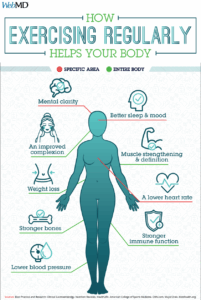
Research suggest regular exercise can:
- Reduce mortality and the risk of recurrent breast cancer by 50%.
- Lower the risk of colon cancer by over 60%.
- Reduce the risk of developing Alzheimer’s disease by approximately 40%.
- Reduce the incidence of heart disease and high blood pressure by approximately 40%.
- Lower the risk of stroke by 27%.
- Lower the risk of developing type II diabetes by 58%.
- Be twice as effective in treating type II diabetes that the standard insulin prescription and can save $2250 per person per year when compared to the cost of standard drug therapy.
- Can decrease depression as effectively as Prozac or behavioral therapy.
- Research shows that a low level of physical activity exposes a patient to a greater risk of dying than does smoking, obesity, hypertension, or high cholesterol and for older men, regular exercise can decrease the risk of death by 40%.
- Active individuals in their 80s have a lower risk of death than inactive individuals in their 60s.
- Adults with better muscle strength have a 20% lower risk of mortality (33% lower risk of cancer specific mortality) than adults with low muscle strength.
- A low level of fitness is a bigger risk factor for mortality than mild-moderate obesity. It is better to be fit and overweight than unfit with a lower percentage of body fat.
- Regular physical activity has been shown to lead to higher SAT scores for adolescents.
- In an elementary school setting, regular physical activity can decrease discipline incidents involving violence by 59% and decrease out of school suspensions by 67%.
Exercise prevents or can help manage many health problems:
- Stroke
- Metabolic Syndrome
- High Blood pressure
- Type 2 Diabetes
- Depression
- Anxiety
- Many types of Cancer
- Arthritis
- Falls
https://www.healthline.com/nutrition/10-benefits-of-exercise
https://www.mayoclinic.org/healthy-lifestyle/fitness/in-depth/exercise/art-20048389
https://www.health.harvard.edu/exercise-and-fitness/exercise-fitness
Exercise is Medicine
https://www.exerciseismedicine.org/
Aerobic exercise is any type of cardiovascular conditioning. It can include activities like brisk walking, swimming, running, or cycling. You probably know it as “cardio.” By definition, aerobic exercise means “with oxygen.” Your breathing and heart rate will increase during aerobic activities.
Aerobic exercise is any type of cardiovascular conditioning. It can include activities like brisk walking, swimming, running, or cycling. You probably know it as “cardio.”
- By definition, aerobic exercisemeans “with oxygen.” Your breathing and heart rate will increase during aerobic Oxygen is your main energy source during aerobic workouts.
- Anaerobic exercisesinvolve quick bursts of energy and are performed at maximum effort for a short time. Examples include jumping, sprinting, or heavy weight lifting. …
How your body responds to Aerobic Exercise:
- During aerobic activity, you repeatedly move large muscles in your arms, legs and hips. You’ll notice your body’s responses quickly.
- You’ll breathe faster and more deeply. This maximizes the amount of oxygen in your blood. Your heart will beat faster, which increases blood flow to your muscles and back to your lungs.
- Your small blood vessels (capillaries) will widen to deliver more oxygen to your muscles and carry away waste products, such as carbon dioxide and lactic acid.
- Your body will even release endorphins, natural painkillers that promote an increased sense of well-being.
Aerobic activity can help you:
- Keep excess pounds at bay
Combined with a healthy diet, aerobic exercise helps you lose weight and keep it off. - Increase your stamina, fitness and strength
- You may feel tired when you first start regular aerobic exercise. But over the long term, you’ll enjoy increased stamina and reduced fatigue.
- You can also gain increased heart and lung fitness and bone and muscle strength over time.
- Ward off viral illnesses
Aerobic exercise activates your immune system in a good way. This may leave you less susceptible to minor viral illnesses, such as colds and flu. - Reduce your health risks
Aerobic exercise reduces the risk of many conditions, including obesity, heart disease, high blood pressure, type 2 diabetes, metabolic syndrome, stroke and certain types of cancer. - Weight-bearing aerobic exercises, such as walking, help decrease the risk of osteoporosis.
- Manage chronic conditions
Aerobic exercise may help lower blood pressure and control blood sugar. It can reduce pain and improve function in people with arthritis. It can also improve the quality of life and fitness in people who’ve had cancer. If you have coronary artery disease, aerobic exercise may help you manage your condition. - Strengthen your heart
A stronger heart doesn’t need to beat as fast. A stronger heart also pumps blood more efficiently, which improves blood flow to all parts of your body. - Keep your arteries clear
Aerobic exercise boosts your high-density lipoprotein (HDL), the “good,” cholesterol, and lowers your low-density lipoprotein (LDL), the “bad,” cholesterol. This may result in less buildup of plaques in your arteries. - Boost your mood
Aerobic exercise may ease the gloominess of depression, reduce the tension associated with anxiety and promote relaxation. It can also improve your sleep. - Stay active and independent as you age
Aerobic exercise keeps your muscles strong, which can help you maintain mobility as you get older. Exercise can also lower the risk of falls and injuries from falls in older adults. And it can improve your quality of life. Aerobic exercise also keeps your mind sharp. Regular physical activity may help protect memory, reasoning, judgment and thinking skills (cognitive function) in older adults. It may also improve cognitive function in children and young adults. It can even help prevent the onset of dementia and improve cognition in people with dementia. - Live longer
Studies show that people who participate in regular aerobic exercise live longer than those who don’t exercise regularly. They may also have a lower risk of dying of all causes, such as heart disease and certain cancers.
Types of aerobic exercise
* Walking
* Running
* Swimming
* Aqua-aerobic classes
* Cycling
* Rowing
* Boxing
* Aerobic or ‘cardio’ classes
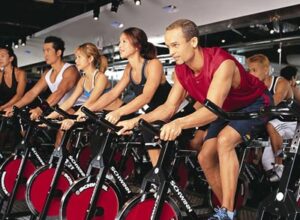
Options for home aerobic exercise
Beside running & walking below are some other options:
- Jump Rope.
- Aerobic circuit using chairs at home.
- Indoor stationary bike.
- Online Programs like Peloton, Sweat on Demand & other apps.
- Free YouTube videos.
80-minute Indoor Cycling Workout Ruwer Valley and Vineyards. Garmin workout. Great workout on my spin bike & love the ride into wine country, small English towns & through a beautiful forest area. https://youtu.be/x1sf9rbRpN8?si=kkX7tCqNbd-FhdMy
Aerobic Exercise
- How Often: 3 – 5 days a week.
- How Hard: Fairly light to somewhat hard.
- How Much: Start with a few minutes. Gradually build up to 30 to 60 minutes over the day.
- Two bouts of aerobic exercise per day works if you have less time. Fit in 5 to 10 minutes here there & everywhere.
Physiological Benefits of Strength Training (also called Resistance Exercise)
- Muscle strength, endurance and power.
- Bone, muscle and connective tissue growth and durability.
- Communication between brain & muscle.
- Growth hormones.
- Blood glucose regulation.
- Aerobic fitness.

Strength Training can help treat many conditions:
Arthritis Low Back Pain
Cancers Mental Health
Dementia Movement Disorders
Depression Obesity
Fall risk Osteoporosis
Frailty Pulmonary Disorders
Hypertension Peripheral Vascular Disease
Insomnia Stroke
Strength Training
How Often: 2 – 3 days a week. Rest day in between.
How Hard: Start with light effort and build up to medium to hard effort.
How Much: 10 – 15 repetitions to start (for each muscle group). Then build up to 8 – 12 reps of a challenging effort. Repeat 2 – 4 times.
The latest U.S. guidelines for physical activity as defined in the Physical Activity Guidelines for Americans (2nd Edition, 2018), updated by the U.S. Department of Health and Human Services (HHS):
Adults (Ages 18–64)
- Moderate-intensity aerobic activity: At least 150 to 300 minutes per week
- Or vigorous-intensity aerobic activity: At least 75 to 150 minutes per week
- Or a combination of moderate and vigorous activity
- These activities should be spread throughout the week
- Muscle-strengthening activities: At least 2 days per week, engaging all major muscle groups (legs, hips, back, chest, abdomen, shoulders, arms)
- For even greater benefits: up to 300 minutes/week of moderate activity (or 150 min of vigorous activity)
Children & Adolescents (Ages 6–17)
- At least 60 minutes per day of moderate-to-vigorous physical activity
- Most of that 60 minutes should be aerobic
- On 3 or more days per week, include:
- Vigorous-intensity aerobic activity
- Muscle-strengthening activity
- Bone-strengthening activity
- Activities should be varied, age-appropriate, enjoyable, and offered daily
Preschool-aged Children (Ages 3–5)
- Should be physically active throughout the day, through both structured and unstructured play (e.g., hopping, jumping, riding)
- A reasonable target may be up to 3 hours per day across light, moderate, and vigorous intensities
Quick Summary Exercise Table Recommended by HHS 2018 Guidelines
Age Group | Aerobic Activity | Strengthening Activity |
Adults (18–64) | 150–300 min/week moderate or 75–150 min vigorous or equivalent combo | ≥2 days/week of muscle-strengthening |
Children (6–17) | ≥60 min/day moderate-to-vigorous aerobic | ≥3 days/week muscle- + bone-strengthening |
Preschoolers (3–5) | Active throughout day (~3 hrs total) | Play that includes bone/muscle development |
Additional Recommendations:
- Any activity is better than none — even small amounts help improve health. Begin where you are and build up gradually.
- For older adults, balance exercises (like standing on one leg) are also recommended, in addition to aerobic and strength training activities.
- Pregnant or postpartum individuals: Aim for 150 minutes/week of moderate-intensity aerobic activity, unless otherwise advised by a healthcare provider.


is a registered dietitian with a Master’s Degree in clinical nutrition. She is the Chief Blog Organizer for www.DayByDayLiving.net
Barbara worked as a research nutritionist with the military’s tri-service medical school & worked as a performance nutrition consultant to Navy SEALS’ BUD/S Training Program and West Coast Navy SEAL Teams. Barbara is the former nutrition performance consultant to the University of Louisville Athletic Department. She is the author of Fast Facts on Fast Food For Fast People and High Energy Eating Sports Nutrition Workbook for Active People used by the University of Louisville, University of Tennessee Lady Vols and the Tennessee football program, the LSU basketball program, the Buffalo Bills, the Cleveland Browns and by the United States Navy SEALs.
Barbara is the former publisher of Kentuckiana HealthFitness Magazine, Kentuckiana Healthy Woman magazine and radio show host of Health News You Can Use. Barbara has over 60 years of experience in promoting healthy lifestyles to consumers. Barbara is a former runner who walks, a spinner, hiker, a pickleball player, a mother and grandmother to 13 grandchildren.
Barbara also serves on the Leadership Team for Moms for America as the Grammy Grizzlies National Group Leader. (www.momsforamerica.us).