
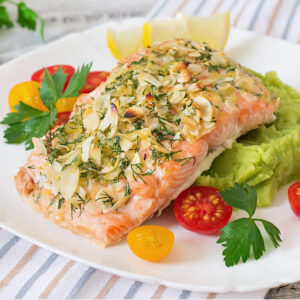
My favorite fish to eat is salmon! When we lived in Alaska when my husband was in the Army, we would eat freshly caught salmon, sometimes king salmon sometimes silver salmon. Yum! Sometimes, we caught the salmon and had to clean it but sometimes my husbands’ patients would bring him some fully cleaned.
Salmon is full of lean protein and has lots of omega 3 fatty acids which are crucial for your health. Salmon is high in fat than some other types of fish. I like to grill salmon, I mean, my husband likes to grill it for me, or I bake it.
Wild-caught salmon is often considered better for your health than farm-raised salmon for several key reasons. However, it’s not always a black-and-white issue—it depends on the farming practices, where the salmon is from, and individual health priorities. Reading the package labels is important.
I actually use canned salmon to make our favorite comfort food, salmon patties. I drain the canned salmon, remove the skin and mash the bones completely when I make salmon patties. Canned salmon is cheaper than fresh plus it’s typically wild caught.
Salmon Nutrition Facts
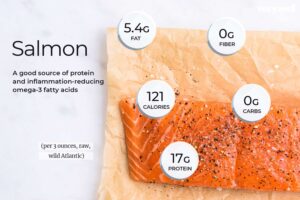
Salmon has 121 calories, 17g of protein, 5.4g of fat including beneficial omega-3 fatty acids, and 37.4mg of sodium. There is no fiber, sugar, or carbohydrates in salmon. The following nutrition information is provided by the U.S. Department of Agriculture for 3 ounces (85g) of raw, wild-caught Atlantic salmon.
- Calories: 121
- Fat: 5.4g
- Sodium: 37.4mg
- Carbohydrates: 0g
- Fiber: 0g
- Sugars: 0g
- Protein: 17g
https://www.verywellfit.com/salmon-nutrition-facts-calories-and-health-benefits-4106641
Here’s a breakdown of the main health-related differences between wild-caught vs Farmed Salmon
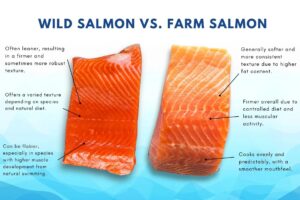
Why Wild-Caught Salmon Is Often Healthier than Farmed Salmon*:
- Better Fat Profile (More Omega-3, Less Omega-6)
- Wild salmon tends to have a better ratio of omega-3 to omega-6 fatty acids.
- Farmed salmon often has more total fat (due to diet and lack of movement), including higher omega-6 fats, which in excess can promote inflammation if not balanced with omega-3s.
- Fewer Contaminants
- Wild salmon generally has lower levels of pollutants like PCBs, dioxins, and mercury.
- Farmed salmon may contain more toxins, depending on how and where it was raised, due to contaminated feed or overcrowded conditions.
- No Antibiotics or Hormones
- Wild salmon are not treated with antibiotics.
- Some farmed salmon, particularly from countries with looser regulations, may be given antibiotics or other chemicals to prevent disease in crowded pens.
- Natural Diet = More Nutrients
- Wild salmon eat a natural diet (e.g. krill, smaller fish), leading to higher levels of astaxanthin, a powerful antioxidant that gives salmon its red/pink color.
- Farmed salmon are often fed pellets made of corn, soy, and fish meal, which may reduce nutrient diversity unless carefully managed.
- Potential Downsides of Farmed Salmon:
- Coloring agents are sometimes added to the feed to mimic the pink hue of wild salmon.
What to Look For (If You Choose Farmed):
If wild salmon isn’t available or affordable, not all farmed salmon is bad. Look for:
- Farmed in the U.S., Canada, Norway, or Iceland – these countries tend to have stricter regulations.
- Certified sustainable sources (e.g., ASC, MSC, Seafood Watch “Best Choice”).
- No antibiotics used or “organic” labels (where available).
Making a Decision Wild-Caught vs Farmed Salmon
Factor | Wild-Caught Salmon | Farmed Salmon |
Omega-3 Quality | High, better ratio | Higher Fat overall, more Omega-6 |
Contaminants | Lower | Potentially higher |
Antibiotics/Chemicals | None used | Sometimes used |
Nutrients | Natural, varied | Depends on the food fed |
Nore: If you’re eating salmon for health benefits, wild-caught is generally the cleaner, more nutritious option—but high-quality, responsibly farmed salmon can still be a good, affordable source of omega-3s.
Smart Shopping Tips: How to Tell the Difference When Buying Salmon
- Check the Label (Carefully).
Look for words like:
- “Wild-caught” – Usually from Alaska (e.g. sockeye, coho, king), which has some of the world’s best-managed fisheries.
- “Alaskan Salmon” – All commercial Alaskan salmon is wild.
- “Atlantic Salmon” – This almost always means farmed, as there’s virtually no commercial wild Atlantic salmon left.
- “Pacific Salmon” – Often wild (from U.S. or Canada), but carefully check the label.
- Another Way to tell Difference is to Look for Certifications.
These labels indicate better health standards and sustainability:
- MSC (Marine Stewardship Council) – For sustainable wild-caught fish.
- ASC (Aquaculture Stewardship Council) – For responsibly farmed fish.
- Organic – Limited availability for salmon, but when available, often means no antibiotics or synthetic additives.
- Also, Check the Color.
* Wild salmon tends to be deep red or vibrant pink (especially sockeye).
* Farmed salmon is often paler or peach-colored—unless artificially pigmented with additives like astaxanthin.
* Beware of dyed fillets—some stores add color to make them appear fresher or more wild-like.
- Check the smell and look at the texture.
- Fresh wild salmon has a clean ocean smell, firm texture, and doesn’t feel mushy.
- Farmed salmon can sometimes be more oily and softer.
- Know the Source of the salmon by checking the label.
Ask or look for:
- “Where is this salmon from?”
- Best wild sources: Alaska, British Columbia, Pacific Northwest
- Better farmed sources: Norway, Iceland, Canada (with ASC or similar certification)
- Price as a Clue, wild salmon costs more.
- Wild salmon usually costs more—expect to pay $15–$25/lb or more (especially for sockeye or king).
- Farmed salmon is typically cheaper, $8–$13/lb.
- If something is labeled “wild” and is very cheap, question it—it may be mislabeled.
- Frozen Can Be a Good Option.
- Frozen wild-caught salmon (especially from Alaska) is often flash-frozen right after catch and can be better than “fresh” farmed salmon that’s been sitting on ice for days.
- Check that it’s labeled “flash frozen” or “vacuum-sealed”.
*From ChatGPT.
Best Types of Wild Salmon are:
Type | Flavor | Fat Content | Best Use |
Sockeye | Rich, deep red | Medium | Grilling, baking |
Coho | Milder, light red | Medium | Very versatile |
King (Chinook) | Buttery, rich | High | Special meal due to cost |
Pink/Chum | Light, less oily | Low | Best for canned or smoked |
https://www.healthline.com/nutrition/17-health-benefits-of-omega-3#takeaway
https://www.verywellhealth.com/benefits-of-omega-3-11772277
https://www.health.com/omega-3-fatty-acids-benefits-7510411
https://www.verywellfit.com/salmon-nutrition-facts-calories-and-health-benefits-4106641
is a registered dietitian with a Master’s Degree in clinical nutrition. She is the Chief Blog Organizer for www.DayByDayLiving.net
Barbara worked as a research nutritionist with the military’s tri-service medical school & worked as a performance nutrition consultant to Navy SEALS’ BUD/S Training Program and West Coast Navy SEAL Teams. Barbara is the former nutrition performance consultant to the University of Louisville Athletic Department. She is the author of Fast Facts on Fast Food For Fast People and High Energy Eating Sports Nutrition Workbook for Active People used by the University of Louisville, University of Tennessee Lady Vols and the Tennessee football program, the LSU basketball program, the Buffalo Bills, the Cleveland Browns and by the United States Navy SEALs.
Barbara is the former publisher of Kentuckiana HealthFitness Magazine, Kentuckiana Healthy Woman magazine and radio show host of Health News You Can Use. Barbara has over 60 years of experience in promoting healthy lifestyles to consumers. Barbara is a former runner who walks, a spinner, hiker, a pickleball player, a mother and grandmother to 13 grandchildren.
Barbara also serves on the Leadership Team for Moms for America as the Grammy Grizzlies National Group Leader. (www.momsforamerica.us).