
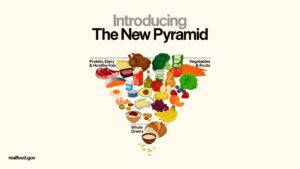
As a registered dietitian since 1973, I always tried to follow whatever the Federal Government’s Health Agencies like the CDC, FDA, NIH, Public Health, recommended because that is what I was taught to do when I was in college and in my dietetic internship. In fact, when I was doing nutrition research at the Military’s Tri-service Medical School in Bethesda, Maryland, we actually collaborated with both NIH and USDA on many our Nutrition & Performance studies.
But as a health professional I couldn’t help to notice through the years, more sickness and more obesity was escalating, no matter how many TV shows, magazines, wellness professionals, talk show hosts, like Oprah, pushed the US Dietary Food Guide Pyramid. In fact, the blame of their sicknesses usually rested on individuals, not what foods were available to them and pushed by the very nutrition & health agencies who were supposed to be the top health scientists of the world.
I remember when I was publishing my 2 health magazines and was then part of the media (1997-2010), I had access to some of America’s top obesity researchers and I always asked them, “Today’s obesity is not like anything else we’ve seen…it’s fat on fat. What is the problem?” They would say, “We don’t know!” Fast forward to today and the obesity we see today is actually much worse than it was in the late 90’s and early 2000s. Today’s obesity effects our children, teens, adults, is totally out of control.
Today, 70% of Americans are overweight or obese, according to CDC data. Nearly 1 in 3 American adolescents between the ages of 12 to 17 has prediabetes. Nearly 90% of health care spending goes to treating people who have chronic diseases which are mostly related to diet and a sedentary lifestyle.
I will say it took the Covid-19 pandemic and the bad advice from both the CDC, NIH, Public Health, etc., during that time, made me conscious of how corporate capture works, how Big Food, Big Ag and Big Chem push forward to get their agendas passed through shotty research paid by Big Food, Big Ag and Big Chem to help their bottom line rather the studies based on Gold Standard Science.
I was able to take a fresh look at what was actually happening in the nutrition field and with the past US Dietary Guidelines like the Food Guide Pyramid of 1992. It actually hurts me to say this but I lost total faith in the Federal Government Health Agencies.

But there is a new Health Sheriff with a posse of Health Experts in town, President Trump’s Secretary of Health & Human Services, Robert F. Kennedy, Jr and his deputies, Dr. Oz, MD, CMS Director, Dr. Makary, M, MPH, FDA Director and Dr. Bhattacharya, MD, PhD, NIH Director, and their partner, Brooke Rollins, Secretary of USDA are all marching in the same direction.
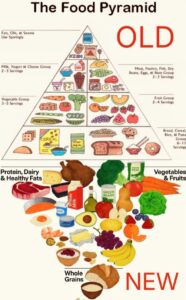
In the past, the Standard American Diet consisted of low-quality, highly processed foods with these highly processed foods being the base of the 1992 Food Guide Pyramid with little or no emphasis on Real Foods.
Flipping the Old Food Guide Pyramid into a new Food Guide Pyramid that promotes: EAT REAL FOOD!
The Specifics on the 2025-2030 MAHA Dietary Guidelines
“America’s Future depends on what we grow, what we serve and what we choose to eat.”
“We are putting real food back at the center of the American diet. Real food that nourishes the body. Real food that restores health. Real food that fuels energy and encourages movement and exercise. Real food that builds strength.”
Five major shifts with an emphasis on REAL FOODS based on GOLD STANDARD SCIENCE:
- Protein on top: meat, eggs, seafood and dairy recognized as nutrient-dense, not dangerous.
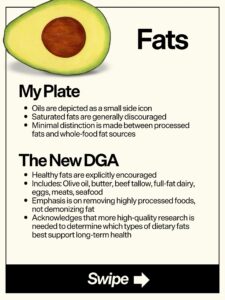
- Fat quality over fat avoidance: whole-food fats matter more than chasing “low-fat” labels.
- Ultra-processed foods finally named as a problem.
- Grains lose their throne — no longer the unquestioned foundation of every plate.
- Human biology quietly returns — metabolism, aging, and real-world health outcomes matter again.
The 2025-2030 MAHA Dietary Guidelines are a whole food framework intended to be customized to individuals and families, and their needs, preferences, and financial status. The guidance provides possibilities across all recommendations.
For example, in proteins, options such as chicken, pork, beans, and legumes; a larger variety of dairy products, at all price points, including whole milk and full-fat dairy products; fresh, frozen, dried, and canned fruits and vegetables, from beets to strawberries, carrots to apples; and whole grains.
Paired with a reduction in highly processed foods laden with refined carbohydrates, added sugars, excess sodium, unhealthy fats, and chemical additives, this approach can change the health trajectory of America. Specific guidance include:
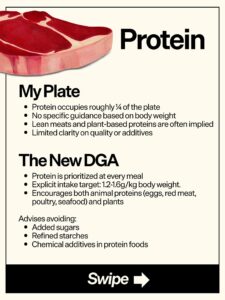
- Prioritizing Protein: While previous Dietary Guidelines have demonized protein in favor of carbohydrates, these guidelines reflect gold standard science by prioritizing high-quality, nutrient-dense protein foods in every meal. This includes a variety of animal sources, including eggs, poultry, seafood, and red meat, in addition to plant-sourced protein foods such as beans, peas, lentils, legumes, nuts, seeds, and soy.
- Avoiding highly processed foods: For the first time, the Dietary Guidelines call out the dangers of certain highly processed foods – a common-sense and vital public health point. The guidance calls to “avoid highly processed packaged, prepared, ready-to-eat, or other foods that are salty or sweet” and “avoid sugar-sweetened beverages, such as soda, fruit drinks, and energy drinks.”
- Avoiding added sugars: While previous Dietary Guidelines did not take a hard line against added sugar (especially for children), this guidance says, “no number of added sugars or non-nutritive sweeteners is recommended or considered part of a healthy or nutritious diet” and calls on parents to completely avoid added sugar for children aged four and under.
- Ending the War on Healthy Fats: The guidance calls for receiving the bulk of fat from whole food sources, such as meats, poultry, eggs, omega 3–rich seafood, nuts, seeds, full-fat dairy, olives, and avocados. When cooking with or adding fats to meals, the guidelines call for using the most nutrient-dense natural options with essential fatty acids, such as olive oil.
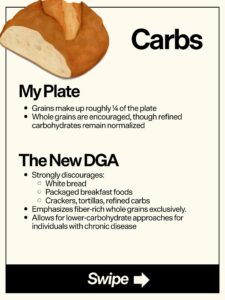
- Heralding whole grains and avoiding refined carbohydrates: This guidance takes a firm stand to “prioritize fiber-rich whole grains” and “significantly reduce the consumption of highly processed, refined carbohydrates, such as white bread, ready-to-eat or packaged breakfast options, flour tortillas, and crackers.”
- Including diets lower in carbohydrates to manage chronic disease: The guidance makes the science-based and common-sense recommendation that individuals with certain chronic diseases may experience improved health outcomes when following a lower carbohydrate diet.
https://www.hhs.gov/press-room/fact-sheet-historic-reset-federal-nutrition-policy.html
The Guidelines emphasize simple, flexible guidance rooted in modern nutrition science:
- Prioritize protein at every meal
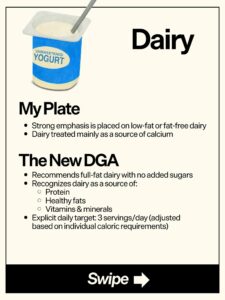
- Consume full-fat dairy with no added sugars
- Eat vegetables and fruits throughout the day, focusing on whole forms
- Incorporate healthy fats from whole foods such as meats, seafood, eggs, nuts, seeds, olives, and avocados
- Focus on whole grains, while sharply reducing refined carbohydrates
- Limit highly processed foods, added sugars, and artificial additives
- Eat the right amount for you, based on age, sex, size, and activity level
- Choose water and unsweetened beverages to support hydration
- Limit alcohol consumption for better overall health
https://cdn.realfood.gov/Daily%20Serving%20Sizes_508.pdf
https://cdn.realfood.gov/DGA_508.pdf
https://cdn.realfood.gov/Scientific%20Report_508.pdf
US Dietary Guidelines for Programs the USDA Funds
The US Dietary Guidelines are used as guidelines for School Meals, Military & Veterans Meals, Child and Adult Nutrition Programs like Snap also called Food Stamps. The USDA spends $400 million/day for nutrition programs. There are 45 million school lunches served each day. The Federal Government feeds 1.3 million active service members and 9 million veterans who depend on VA hospitals.
Creating a Daily Meal Plan for Your Health
- Use the portions on Table 1: 2025-2030 MAHA Food Groups Foods and Portion Size to determine what actual food group portions are.
- Use Table 2: Daily Servings by Caloric Level to determine what Food Group Foods and Portion in different calorie levels.
Table 1. 2025-2030 MAHA Food Group Foods and Portion Size
Protein foods include:
Animal- and plant-based protein foods including meats, poultry eggs, seafood, beans, peas, lentils legumes, nuts, seeds and soy.
Serving Size Examples:
3 oz cooked meat, poultry and seafood
1 egg
½ cup beans, peas, or lentils
1 oz* of nuts or seeds
2 tbsp nut or seed butter
3 oz soy
Dairy includes:
Whole, reduced-fat, low-fat or nonfat dairy products including fluid, dry and evaporated milk, yogurt, cheeses, lactose-free and lactose-reduced products, fortified dairy alternatives.
Serving Size Examples:
1 cup of milk
¾ cup yogurt
1 oz of cheese
Vegetables include:
Vegetables of all types – dark green, red and orange, beans, peas, lentils and legumes; starchy, including all fresh, frozen and canned or raw vegetables.
Serving Size Examples:
1 cup raw or cooked
2 cups leafy greens
Fruits include:
Fruits of all types, including fresh, frozen, canned, juiced and dried fruits.
Serving Size Examples:
1 cup raw
½ cup dried
Whole Grains include:
All whole-grain foods, and products made with whole grains as ingredients.
Serving Size Examples:
½ cup cooked oats, brown rice, barley, quinoa, or buckwheat
1 slice of bread
1 tortilla
Healthy Fats include:
Includes healthy oils like olive oil, avocado oil
Serving Size Examples:
1 tsp olive oil
1 tsp butter
*Abbreviations
Ounce= oz
Tablespoon = tbsp
Teaspoon = tsp
Table 2. Daily Servings by Caloric Level
(See Table 1. MAHA Food Group Foods and Portion Size for actual portion sizes.)
Food Group | 1000 calories | 1200 calories | 1400 calories | 1600 calories |
Protein | 1-1 ½ servings | 1 ½ – 2 servings | 2 – 2 ½ servings | 2 ½ – 3 ½ servings |
Dairy | 2 servings | 2 ½ servings | 2 ½ servings | 3 servings |
Vegetables | 1 ¼ servings | 1 ¾ servings | 1 ¾ servings | 2 ½ servings |
Fruits | 1 serving | 1 serving | 1 ½ servings | 1 ½ servings |
Whole Grains | 1-2 servings | 1 ½ – 2 ¾ servings | 1 ¾ – 3 ¼ servings | 1 ¾ – 3 ¼ servings |
Healthy Fats | 2 ½ servings | 2 ½ servings | 2 ¼ servings | 2 ½ servings |
Daily Servings by Caloric Level
Food Group | 1800 calories | 2000 calories | 2200 calories | 2400 calories |
Protein | 2 ½ – 3 ½ servings | 3 – 4 servings | 3 ½ – 4 ½ servings | 3 ½ – 4 ½ servings |
Dairy | 3 servings | 3 servings | 3 servings | 3 servings |
Vegetables | 3 servings | 3 servings | 3 ½ servings | 2 ½ servings |
Fruits | 1 ½ serving | 2 serving | 2 servings | 2 servings |
Whole Grains | 2 – 4 servings | 2 – 4 servings | 2 ¼ – 4 ½ serving | 2 ¾ – 5 ¼ servings |
Healthy Fats | 4 serving | 4 ½ servings | 4 ½ servings | 5 servings |
Daily Servings by Caloric Level
Food Group | 2600 calories | 2800 calories | 3000 calories | 3800 calories |
Protein | 3 ½ – 4 ½ servings | 4-5 servings | 4-5 servings | 4 – 5 servings |
Dairy | 3 servings | 3 servings | 3 servings | 3 servings |
Vegetables | 4 ¼ servings | 4 ¼ servings | 4 ¾ servings | 4 ¾ servings |
Fruits | 2 serving | 2 ½ serving | 2 ½ servings | 2 ½ servings |
Whole Grains | 3-6 servings | 3 ¼ – 6 ½ servings | 3 ¼ – 6 ½ servings | 3 ¼ – 6 ½ servings |
Healthy Fats | 5 ½ servings | 6 servings | 7 servings | 8 servings |
https://cdn.realfood.gov/Scientific%20Report%20Appendices.pdf
Special Recommendations for Highly Processed Foods, Added Sugars & Refined Carbohydrates
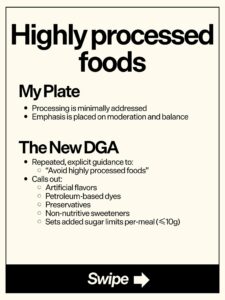
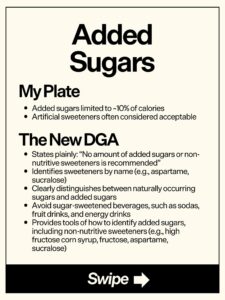
- Avoid highly processed packaged foods, prepared, ready-to-eat, or other foods that are salty or sweet like chips, cookies and candy that have added sugars and sodium (salt).
- Prioritize nutrient-dense food like vegetables, fruits etc. and home-prepared meals.
- When dining out choose nutrient-dense options.
- Limit foods and beverages that include artificial flavors, petroleum-based dyes, artificial preservatives, and low-calorie nutritive sweeteners. *
- Avoid sugar-sweetened beverages, like sodas, fruit drinks, and energy drinks.
- While no number of additive sugars or non-nutritive sweeteners are recommended or considered part of a healthy diet, one meal should not contain more than 10 grams of added sugar.
- When snack foods, added sugar limit recommendations should follow FDA “Healthy” claim limits.
- For example, grain snacks like crackers should not exceed 5 grams of added per ¾ ounce of whole-grain equivalent
- Dairy snacks like yogurt should not exceed 2.5 grams of added sugar per ½ cup equivalent.
*You can find added sugar on the food label and specific artificial flavors, petroleum-based dyes, artificial preservatives, and low-calorie nutritive sweeteners on the ingredient list.
Become an Added Sugar Investigator

- To help identify sources of added sugar, look for ingredients that include the word “sugar” or “syrup” or that ends in “ose.”
- Added sugars can appear on the ingredient list under many different “deceiving names” like high-fructose corn syrup, agave syrup, corn syrup, rice syrup, fructose, glucose, dextrose, sugar, cane sugar, beet sugar, turbinado sugar, maltose, fruit juice concentrate, honey and molasses.
- Examples, non-nutritive sweeteners include aspartame, sucralose, saccharin, xylitol, and acesulfame K.
- Foods and drinks like fruits and even plain milk have naturally occurring sugars but these foods are not considered added sugar.
The ABCs of Microbiome Gut Health
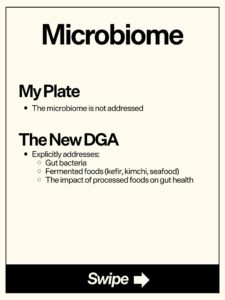
The 2025-2030 MAHA Dietary Guidelines are emphasizing the power of a healthy gut microbiome. Your gut contains trillions of bacteria and microorganisms called the microbiome. A healthy microbiome has been called the control center for your health. A healthy diet creates a well-balanced microbiome and healthy digestion. Highly processed foods disrupt the microbiome balance but a diet which included vegetables, fruits, fermented foods like sauerkraut, kimchi, kefir, miso and high fiber foods help create a healthy diverse microbiome beneficial to keep you healthy.
https://daybydayliving.net/?p=3462
https://daybydayliving.net/?p=3536
https://daybydayliving.net/?p=3288
What about Alcohol?
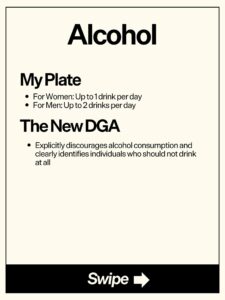
The 2025-2030 MAHA US Dietary Guidelines doesn’t restrict alcohol beverages but the recommendation is consuming less alcohol is better for your overall health. It does recommendation pregnant women should completely avoid alcohol. In addition, those who are recovering from alcohol use disorder or those who are unable to control the amount of alcohol they consumer should completely avoid alcohol. People who are taking medications or have medical conditions that can interest with alcohol should avoid alcohol. For those who have a family history of alcoholism should be avoid alcohol or drink in moderation.
In 2024, the Biden Surgeon General, Dr. Vivek Murthy, issued a new advisory warning about the link between alcohol consumption and increased cancer risk. Dr. Vivek Murthy called for additions to labels warning of the connection between alcohol use and cancer risk. In fact, Dr. Murthy explained alcohol consumption is the third leading preventable cause of cancer in the U.S., behind only tobacco and obesity, and increases the risk for at least seven types of cancer, according to the advisory.
Not sure why the 2025-2030 MAHA US Dietary Guidelines did not come out defining the strong relationship between the alcohol consumption and cancer but they left it up to the individual.
https://www.hhs.gov/sites/default/files/oash-alcohol-cancer-risk.pdf
What about the intake of Sodium in the 2025-2030 MAHA US Dietary Guidelines?
Sodium is an electrolyte which is essential for proper hydration. The recommendation for the general population over 14 years of age is to consumer less than 2,300 milligrams per day of sodium. However, very active individuals may need more than the recommended 2,300 milligrams of sodium to offset the sweat loses.
For children, the recommendations vary by age:
Ages 1 – 3: less than 1,200 milligrams per day
Ages 4 – 8: less than 1500 milligrams per day
Ages 9-13: less than 1,800 milligrams per day
Note: Highly processed foods are typically high in sodium and should be avoided, not just for sodium but for the added sugar.
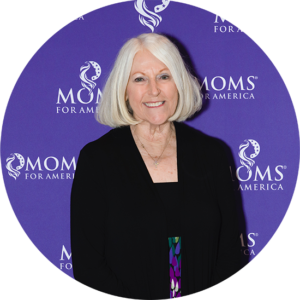
is a registered dietitian with a Master’s Degree in clinical nutrition. She is the Chief Blog Organizer for www.DayByDayLiving.net
Barbara worked as a research nutritionist with the military’s tri-service medical school & worked as a performance nutrition consultant to Navy SEALS’ BUD/S Training Program and West Coast Navy SEAL Teams. Barbara is the former nutrition performance consultant to the University of Louisville Athletic Department. She is the author of Fast Facts on Fast Food For Fast People and High Energy Eating Sports Nutrition Workbook for Active People used by the University of Louisville, University of Tennessee Lady Vols and the Tennessee football program, the LSU basketball program, the Buffalo Bills, the Cleveland Browns and by the United States Navy SEALs.
Barbara is the former publisher of Kentuckiana HealthFitness Magazine, Kentuckiana Healthy Woman magazine and radio show host of Health News You Can Use. Barbara has over 50 years of experience in promoting healthy lifestyles to consumers. Barbara is a former runner who walks, a spinner, hiker, a pickleball player, a mother and grandmother to 13 grandchildren.
Barbara also serves on the Leadership Team for Moms for America as the Grammy Grizzlies National Group Leader. (www.momsforamerica.us).
Barbara also serves as a Nutrition and Wellness Advisor for United Doctors of America Advisory Board. (www.usuda.org)