
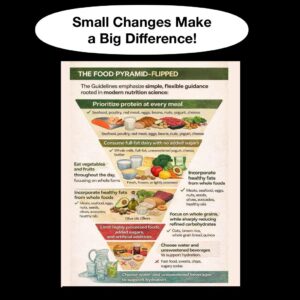
The 2025-2020 US Dietary Guidelines by the Trump HHS, there was a big uproar about of EAT REAL FOOD motto.
Moving from an ultra-processed food culture to a Eat Real Food culture might be hard at first but many families could start by Making Small Changes but these small changes will make a big difference in your families’ health.
Small, consistent tweaks to your diet can dramatically improve energy, weight management, heart health, and long-term disease risk.
Here are high-impact changes that are simple but powerful:
Change 1: Swap Sugary Drinks for Water
Replacing soda, sweet tea, or juice with water (or sparkling water).
This strategy will:
- Reduce excess calories
- Improve blood sugar control
- Support weight loss
Note: Even one drink per day swapped makes a difference over time. 12 oz soda about 150 – 170 calories.
150 calories X 30 days = 4500 calories or potentially 1.2 pound for that change. (3500 calories = a pound of weight loss).
Bonus: Drink a glass of water first thing in the morning to jumpstart your hydration plan for the day.
Change 2: Add One Serving of Vegetables to a Meal
Instead of overhauling everything, just:
- Add spinach to eggs or sliced tomatoes along with your eggs
- Add a side salad at lunch or fresh carrot sticks to lunch
- Add roasted vegetables at dinner
Note: Vegetables add more dietary fiber which helps with better digestion, improved cholesterol, and better blood sugar balance.
Fresh is always best when it comes to vegetables from the nutrient and dietary fiber standpoint but frozen vegetables with no added ingredients and no salt added canned vegetables are better than eating no vegetables at all and do contain nutrients.
Change 3. Choose Whole Grains Instead of Refined White Bread
Switch:
- *White bread → whole wheat
- White rice → brown rice or quinoa
- Regular pasta → whole grain pasta
Note: This improves dietary fiber intake which helps with digestion, heart health, cancer prevention and constipation. Americans should eat 25- 35 grams of dietary fiber per day for good health.
Note: *Try Sourdough bread because it’s made from basic ingredients (flour, water, salt) and fermentation process is closer to a whole food than factory-produced white bread with preservatives.
Change 4. Eat a Food which contains Protein at Every Meal
Protein helps:
- Control hunger
- Maintain muscle
- Stabilize blood sugar
Examples: eggs, Greek yogurt, beans, tofu, chicken, fish, cheese.
Change 5. Cook at Home More Often
Meals from restaurants and packaged foods are often high in sodium, sugar, and unhealthy fats.
Cooking even 1–2 extra meals per week at home can significantly improve diet quality.
Cook a larger portion recipe, and warm-up for another home cooked meal or freeze.
Use a crockpot or use an Air Fryer to create quick meals.
Change 6. Use Healthy Fats Instead of Processed Oils
Replace:
- margarine → olive oil or butter
- Processed snacks → nuts or seeds
Healthy fats support heart and brain health.
Change 7. Slow Down While Eating and Actually Chew Your Food
Eating more slowly helps:
- Improve digestion
- Prevent overeating
- Increase satisfaction
Try putting your fork down between bites. Betting chewing = less gas and bloating.
Change 8. Reduce Ultra-Processed Snacks
Swap:
- Chips for roasted nuts or popcorn
- Candy for dark chocolate (70%+)
- Pastries for fruit
- Flavored yogurt for plain yogurt with added fresh fruit
- Sugary cereal for oats
Even cutting back slightly lowers inflammation and improves metabolic health. If you replace ultra-processed foods with Real Foods, you will increase your nutrients as well.
Change 9. Eat More Dietary Fiber (Aim for 25–35g/day)
Add:
- Beans or lentils making soups, chilis, tacos or burritos
- Chia or flax seeds to cereal to boost dietary fiber & nutrients
- Oats
- Fresh fruits with skins
- Fresh vegetables like carrots, edamame, celery, etc.
Dietary Fiber improves gut health, keeping constipation at a minimum, improves cholesterol numbers, and helps to increase the feeling of fullness.
Note: When you increase dietary fiber, also increase your daily fluid intake.
Change 10. Practice the “80/20 Rule”
Eat nutritious, whole foods 80% of the time.
Leave 20% flexible so your diet stays sustainable.
Great choice — improving gut health which often improves energy, immunity, mood, and even sleep.




is a registered dietitian with a Master’s Degree in clinical nutrition. She is the Chief Blog Organizer for www.DayByDayLiving.net
Barbara worked as a research nutritionist with the military’s tri-service medical school collaborating with Department of Defense, National Health Institutes (NIH), and also United States Department of Agriculture (USDA). Barbara worked as a performance nutrition consultant to Navy SEALS’ BUD/S Training Program and West Coast Navy SEAL Teams. Barbara is the former nutrition performance consultant to the University of Louisville Athletic Department. She is the author of Fast Facts on Fast Food for Fast People and High Energy Eating Sports Nutrition Workbook for Active People used by the University of Louisville, University of Tennessee Lady Vols and the Tennessee football program, the LSU basketball program, the Buffalo Bills, the Cleveland Browns and by the United States Navy SEALs.
Barbara is the former publisher of Kentuckiana HealthFitness Magazine, Kentuckiana Healthy Woman magazine and radio show host of Health News You Can Use. Barbara has over 50 years of experience in promoting healthy lifestyles to consumers. Barbara is a former runner who walks, a spinner, hiker, a pickleball player, a mother and grandmother to 13 grandchildren.
Barbara also serves on the Leadership Team for Moms for America as the Grammy Grizzlies National Group Leader. (www.momsforamerica.us).
Barbara also serves as a Nutrition and Wellness Advisor for United Doctors of America Advisory Board. (www.usuda.org)