
The MAHA movement has brought harmful food additives in American foods to the forefront when discussing the ABCs of making Americans healthier. Many of the foods allowed on the GRAS List are not allowed in other countries. With the help of ChatGPT, check out what GRAS means and why these additives are being scrutinized by the Trump Health & Human Services and some are finally being eliminated completely.
The Trump HHS, under the direction of HHS Secretary Robert Kennedy, J., has already made some changes in what Healthy Food Additives are allowed to replace the Food dyes deemed unhealthy. And more changes will be coming as Good Standard Research Methods on Food Additives are completed by the Federal Government without the Corporate Capture studies of the past. Many food companies are in the process of altering their food additives to meet the Trump HHS’s recommendations.
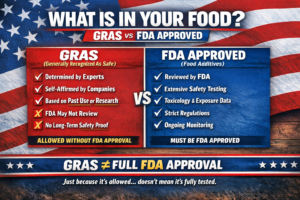
The Federal Government GRAS List refers to substances that are classified as:
GRAS = “Generally Recognized As Safe”
This designation is overseen by the U.S. Food and Drug Administration.
What does GRAS Actually Mean?
A substance is considered GRAS if:
- Qualified experts agree it is safe under its intended use
- Safety is based on:
- Scientific research, OR
- Long history of common use in food (before 1958)
The GRAS List Designation was created from the Federal Food, Drug, and Cosmetic Act after 1958.
Examples of GRAS Substances:
Common items on the GRAS list include:
- Salt (sodium chloride)
- Sugar
- Vinegar
- Baking soda
- Certain preservatives (like citric acid)
- Some gums (xanthan gum, guar gum)
The GRAS List does NOT mean:
- “Healthy”
- “Risk-free in all amounts”
- “Approved after rigorous FDA testing like drugs”
The GRAS LIST means:
Safe under specific conditions of use by created by Companies not FDA reviewed.
How Substances Get GRAS Status
There are two pathways:
- FDA Reviewed (Voluntary Notification)
- Companies submit safety data to the FDA
- FDA responds with:
- “No questions” (common outcome)
- Self-Affirmed GRAS
- Companies can decide on their own (using expert panels)
- No requirement to inform the FDA
Why GRAS Is Controversial?
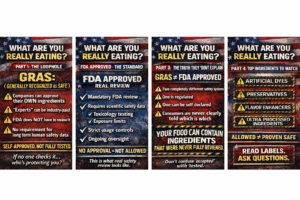
Critics argue:
- Companies can self-certify ingredients
- Potential conflicts of interest
- Limited long-term safety data for some additives
Some organizations like the Center for Science in the Public Interest have called for stricter oversight.
Vani Hari, also called the Food Babe, has been out in front of what ingredients are potentially unhealthy based on her personal health issues over the years. While she is not a nutrition expert, her ideas & recommendations are excellent.
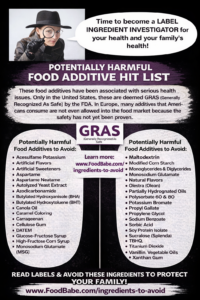
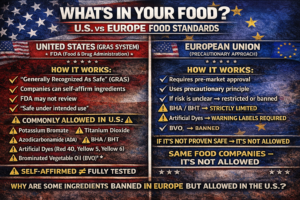
Many of the foods allowed on by the US GRAS List are not allowed in Europe and other countries around the world.
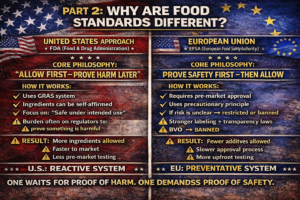
Note: I used ChatGPT for the graphics and pulling this blog together for this topic, but I also check the information carefully to ensure the health information is correct. In order to get the right answers & the development of these health blogs when using ChatGPT effectively, you must know how to pose the correct questions.
*This content was generated with assistance from ChatGPT, an AI language model by OpenAI
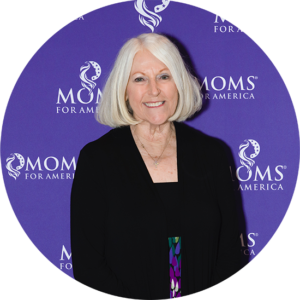
is a registered dietitian with a Master’s Degree in clinical nutrition. She is the Chief Blog Organizer for www.DayByDayLiving.net
Barbara worked as a research nutritionist with the military’s tri-service medical school collaborating with Department of Defense, National Health Institutes (NIH), and also United States Department of Agriculture (USDA). Barbara worked as a performance nutrition consultant to Navy SEALS’ BUD/S Training Program and West Coast Navy SEAL Teams. Barbara is the former nutrition performance consultant to the University of Louisville Athletic Department. She is the author of Fast Facts on Fast Food for Fast People and High Energy Eating Sports Nutrition Workbook for Active People used by the University of Louisville, University of Tennessee Lady Vols and the Tennessee football program, the LSU basketball program, the Buffalo Bills, the Cleveland Browns and by the United States Navy SEALs.
Barbara is the former publisher of Kentuckiana HealthFitness Magazine, Kentuckiana Healthy Woman magazine and radio show host of Health News You Can Use. Barbara has over 50 years of experience in promoting healthy lifestyles to consumers. Barbara is a former runner who walks, a spinner, hiker, a pickleball player, a mother and grandmother to 13 grandchildren.
Barbara also serves on the Leadership Team for Moms for America as the Grammy Grizzlies National Group Leader. (www.momsforamerica.us).