
Glyphosate is a widely used herbicide (weed killer) designed to kill plants by blocking a specific enzyme they need to grow. If you have ever used Roundup in your yard to destroy weeds, it’s glyphosate that does the job.
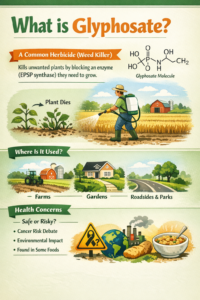
Glyphosate works by inhibiting an enzyme called EPSP synthase, which plants use in the shikimate pathway to produce important amino acids.
When this pathway is blocked:
- Plants cannot produce key proteins
- Growth stops
- The plant eventually dies
This pathway exists in plants, algae, bacteria, and fungi, but not in human cells, which is why it has historically been considered less toxic to humans than some other herbicides.
Where Glyphosate Is Used
Glyphosate is commonly used for:
- Agriculture – controlling weeds in crops like corn, soybeans, and wheat
- Home gardening – weed control in lawns and driveways
- Land management – roadsides, parks, and utility areas
A well-known product that contains glyphosate is Roundup herbicide, originally developed by Monsanto and now owned by Bayer.
Why Glyphosate Became So Widely Used
In the 1990s, genetically engineered crops called “Roundup Ready” were developed to tolerate glyphosate. Farmers could spray fields to kill weeds without harming the crop.
Common glyphosate-tolerant crops include:
- Soybeans
- Corn
- Cotton
- Canola
Health and Environmental Debate
Glyphosate has become controversial.
- In 2015, the International Agency for Research on Cancer classified glyphosate as “probably carcinogenic to humans.”
- Other regulators such as the U.S. Environmental Protection Agency and the European Food Safety Authority have stated that glyphosate is not likely to cause cancer when used as directed.
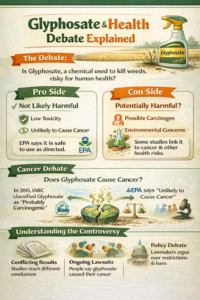
Because of this disagreement, there are:
- ongoing lawsuits
- continued scientific research
- policy debates about its use
Where People May Encounter It
Trace amounts can sometimes be found in:
- grains (oats, wheat, barley)
- processed foods made from those grains
- drinking water in agricultural areas
However, regulatory agencies set maximum residue limits they consider safe.
The Bottom Line
Glyphosate = a chemical weed killer used worldwide in farming and landscaping to kill unwanted plants.
Where Glyphosate Can Show Up in Food
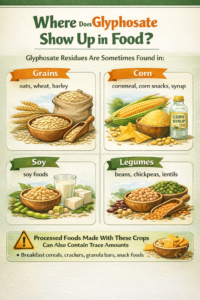
Glyphosate can appear in small residue amounts in certain foods, mainly because it is used to control weeds in agriculture or sometimes sprayed on crops shortly before harvest.
Foods Most Commonly Reported With Glyphosate Residues
- Grain Products
- Oats (oatmeal, granola, breakfast cereals)
- Wheat (bread, crackers, pasta)
- Barley
- Rye
These grains may be sprayed before harvest to help dry the crop evenly.
- Legumes
- Soybeans
- Chickpeas
- Lentils
- Peas
These crops are often grown in fields where glyphosate is used to control weeds.
- Corn Products
- Cornmeal
- Corn syrup
- Corn-based snacks
Corn is commonly grown in systems where glyphosate herbicides are used.
- Processed Foods Made From These Crops
Because grains and corn are widely used in processed foods, small residues can sometimes appear in:
- Breakfast cereals
- Crackers
- Granola bars
- Snack foods
Foods With Very Low Likelihood
Glyphosate is rarely found in significant amounts in:
- Fresh fruits
- Fresh vegetables
- Organic foods (glyphosate is not allowed in organic farming)
Important Note
Government agencies such as the U.S. Environmental Protection Agency and the U.S. Food and Drug Administration monitor pesticide residues and set limits considered safe for consumption.
The Bottom Line
Glyphosate residues are most commonly associated with grain crops, soy, corn, and foods made from them.
Alternatives to Using Glyphosate
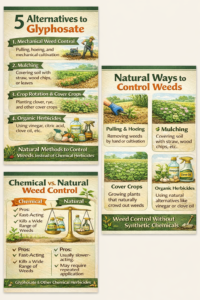
There are several practical alternatives to glyphosate used in farming, gardening, and landscaping. These approaches focus on mechanical control, natural methods, and prevention rather than chemical herbicides.
- Mechanical Weed Control
Removing weeds physically is one of the most common alternatives.
Examples:
- Hand pulling weeds
- Hoeing or cultivating soil
- Mechanical cultivators used by farmers
- Flame weeders (heat to kill weeds)
✔ Very effective for small areas
✔ No chemical residues
- Mulching
Covering soil prevents weeds from getting sunlight.
Common mulch materials:
- Straw
- Wood chips
- Leaves
- Grass clippings
- Landscape fabric
✔ Suppresses weed growth
✔ Improves soil health
- Crop Rotation & Cover Crops
Farmers often plant cover crops that crowd out weeds.
Examples:
- Clover
- Rye
- Buckwheat
- Alfalfa
Benefits:
- Reduces weeds naturally
- Improves soil fertility
- Protects soil from erosion
- Organic Herbicides
Some natural herbicides can kill weeds without synthetic chemicals.
Examples include:
- Acetic acid (strong vinegar)
- Citric acid
- Clove oil
- Soap-based herbicides
These usually burn the plant leaves but may require repeated applications.
- Smart Lawn & Garden Practices
Healthy soil and plants help prevent weeds from taking over.
Helpful strategies:
- Dense planting
- Proper watering
- Healthy soil biology
- Compost use
✔ Strong plants compete better against weeds.
The Bottom Line
Instead of using glyphosate in your home gardens or for your lawns, weeds can be managed through mechanical removal, mulching, cover crops, natural herbicides, and better soil management.
Note: I used ChatGPT for the graphics and pulling this blog together for this topic, but I also check the information carefully to ensure the health information is correct. In order to get the right answers & the development of these health blogs when using ChatGPT effectively, you must know how to pose the correct questions.
*This content was generated with assistance from ChatGPT, an AI language model by OpenAI

is a registered dietitian with a Master’s Degree in clinical nutrition. She is the Chief Blog Organizer for www.DayByDayLiving.net
Barbara worked as a research nutritionist with the military’s tri-service medical school collaborating with Department of Defense, National Health Institutes (NIH), and also United States Department of Agriculture (USDA). Barbara worked as a performance nutrition consultant to Navy SEALS’ BUD/S Training Program and West Coast Navy SEAL Teams. Barbara is the former nutrition performance consultant to the University of Louisville Athletic Department. She is the author of Fast Facts on Fast Food for Fast People and High Energy Eating Sports Nutrition Workbook for Active People used by the University of Louisville, University of Tennessee Lady Vols and the Tennessee football program, the LSU basketball program, the Buffalo Bills, the Cleveland Browns and by the United States Navy SEALs.
Barbara is the former publisher of Kentuckiana HealthFitness Magazine, Kentuckiana Healthy Woman magazine and radio show host of Health News You Can Use. Barbara has over 50 years of experience in promoting healthy lifestyles to consumers. Barbara is a former runner who walks, a spinner, hiker, a pickleball player, a mother and grandmother to 13 grandchildren.
Barbara also serves on the Leadership Team for Moms for America as the Grammy Grizzlies National Group Leader. (www.momsforamerica.us).