

When I was in college I had to write a term paper for my advanced nutrition class. This was in 1970. I decided to write the paper on Breast Feeding. As a result of that paper, I was inspired to breast feed my children. My first child was born in 1975. I had a cesarean birth after 18 hours of labor. Breast feeding in those days was not very popular. In fact, most mothers fed their babies formulas. My mother-in-law was so shocked that I breast fed and even said why would you breast feed instead using a formula. I explained to her about the term paper I had written and mothers’ milk was the perfect food for my son. However, I had to go back to work in 6 weeks because my husband was in dental school and someone had to support the family.
Breast feeding was not easy back then. There was no one at the hospital that could help me. The hospital staff was very knowledgeable on formula feeding. I was unsuccessful at breast feeding him & very depressed by that but I had to go back to work full time anyway. My in-laws were keeping him while I worked. But Chris did ok on the formula and thrived.
However, I had to go back to work in 6 weeks because my husband was in dental school and someone had to support our family and it was way too hard to try to even express milk using a horrible rubber pump and very hard to store the expressed breast milk so I gave up.
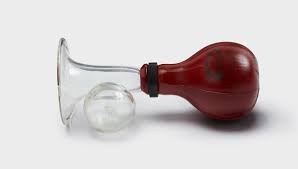
Note: Only mothers whose babies were in a Neonatal Intensive Care Unit had access to electric breast pumps but only in the hospital.
Baby #2 arrived and I was only working part-time. Baby #2 and Baby #3 were completely breast fed with formula supplementing them when I was unable to breast feed because of my work schedule. At work, I had to express my milk using this discussing breast pump to avoid a breast infection. At that time, only preemie babies could have access to the really good breast pumping machines. By time #2 son had arrived, I had found the Le Leche League https://llli.org/ and learned a lot which help to prepare me for a positive breastfeeding experience for me and my other babies.
But in today’s America, it’s much easier to breast feed your baby is you choose to. There are: 1. nurses in the hospital that can help get you started 2. there are other mothers who can help 3. there are excellent affordable breast pumps should you need to go back to work full time 4. there is a government website that can help you if needed 5. there is a law that can help you if you choose to pump your breasts at work.
We have come a long way, baby…to give our babies the best food for our babies!
Fast forward to today, breast feeding is much easier and actually many mothers understand breast milk was made to feed your baby…not cow’s milk or soy milk! I was thrilled when 2 of my three daughters-in-law with 12 children between them chose to breast feed all their babies. It was not easy for them in fact two of the babies were twins!
But today, breast feeding is so much easier in that there are designated breastfeeding areas, more breastfeeding pump machines whihc are affordable for moms who work and want to breast feed their babies.
Why Breastfeeding Is Best for Your Baby
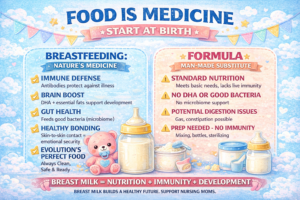
Breastfeeding is often recommended as the best way to feed a baby because it’s uniquely designed to support growth, immunity, and development—in ways formula can’t fully replicate.
- Builds a Strong Immune System
Breast milk is loaded with antibodies, especially in early milk (colostrum).
- Helps protect against ear infections, diarrhea, and respiratory illnesses
- Supports long-term immune health
- Supports Brain Development
Breast milk contains DHA and other essential fats.
- Linked to improved cognitive development
- Supports vision and nervous system growth
- Perfect Nutrition—Tailored to Baby
Breast milk changes as your baby grows.
- Always the right balance of protein, fat, and carbs
- Easier to digest than formula
- Reduces risk of constipation and stomach upset
- Promotes Bonding
Skin-to-skin contact during breastfeeding helps:
- Strengthen emotional connection
- Regulate baby’s heart rate and temperature
- Promote a sense of security
- May Lower Risk of Chronic Disease
Breastfed babies have lower risk of:
- Obesity later in life
- Type 1 and Type 2 diabetes
- Allergies and asthma
- Supports Gut Health (Microbiome)
Breast milk feeds “good bacteria” in the gut.
- Builds a strong digestive system
- Plays a key role in immunity and inflammation control
- Always Clean, Safe & Ready
- No preparation needed
- Always the right temperature
- No risk of contamination
Important Perspective
Breastfeeding is beneficial—but not always possible or best for every mom or baby. Formula is a safe, nutritious alternative when needed. The goal is a healthy, well-fed baby and a supported mom.
Choosing the Right Breast Pump for You to Use
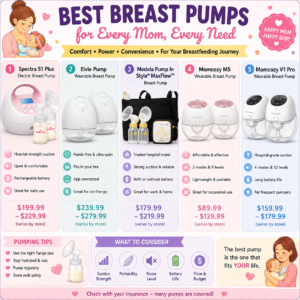
Choosing the best breast pump comes down to comfort, suction strength, portability, and how often you’ll pump.
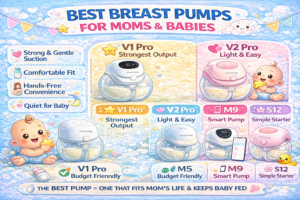
Here are top-rated options (based on real testing, reviews, and current 2026 picks) to help you decide 👇
BEST BREAST PUMPS (2026 PICKS)
Best Overall (Power + Reliability)
Spectra S1 Plus Electric Breast Pump
$225.99•Target + others
4.6 (1.2K)
$225.99•Target + others•
4.6 (1.2K)
- Strong, adjustable suction (great milk output)
- Quiet + gentle (popular with lactation consultants)
- Battery powered → portable
Widely considered a top pump year after year
Best Wearable (Hands-Free Freedom)
Elvie Pump Wearable Breast Pump · $239.99 · 3.7
Fully hands‑free, fits inside bra, ultra‑quiet—ideal for busy moms multitasking.
- Completely cordless + discreet
- App-connected tracking
- Great for working moms
Ranked top wearable pump in 2026 reviews
Best Hybrid (Power + Portability)
Medela Pump In Style Pro Hands-Free · $189.99 · 4.7
Strong traditional pump performance with newer hands‑free convenience.
- Trusted medical-grade brand
- Combines power + mobility
- Good insurance coverage option
Medela remains one of the most tested and trusted brands
Best Budget Wearable
Momcozy M5 Wearable Breast Pump · $199.99 · 4.5
Affordable, lightweight wearable pump with strong suction and good comfort.
- Much cheaper than premium wearables
- Lightweight + easy to use
- Great starter option
Frequently listed as best value wearable
How to Choose (Simple)
- At home a lot? Spectra (strong + reliable)
- Working / on-the-go? Elvie or Momcozy
- Want both power + flexibility? Medela hybrid
- On a budget? Momcozy M5
Bottom Line
- Best overall: Spectra S1
- Best wearable: Elvie
- Best value: Momcozy
- Best balance: Medela
Baby Formula Toxin Study Found Toxic Metals in Some Baby Formulas
If you choose to use a baby formula or use a baby formula to supplement your breastfeeding, be careful choosing what baby formula you choose.
Florida launched food testing mission after SHOCKING baby formula discovery. Some infant formulas contain toxic metals like Arsenic, Cadmium, Lead, Mercury, and Pesticides in them. Check out the baby formulas to avoid due to toxic metals in them.
https://youtu.be/i9oSZqij8oo?si=wPiXZSebJLwjmtWX
https://exposingfoodtoxins.com/
https://exposingfoodtoxins.com/food-toxins/
Moms.gov Website Available for Moms
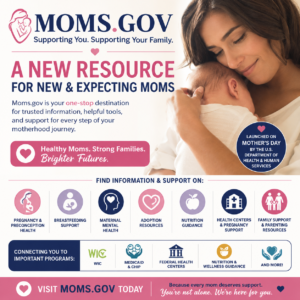
The Moms.Gov website contains Resources, Information, and Help for New and Expecting Mothers. It’s very complete for moms.
For all nutrition recommendations for pregnant women, new mothers, and infants, check out the Dietary Guidelines for Americans.
Pregnant women should consume diverse nutrient-dense foods, including iron-rich meats, folate-rich greens and legumes, eggs, dairy, and low-mercury omega-3-rich seafoods like salmon, sardines, trout and should talk to their health care provider professional about taking a daily prenatal vitamin.
Nursing mothers should eat a wide variety of nutrient-dense foods, including vitamin B12, meats, poultry, omega-3-rich seafood, legumes, and vitamin A-rich vegetables and should talk to their health care professional about whether dietary supplements may be needed while breastfeeding.
Breastfeeding Information on the Moms.gov website
Research shows that breastfeeding provides many health benefits for you and your baby. However, it can also be difficult to manage breastfeeding in today’s hurried world. Learning as much as you can before you give birth can help.
Making the decision to breastfeed
When you breastfeed, you give your baby a healthy start that lasts a lifetime. Breastmilk is the perfect food for your baby. Breastfeeding saves lives, money, and time.
Learning to Breastfeed
Breastfeeding may be natural, but it’s also a skill that takes practice. Learn what makes a good latch, see different breastfeeding holds, and find out how to tell if your baby is getting enough breastmilk.
Physical and mental health while breastfeeding
Getting rest when possible, eating healthy foods, and taking some time for themselves helps new moms regain energy and strength.
Breastfeeding challenges
Breastfeeding can be challenging enough, but some women experience special challenges, such as breastfeeding multiples or breastfeeding during a breast infection.
Pumping and Storing Breastmilk
Get tips on pumping your milk and storing it safely.
Breastfeeding fact sheet
Here you will find facts, tips and learn about support resources available to you.
https://www.moms.gov/
PUMP for Nursing Mothers Act
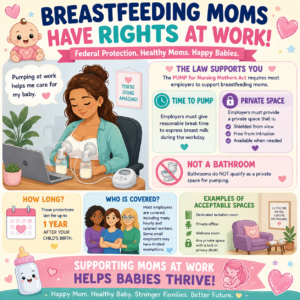
Recently my granddaughter got married. One of her bridesmaids was using two individual breast pumps in the dressing room while waiting for the wedding to begin. She was a teacher and she used this style of breast pumps at school. She told me that there was a law passed for businesses to allow breast feeding mothers time off to use a breast pump during day and also had to provide a private place to use the breast pump. The information about the law is below.
What the Law Requires
The federal PUMP for Nursing Mothers Act (passed in 2022) expanded protections for breastfeeding employees. Employers are required by federal law to provide reasonable break time and a private space for their breastfeeding employees to express breast milk during the workday.
Employers generally must provide:
Reasonable break time to pump breast milk
A private space that is:
- Shielded from view
- Free from intrusion
- Available when needed
Note: A bathroom does not qualify as the pumping space.
How Long Do These Protections Last?
Federal law protects employees for up to one year after the child’s birth.
Who Is Covered?
Most employees are covered, including many salaried and hourly workers.
Some small employers (fewer than 50 employees) may claim an exemption if compliance would cause significant hardship, but many still provide accommodations.
Examples of Acceptable Pumping Spaces
- Dedicated lactation room
- Private office
- Wellness room
- Temporary private space with a lock or privacy shield
Why This Matters
Regular pumping helps:
- Maintain milk supply
- Prevent discomfort and infection
- Allow mothers to continue breastfeeding after returning to work
Bottom Line
Most U.S. employers must give breastfeeding mothers reasonable pumping breaks and a private non-bathroom space to express milk during the workday for up to one year after childbirth.
Note: I used ChatGPT for the graphics and pulling this blog together for this topic, but I also check the information carefully to ensure the health information is correct. In order to get the right answers & the development of these health blogs when using ChatGPT effectively, you must know how to pose the correct questions.
This content was generated with assistance from ChatGPT, an AI language model by OpenAI
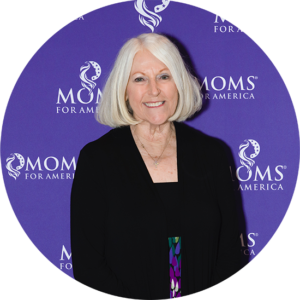
is a registered dietitian with a Master’s Degree in clinical nutrition. She is the Chief Blog Organizer for www.DayByDayLiving.net
Barbara worked as a research nutritionist with the military’s tri-service medical school collaborating with Department of Defense, National Health Institutes (NIH), and also United States Department of Agriculture (USDA). Barbara worked as a performance nutrition consultant to Navy SEALS’ BUD/S Training Program and West Coast Navy SEAL Teams. Barbara is the former nutrition performance consultant to the University of Louisville Athletic Department.
She is the author of Fast Facts on Fast Food for Fast People and High Energy Eating Sports Nutrition Workbook for Active People used by the University of Louisville, University of Tennessee Lady Vols and the Tennessee football program, the LSU basketball program, the Buffalo Bills, the Cleveland Browns and by the United States Navy SEALs.
Barbara is the former publisher of Kentuckiana HealthFitness Magazine, Kentuckiana Healthy Woman magazine and radio show host of Health News You Can Use and a TV segment on the Local ABC station called Barbara’s Right Bite.
Barbara has over 50 years of experience in promoting healthy lifestyles to consumers. Barbara is a former runner who walks, a spinner, hiker, a pickleball player, a mother and grandmother to 13 grandchildren.
Barbara also serves on the Leadership Team for Moms for America as the Grammy Grizzlies National Group Leader. (www.momsforamerica.us).