

With today’s grocery prices, throwing away spoiled food is like throwing away money. Buying nutritious food is only the first step. How you store that food matters, too. Proper storage of fresh produce, dairy products, meat and poultry can help foods last longer, reduce food waste, protect your family from foodborne illness and help extend your family’s food budget.
Many of us bring groceries home and simply find a spot for everything in the refrigerator. But different foods have different storage needs. Knowing which fruits belong on the counter, which vegetables need refrigeration, where to put milk and eggs, and how quickly to use raw meat can make a real difference in how much food your family wastes.
Fresh Produce: Know How Long It Lasts
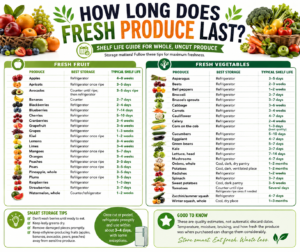
Fresh fruits and vegetables are nutrient-dense foods, but they can also represent a significant portion of wasted grocery dollars. Storage times vary with ripeness, freshness at purchase and refrigerator conditions, so use these as practical estimates rather than guarantees.
Fruits
- Apples: About 3–6 weeks refrigerated; only several days at room temperature.
- Bananas: About 2–7 days at room temperature. Refrigerate ripe bananas if you want to slow further ripening; the peel will darken, but the fruit inside can remain good.
- Berries: About 3–7 days refrigerated. Keep them dry and wash just before eating.
- Grapes: About 1–2 weeks refrigerated. Keep dry until ready to use.
- Citrus fruits: Often 2–3 weeks refrigerated; shorter at room temperature.
- Peaches, nectarines and plums: Ripen on the counter, then refrigerate and use within several days.
- Pears: Ripen at room temperature, then refrigerate ripe fruit for several days.
- Melons: Store whole melons at room temperature until ripe. Once cut, cover and refrigerate and use within about 3–4 days.
- Avocados: Ripen on the counter. Once ripe, refrigeration can give you a few extra days.
Vegetables
- Leafy greens: Usually about 3–7 days refrigerated. Keep them dry because excess moisture speeds deterioration.
- Broccoli and cauliflower: About 3–7 days refrigerated.
- Carrots: Often 2–3 weeks refrigerated when stored properly.
- Celery: About 1–2 weeks refrigerated.
- Bell peppers: About 1–2 weeks refrigerated, depending on freshness.
- Green beans: About 3–7 days refrigerated.
- Cucumbers: About 1 week refrigerated.
- Zucchini and summer squash: About 4–7 days refrigerated.
- Mushrooms: About 4–7 days refrigerated. A paper bag can help manage moisture.
- Cabbage: Often 1–2 weeks or longer refrigerated, depending on variety and condition.
- Potatoes and sweet potatoes: Store in a cool, dark, dry, well-ventilated place rather than the refrigerator. Use within several weeks for best quality.
- Dry onions: Store in a cool, dry, ventilated location. Once cut, refrigerate in a covered container.
- Tomatoes: Keep at room temperature for best flavor until ripe. Refrigeration can extend the life of very ripe tomatoes, although texture may change.
Simple Produce Storage Tricks That Save Money
Don’t automatically wash all produce as soon as you get home. For many fruits and vegetables—especially berries—extra moisture encourages mold and deterioration. Wash them just before using unless you have a storage system specifically designed for prewashed produce.
Remove damaged or moldy produce promptly so it doesn’t contribute to deterioration of nearby food. Store leafy vegetables where they won’t be crushed, and use perforated bags or produce containers when appropriate.
Some fruits—including apples, bananas, pears, peaches and avocados—produce ethylene gas, which can speed ripening. Keeping ethylene-producing fruits away from sensitive vegetables can help produce last longer.
Most importantly, look through your produce drawers before shopping again. Plan meals around the fruits and vegetables that need to be eaten first.
Start With the Right Refrigerator Temperature
One of the most important food-safety habits is also one of the easiest:
Keep your refrigerator at 40°F (4°C) or below and your freezer at 0°F (-18°C) or below.
I recommend keeping an inexpensive refrigerator thermometer inside your refrigerator. Don’t assume the temperature setting on the dial tells you the actual temperature.
Perishable foods should generally be refrigerated within 2 hours. If the temperature is above 90°F, refrigerate them within 1 hour.
How to Store Dairy Products
Milk
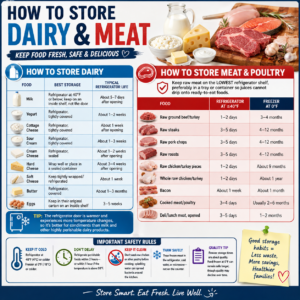
Keep milk at 40°F or colder, preferably on an inside refrigerator shelf rather than in the door.
Why? Every time the refrigerator door opens, foods stored there are exposed to warmer air. The inside shelves usually maintain a more consistent temperature.
Once opened, milk is generally best used within about 5–7 days, although the date on the container, refrigerator temperature and handling also matter.
Yogurt
Keep yogurt refrigerated and tightly covered. It will typically maintain its best quality for about 1–2 weeks.
Cottage Cheese
Store cottage cheese tightly covered in the refrigerator and use it within about one week after opening.
Sour Cream
Keep sour cream tightly covered and refrigerated. It can generally be stored for about 1–3 weeks, depending on the product and its date.
Cream Cheese
Refrigerate cream cheese in a tightly sealed package or container. After opening, aim to use it within about 1–2 weeks.
Hard Cheese
Hard cheeses such as cheddar can last longer than soft cheeses. Wrap them well or store them in a sealed container. After opening, many hard cheeses maintain good quality for approximately 3–4 weeks.
Soft Cheese
Soft cheeses have a shorter refrigerator life. Keep them tightly wrapped or covered and generally use within about one week after opening.
Butter
Keep butter covered in the refrigerator to prevent it from absorbing odors and flavors from other foods. Refrigerated butter can maintain good quality for approximately 1–3 months.
Eggs
Keep eggs in their original carton on an inside refrigerator shelf, rather than in the refrigerator-door egg compartment.
Fresh shell eggs can generally be refrigerated for 3–5 weeks.
How to Store Raw Meat and Poultry
Raw meat and poultry require special attention because their juices can contain harmful microorganisms.
Keep raw meat and poultry on the lowest refrigerator shelf.
I also recommend placing packages in a tray, pan or container. If a package leaks, the juices are contained instead of dripping onto vegetables, fruit or other ready-to-eat foods.
As a general guide:
- Ground beef and ground turkey: 1–2 days refrigerated
- Steaks: 3–5 days
- Pork chops: 3–5 days
- Raw roasts: 3–5 days
- Raw chicken or turkey pieces: 1–2 days
- Whole raw chicken or turkey: 1–2 days
- Bacon: about 1 week
- Opened deli/lunch meat: 3–5 days
- Cooked meat and poultry: 3–4 days
If you aren’t going to use raw meat or poultry within the recommended refrigerator period, freeze it.
How Long Can Meat Stay in the Freezer?
Freezing dramatically extends storage time. For best quality, approximate freezer times include:
Ground meat: 3–4 months
Steaks, chops and roasts: 4–12 months
Chicken or turkey pieces: about 9 months
Whole chicken or turkey: about 1 year
Cooked meat and poultry: generally 2–6 months
Remember that freezer recommendations are largely about quality. Food kept continuously frozen at 0°F can remain safe beyond these quality guidelines, although flavor and texture may deteriorate.
Label freezer packages with the food and date frozen. That simple habit prevents mysterious packages from accumulating in the back of the freezer!
Thaw Meat Safely
Don’t thaw frozen meat or poultry by leaving it on the kitchen counter.
Use one of these safer methods:
- Refrigerator: Usually the easiest and safest method. Plan ahead because larger items may require a day or more.
- Cold water: Keep the food in a leak-proof package and change the water regularly.
- Microwave: Cook the food promptly after microwave thawing.
Don’t Wash Raw Chicken
Many people grew up washing raw chicken before cooking it. It isn’t necessary and can actually make your kitchen less safe.
Running water over raw poultry can splash bacteria onto your sink, countertop, utensils and nearby foods.
Cooking poultry thoroughly—not washing it—is what destroys harmful bacteria.
Store Leftovers Promptly
Don’t leave dinner sitting on the counter for hours.
Refrigerate leftovers within 2 hours, preferably in shallow containers that allow food to cool more quickly. Most cooked meat and poultry leftovers should be eaten within 3–4 days.
If you know you aren’t going to eat them in that time, freeze them.
Organize Your Refrigerator for Food Safety
A well-organized refrigerator can help prevent cross-contamination.
A simple approach is:
Upper and middle shelves: Leftovers, cooked foods, yogurt, cheese and other ready-to-eat foods.
Inside shelves: Milk and eggs, where temperatures tend to be more consistent.
Bottom shelf: Raw meat, poultry and seafood in leak-proof containers or trays.
Produce drawers: Fruits and vegetables.
Door: Condiments and other foods that tolerate greater temperature fluctuations.
Use Your Senses—but Don’t Rely on Them for Safety
If food develops an unusual odor, appearance or texture, throw it away.
However, remember that disease-causing bacteria don’t always change the smell, taste or appearance of food. A food can look perfectly normal and still be unsafe if it has been stored improperly or kept too long.
When in doubt, throw it out.
Food Safety Can Also Save Money
Proper food storage isn’t just about preventing foodborne illness. It can help your grocery budget.
Food that spoils before you eat it is money thrown away. Knowing where foods belong and how long they last can help you plan meals around foods that need to be eaten first.
Try keeping a small “Eat First” container or section in your refrigerator for foods approaching the end of their recommended storage time.
Store Smart. Eat Fresh. Live Well.
Healthy eating starts with choosing nutritious foods, but it doesn’t end at the grocery store. Keeping those foods fresh and safe is part of good nutrition, too.
A cold refrigerator, an organized bottom shelf for raw meat, properly covered dairy products and good leftover habits can go a long way toward protecting your food—and your family.
Good storage habits = Less waste + More savings + Healthier families!
Note: I used ChatGPT for the graphics and pulling this blog together for this topic, but I also check the information carefully to ensure the health information is correct. In order to get the right answers & the development of these health blogs when using ChatGPT effectively, you must know how to pose the correct questions.
This content was generated with assistance from ChatGPT, an AI language model by OpenAI

Barbara Day, M.S., R.D. is a registered dietitian with a Master’s Degree in clinical nutrition. She is the Chief Blog Organizer for www.DayByDayLiving.net
Barbara worked as a research nutritionist with the military’s tri-service medical school collaborating with Department of Defense, National Health Institutes (NIH), and also United States Department of Agriculture (USDA). Barbara worked as a performance nutrition consultant to Navy SEALS’ BUD/S Training Program and West Coast Navy SEAL Teams. Barbara is the former nutrition performance consultant to the University of Louisville Athletic Department.
She is the author of Fast Facts on Fast Food for Fast People and High Energy Eating Sports Nutrition Workbook for Active People used by the University of Louisville, University of Tennessee Lady Vols and the Tennessee football program, the LSU basketball program, the Buffalo Bills, the Cleveland Browns and by the United States Navy SEALs.
Barbara is the former publisher of Kentuckiana HealthFitness Magazine, Kentuckiana Healthy Woman magazine and radio show host of Health News You Can Use and a TV segment on the Local ABC station called Barbara’s Right Bite.
Barbara has over 50 years of experience in promoting healthy lifestyles to consumers. Barbara is a former runner who walks, a spinner, hiker, a pickleball player, a mother and grandmother to 13 grandchildren.
Barbara also serves on the Leadership Team for Moms for America as the Grammy Grizzlies National Group Leader. (www.momsforamerica.us).