
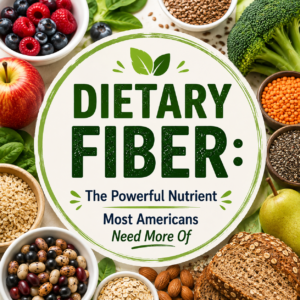
When people think about dietary fiber, they often think about one thing: preventing constipation. But fiber does much more than keep you regular.
Dietary fiber can influence your gut microbiome, cholesterol, blood glucose, appetite, heart health and colon health. And unlike many nutrition trends, you don’t need an expensive supplement or special food to get it.
Some of our best sources of fiber are everyday REAL FOODS: vegetables, fruits, beans, lentils, whole grains, nuts and seeds.
What Is Dietary Fiber?
Dietary fiber consists largely of carbohydrates in plant foods that aren’t completely digested and absorbed in the small intestine.
Instead of being broken down like most carbohydrates, fiber travels into the large intestine, where different types of fiber perform different jobs.
Some fibers absorb water. Some form gels. Some add bulk to stool. Others are fermented by bacteria living in your colon.
That is why simply talking about “fiber” doesn’t tell the entire story.
There Are Different Types of Fiber
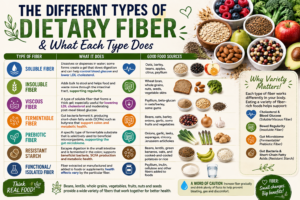
You may have heard fiber divided into soluble and insoluble fiber, but there are other characteristics that help determine what fiber does in the body.
Soluble Fiber
Soluble fiber dissolves or disperses in water. Some soluble fibers form a gel that slows digestion.
Depending on the specific fiber, soluble fiber can help with blood glucose control, cholesterol reduction and bowel health.
Good sources include oats, barley, beans, apples, citrus fruits and psyllium.
Insoluble Fiber
Insoluble fiber doesn’t dissolve in water in the same way.
It adds bulk to stool and helps material move through the digestive tract, making it particularly important for bowel regularity.
Sources include wheat bran, whole grains, nuts, seeds and many vegetables.
Viscous Fiber
Viscous fiber is especially interesting because it forms a thick gel in the digestive tract.
Certain viscous fibers can help lower LDL cholesterol and slow the absorption of glucose following a meal.
Psyllium and the beta-glucan found in oats and barley are important examples.
Fermentable Fiber
Some fibers are fermented by the trillions of microorganisms living in your intestinal tract.
During fermentation, gut bacteria produce short-chain fatty acids, including acetate, propionate and butyrate.
Butyrate is especially important because it provides fuel for cells lining the colon and contributes to a healthy intestinal environment.
Prebiotic Fiber
Certain fermentable fibers are considered prebiotics because beneficial microorganisms selectively use them.
Prebiotic fibers can help support a healthy and diverse gut microbiome.
Foods containing prebiotic compounds include onions, garlic, leeks, asparagus and chicory.
Resistant Starch
Resistant starch is technically starch, but it resists digestion in the small intestine and behaves somewhat like fermentable fiber when it reaches the colon.
It can provide fuel for beneficial gut bacteria and contribute to short-chain fatty acid production.
Sources include beans, lentils, green bananas, oats and some cooked-and-cooled starchy foods such as potatoes and rice.
Your Gut Microbiome Loves Fiber and There are Many Health Benefits of Dietary Fiber
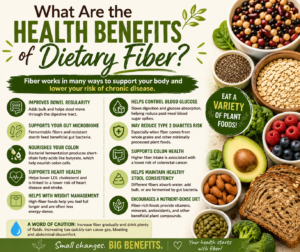
One of the most exciting areas of nutrition research involves the relationship between fiber and the gut microbiome.
Your intestinal tract contains an enormous community of microorganisms. What you eat helps determine which organisms thrive.
Fiber-rich plant foods provide substrates that beneficial bacteria can use.
In other words:
You aren’t just feeding yourself—you are feeding your gut microbiome.
This is another reason variety is so important. Different bacteria prefer different substrates, so eating many different plant foods may support a more diverse microbial community.
Fiber and Heart Health
Fiber also plays an important role in cardiovascular health.
Certain soluble, viscous fibers can help reduce LDL cholesterol. Fiber-rich diets are also generally associated with better cardiovascular outcomes.
But remember that fiber doesn’t exist in isolation in whole foods.
When you eat beans, vegetables, fruits, nuts, seeds and whole grains, you’re also getting vitamins, minerals, healthy fats and numerous beneficial plant compounds.
That’s one reason I prefer a food-first approach whenever possible.
Fiber and Blood Glucose
Fiber can also change how quickly carbohydrates are digested and absorbed.
Viscous fibers can slow gastric emptying and glucose absorption, helping reduce the sharp rise in blood glucose that can occur after eating rapidly digested carbohydrates.
Fiber-rich whole foods also generally require more chewing and tend to be digested differently from highly refined carbohydrates.
Replacing refined grains and ultra-processed foods with fiber-rich whole foods can therefore improve the overall nutritional quality of the diet.
Fiber and Weight Management
Fiber isn’t a magic weight-loss ingredient, but high-fiber foods can be very helpful for weight management.
Fiber-rich foods often take longer to eat and can help you feel satisfied longer.
Consider the difference between drinking a glass of apple juice and eating a whole apple.
The whole apple contains its natural fiber and requires chewing. The juice removes much of that fiber and can be consumed very quickly.
Whenever practical:
Eat the fruit—not just the juice.
Fiber and Colon Health
Fiber helps maintain normal bowel function, but its relationship with colon health goes beyond regularity.
Fermentation of certain fibers produces short-chain fatty acids that help maintain the environment of the colon.
Higher consumption of fiber-rich foods is also associated with a lower risk of colorectal cancer.
That’s an important reason to make fiber-rich foods part of your everyday eating pattern rather than thinking of fiber only when you’re constipated.
Could Low Dietary Fiber Intake Be Contributing to Cancer in Younger Americans?

The rise in colorectal cancer among younger adults is concerning, and researchers are still trying to understand why it is happening. Too little dietary fiber could be one contributing factor, but current evidence does not show that low fiber alone is the cause. Higher dietary fiber intake has consistently been associated with a lower risk of colorectal cancer. Fiber may help protect the colon by increasing stool bulk, shortening intestinal transit time and feeding beneficial gut bacteria that produce short-chain fatty acids such as butyrate, which helps nourish cells lining the colon. Researchers are also investigating the possible roles of ultra-processed dietary patterns, obesity, physical inactivity, alcohol, red and processed meats, sugar-sweetened beverages, inflammation, changes in the gut microbiome and environmental exposures. The important message is that a fiber-rich REAL FOOD diet may be one modifiable part of a broader cancer-prevention lifestyle, even though researchers do not yet have a single explanation for the increase in early-onset colorectal cancer.
How Much Fiber Do You Need?
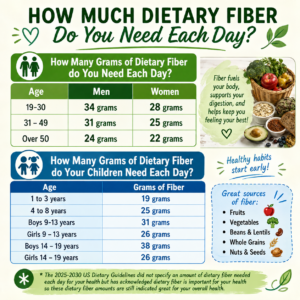
Fiber needs depend on age, sex and calorie intake. A commonly used guideline is approximately 14 grams of fiber per 1,000 calories consumed.
For many adults, recommended intakes fall in the neighborhood of 25–38 grams per day, although needs vary.
Unfortunately, many Americans consume considerably less.
Rather than becoming obsessed with hitting a perfect number every day, concentrate on including fiber-rich foods throughout the day.
The Best Fiber Comes With Food
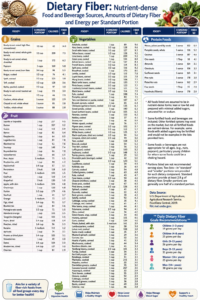
A high-fiber diet doesn’t have to be complicated.
Some excellent choices include:
- Beans, peas, chickpeas and lentils
- Oatmeal and barley
- Whole-grain breads and cereals
- Berries
- Apples and pears
- Broccoli and Brussels sprouts
- Carrots and sweet potatoes
- Leafy green vegetables
- Avocados
- Almonds and pistachios
- Chia and flax seeds
Instead of looking for one “superfood,” eat a variety of plant foods.
Each brings something different to the table.
What About Fiber Supplements?
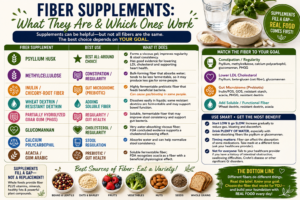
Fiber supplements can be useful in certain circumstances, and some specific fibers—such as psyllium—have well-established physiological benefits.
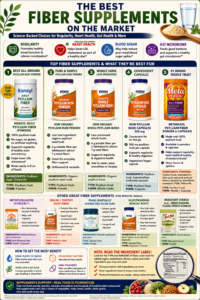
If you have difficulty meeting your fiber needs through food alone, a fiber supplement can help fill the gap. Psyllium husk is one of the most useful and well-studied choices because it forms a viscous gel that can promote bowel regularity and help lower LDL cholesterol. Plain psyllium products with few added ingredients are available as powders or capsules; examples include Konsyl, NOW Psyllium Husk and Metamucil. Other supplements include methylcellulose for regularity and fermentable fibers such as inulin or chicory-root fiber for prebiotic effects, although these may cause more gas and bloating in some people. Whatever product you choose, check the label for the actual type and amount of fiber, start gradually and drink plenty of fluids—especially when using psyllium. Fiber supplements can also affect the absorption of certain medications, so timing may need to be discussed with your healthcare provider.
But an isolated fiber isn’t nutritionally identical to eating a bowl of beans, berries or oatmeal.
Whole foods provide fiber along with protein, vitamins, minerals, healthy fats and phytochemicals.
That’s why supplements should supplement a good diet rather than become a replacement for one.
Increase Fiber Gradually
If you’re currently eating a low-fiber diet, don’t suddenly double or triple your fiber intake.
Your gastrointestinal tract may respond with gas, bloating, cramping or changes in bowel habits.
Instead, gradually add fiber-rich foods and allow your digestive system and gut microbiome time to adjust.
And remember to drink adequate fluids.
People with certain gastrointestinal disorders or other medical conditions may need individualized advice from their physician or registered dietitian before substantially changing their fiber intake.
Simple Ways to Eat More Fiber
Start with breakfast. Add berries, chia seeds or ground flaxseed to oatmeal.
Add beans or chickpeas to your lunch salad.
Snack on an apple, pear or handful of nuts.
Replace refined grains with whole grains.
Add lentils or beans to soups.
Serve an extra vegetable with dinner.
Try including several different plant foods on your plate rather than relying on the same vegetables every day.
Small changes made consistently can produce a substantial increase in fiber intake.
What About “Fibermaxing”?
Social media has recently given eating more fiber a trendy new name: fibermaxing.
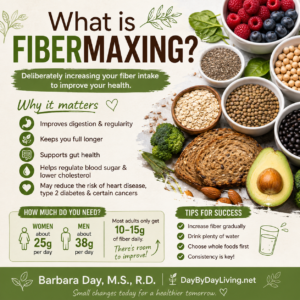
Unlike many internet nutrition trends, this one is based on a genuinely important nutrition principle.
But I wouldn’t recommend trying to “max out” your fiber intake.
The goal should be to eat enough fiber—and eat a variety of it.
More isn’t automatically better, especially if you’re increasing fiber too quickly.
The Bottom Line
Dietary fiber is one of the unsung heroes of good nutrition.
It helps support your digestive system, gut microbiome, heart, blood glucose, cholesterol, appetite and colon.
But perhaps the most important message is this:
Don’t just look for foods that say “high fiber” on the package.
Go back to the foods that naturally contained fiber long before food manufacturers started putting health claims on labels.
Eat vegetables.
Eat fruit.
Eat beans and lentils.
Eat whole grains.
Eat nuts and seeds.
Eat REAL FOOD—and feed your gut microbiome well.
Note: I used ChatGPT for the graphics and pulling this blog together for this topic, but I also check the information carefully to ensure the health information is correct. In order to get the right answers & the development of these health blogs when using ChatGPT effectively, you must know how to pose the correct questions.
This content was generated with assistance from ChatGPT, an AI language model by OpenAI

Barbara Day, M.S., R.D. is a registered dietitian with a Master’s Degree in clinical nutrition. She is the Chief Blog Organizer for www.DayByDayLiving.net
Barbara worked as a research nutritionist with the military’s tri-service medical school collaborating with Department of Defense, National Health Institutes (NIH), and also United States Department of Agriculture (USDA). Barbara worked as a performance nutrition consultant to Navy SEALS’ BUD/S Training Program and West Coast Navy SEAL Teams. Barbara is the former nutrition performance consultant to the University of Louisville Athletic Department.
She is the author of Fast Facts on Fast Food for Fast People and High Energy Eating Sports Nutrition Workbook for Active People used by the University of Louisville, University of Tennessee Lady Vols and the Tennessee football program, the LSU basketball program, the Buffalo Bills, the Cleveland Browns and by the United States Navy SEALs.
Barbara is the former publisher of Kentuckiana HealthFitness Magazine, Kentuckiana Healthy Woman magazine and radio show host of Health News You Can Use and a TV segment on the Local ABC station called Barbara’s Right Bite.
Barbara has over 50 years of experience in promoting healthy lifestyles to consumers. Barbara is a former runner who walks, a spinner, hiker, a pickleball player, a mother and grandmother to 13 grandchildren.
Barbara also serves on the Leadership Team for Moms for America as the Grammy Grizzlies National Group Leader. (www.momsforamerica.us).