
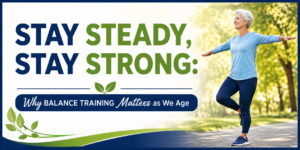
As a 76 year old, one of my daily struggles is balance. I notice it more when I am going up and down stairs especially when I am going to my grandkids sporting events and there is no arm rail going up and down in the bleachers. I also notice it when I am playing pickleball, especially when I go after a ball after I have missed a shot off the court & reach down to get the ball.
It’s not just me, my husband feels it as well. When he’s taking sport pictures, working on his hobby of building a train layout or replacing a burned-out light bulb in the ceiling using a ladder.
As we get older, maintaining good balance becomes increasingly important. Balance helps us walk confidently, climb stairs, get out of a chair, enjoy recreational activities—and most importantly, reduce our risk of falling.
The good news? Balance can be trained at almost any age.
Why Does Balance Change With Age?
Good balance depends on several systems working together: our muscles and joints, vision, inner ear, nervous system and the brain’s ability to recognize where our body is in space.
As we age, we may lose muscle strength, flexibility and reaction speed. Vision and inner-ear changes can also affect stability. Certain medications and medical conditions can contribute as well.
That’s why staying active is so important.
7 Simple Exercises to Build Better Balance
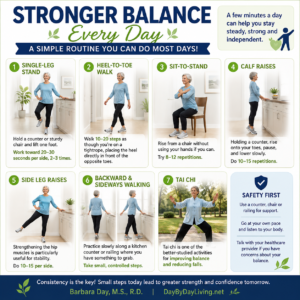
Try adding these exercises to your regular routine:
- Single-Leg Stand
Stand next to a sturdy counter and lift one foot. Hold for 10–30 seconds, then switch sides. - Heel-to-Toe Walk
Walk slowly in a straight line, placing the heel of one foot directly in front of the toes of the other. - Sit-to-Stand
Rise from a sturdy chair and slowly sit back down. Work toward 8–12 repetitions. - Calf Raises
Hold a counter, rise onto your toes, pause and slowly lower. - Side Leg Raises
Holding a sturdy surface, lift one leg out to the side. This helps strengthen the hip muscles that are important for stability. - Side-to-Side Weight Shifts
Stand with your feet comfortably apart and slowly shift your weight from one leg to the other. - Try a Wobble Board
For people who are ready for a greater challenge, a wobble or balance board can work the ankles, legs and core while challenging coordination and body awareness.
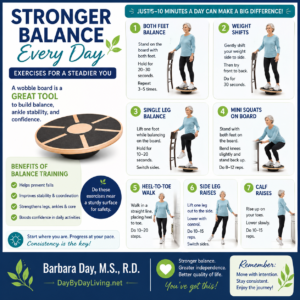
When I was going to rehab after my foot surgery, I had to relearn balance and I used a wobble board. In fact, I actually bought one on Amazon but…I had not been using it until recently after I began writing this blog about balance.
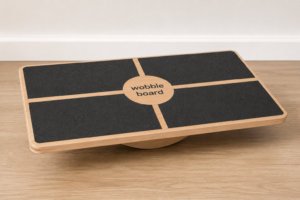
Always use a wobble board beside a sturdy counter or railing so you have something to grab. Beginners should start with both feet on the board and small, controlled movements.
Don’t Forget Strength Training
Balance and muscle strength go hand in hand.
Strong hips, thighs, calves and core muscles help keep us upright—and may help us recover more quickly when we trip or lose our footing.
Aim to include muscle-strengthening activities at least two days each week, along with regular walking or other aerobic activity.
Just a Few Minutes Can Help
You don’t need an hour-long workout. Try incorporating 5–10 minutes of balance practice into your day. You can even practice standing on one foot while brushing your teeth—just keep the bathroom counter within reach!
And remember: balance exercises should challenge you without putting you in danger. If you have significant balance problems or have experienced falls, talk with your healthcare provider or physical therapist before trying more difficult exercises.
Growing older doesn’t mean we have to stop moving. In fact, staying strong, steady and active becomes even more important.
Strong muscles + good balance = greater confidence and independence.
Keep moving. Keep challenging yourself. And keep doing what you can today to protect your independence tomorrow.
This article is for educational purposes and is not a substitute for individualized medical care. People with inflammatory arthritis or gout should not stop or change prescribed medications without consulting their healthcare professional.
Note: I used ChatGPT for the graphics and pulling this blog together for this topic, but I also check the information carefully to ensure the health information is correct. In order to get the right answers & the development of these health blogs when using ChatGPT effectively, you must know how to pose the correct questions.
This content was generated with assistance from ChatGPT, an AI language model by OpenAI
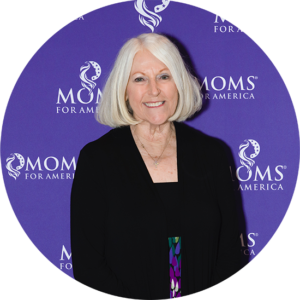
Barbara Day, M.S., R.D. is a registered dietitian with a Master’s Degree in clinical nutrition. She is the Chief Blog Organizer for www.DayByDayLiving.net
Barbara worked as a research nutritionist with the military’s tri-service medical school collaborating with Department of Defense, National Health Institutes (NIH), and also United States Department of Agriculture (USDA). Barbara worked as a performance nutrition consultant to Navy SEALS’ BUD/S Training Program and West Coast Navy SEAL Teams. Barbara is the former nutrition performance consultant to the University of Louisville Athletic Department.
She is the author of Fast Facts on Fast Food for Fast People and High Energy Eating Sports Nutrition Workbook for Active People used by the University of Louisville, University of Tennessee Lady Vols and the Tennessee football program, the LSU basketball program, the Buffalo Bills, the Cleveland Browns and by the United States Navy SEALs.
Barbara is the former publisher of Kentuckiana HealthFitness Magazine, Kentuckiana Healthy Woman magazine and radio show host of Health News You Can Use and a TV segment on the Local ABC station called Barbara’s Right Bite.
Barbara has over 50 years of experience in promoting healthy lifestyles to consumers. Barbara is a former runner who walks, a spinner, hiker, a pickleball player, a mother and grandmother to 13 grandchildren.
Barbara also serves on the Leadership Team for Moms for America as the Grammy Grizzlies National Group Leader. (www.momsforamerica.us).