
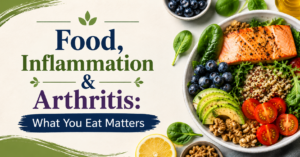
I had already been a runner for many years when symptoms of psoriatic arthritis began to appear. I remember developing terrible pain in one of my toes that felt almost as if I had broken it. I also experienced painful swelling in my fingers and problems with my wrists. At times, the pain and inflammation could be intense.
As the years passed, I began paying closer attention to what was happening in my life when my symptoms flared. Stress, inadequate sleep, and not taking care of myself seemed to make a difference. Nutrition also became an important part of the picture. When I focused on eating nutritious, minimally processed foods and taking better care of my overall health, I generally felt better.
There is currently no cure for psoriasis or psoriatic arthritis, and nutrition is not a substitute for appropriate medical treatment. But I have learned firsthand that what we eat can be an important part of an overall arthritis-management strategy.
Today, I think of food as one piece of a much larger puzzle. A nutritious eating pattern, regular physical activity, adequate sleep, stress management, and maintaining a healthy weight can all support overall health and may help reduce some of the factors that contribute to inflammation.
After living with psoriatic arthritis for decades—and spending my professional career as a Registered Dietitian—I have become increasingly interested in the connection between food, inflammation, gut health, and arthritis. That is why I believe nutrition deserves a seat at the table when we talk about managing arthritis.
Arthritis is not just One Disease
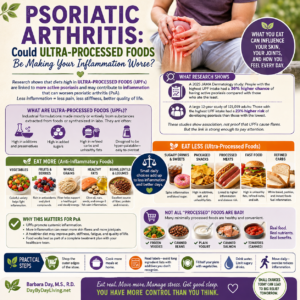
Arthritis is not just one disease. The term describes more than 100 conditions involving joints, surrounding tissues, or connective tissue. Osteoarthritis, rheumatoid arthritis, gout, and psoriatic arthritis are among the better-known forms—and nutrition can play a different role in each.
Food isn’t a cure for arthritis, and nutrition should not replace appropriate medical treatment. But what we eat can influence body weight, inflammation, blood sugar, uric acid, muscle strength, bone health, and cardiovascular risk. For many people with arthritis, those factors can make a meaningful difference in symptoms and long-term health.
- Osteoarthritis: Reduce the Load and Support the Joint
Osteoarthritis (OA) is the most common form of arthritis. It occurs as cartilage and other joint tissues change over time and commonly affects the knees, hips, hands, and spine.
One of nutrition’s most important roles in osteoarthritis is weight management. Extra body weight increases the mechanical load on weight-bearing joints. Fat tissue is also metabolically active and can produce inflammatory substances.
A Mediterranean-style eating pattern is an excellent foundation:
- Vegetables and fruits
- Beans and lentils
- Whole grains
- Nuts and seeds
- Fish and seafood
- Extra-virgin olive oil
- Adequate protein
- Fewer ultra-processed foods and sugary drinks
Protein is especially important for older adults because maintaining muscle helps support and stabilize joints. Pair good nutrition with appropriate strength training, walking, swimming, cycling, or other joint-friendly movement.
Nutrition goal for osteoarthritis: Maintain a healthy weight while preserving muscle and emphasizing nutrient-dense, minimally processed foods.
- Rheumatoid Arthritis: Focus on an Anti-Inflammatory Pattern
Rheumatoid arthritis (RA) is an autoimmune disease. The immune system mistakenly attacks tissues in and around the joints, creating chronic inflammation.
Nutrition cannot turn off the autoimmune process, but an overall anti-inflammatory dietary pattern may complement medical treatment.
Foods to emphasize include:
Omega-3-rich fish: Salmon, sardines, trout, herring, and other fatty fish provide EPA and DHA. Omega-3 fats have been studied for their potential to reduce inflammatory activity and may help some people with RA with joint tenderness or stiffness.
Colorful vegetables and fruits: Berries, leafy greens, broccoli, peppers, tomatoes, citrus fruits, and other plant foods supply vitamins, minerals, fiber, polyphenols, and other antioxidants.
Healthy fats: Extra-virgin olive oil, nuts, seeds, and avocados can replace foods high in saturated fat.
Fiber-rich foods: Beans, lentils, vegetables, fruits, and whole grains help support a diverse gut microbiome. The relationship between the gut microbiome and immune regulation is an important and growing area of arthritis research.
At the same time, limit diets dominated by ultra-processed foods, refined carbohydrates, added sugars, and excessive saturated fat.
Nutrition goal for rheumatoid arthritis: Build meals around a Mediterranean-style, anti-inflammatory pattern while continuing prescribed treatment.
- Gout: Nutrition Has a Particularly Important Role
Gout is an inflammatory arthritis caused by the formation of urate crystals in joints, usually when uric acid levels remain too high.
Diet can directly affect uric acid levels, although genetics, kidney function, medications, body weight, and other factors also matter.
People prone to gout should be particularly cautious about:
- Organ meats such as liver
- Large amounts of red meat
- Certain high-purine seafoods
- Beer and distilled spirits
- Excessive alcohol
- Sugar-sweetened beverages
- Foods and drinks high in fructose
Water is important because adequate hydration helps the kidneys eliminate uric acid.
Low-fat dairy products may be beneficial, and gradual weight loss can help people who are overweight. Avoid crash dieting or prolonged fasting because rapid metabolic changes can sometimes trigger gout attacks.
Interestingly, vegetables containing purines generally don’t appear to carry the same gout risk as high-purine animal foods, so people usually do not need to eliminate nutritious vegetables simply because they contain purines.
Nutrition goal for gout: Lower uric-acid-promoting dietary exposures, stay hydrated, maintain a healthy weight, and follow medical advice when urate-lowering medication is needed.
- Psoriatic Arthritis: Think Inflammation Plus Metabolic Health
Psoriatic arthritis (PsA) is another immune-mediated inflammatory condition. It can affect the joints, tendons, spine, and skin.
People with psoriatic disease also have higher rates of obesity and certain cardiometabolic risk factors. That makes nutrition important beyond the joints themselves.
A Mediterranean-style eating pattern emphasizing vegetables, fruits, legumes, whole grains, fish, nuts, seeds, and olive oil is a sensible approach.
For someone carrying excess weight, gradual weight loss may improve overall health and can reduce stress on painful joints. Some evidence also suggests weight reduction can improve disease outcomes in people with psoriatic arthritis who have obesity.
Nutrition goal for psoriatic arthritis: Reduce excess weight when appropriate, improve cardiometabolic health, and emphasize an anti-inflammatory dietary pattern.
What About Gluten, Dairy and Nightshade Vegetables?
People with arthritis are often told to eliminate gluten, dairy products, tomatoes, peppers, eggplant, potatoes, or other foods.
There isn’t good evidence that everyone with arthritis needs to eliminate these foods.
Gluten should be avoided by people with celiac disease and may need to be restricted in certain other clinically identified circumstances. But unnecessarily eliminating whole food groups can make it harder to obtain adequate fiber, calcium, vitamin D, protein, and other nutrients.
If you believe a particular food consistently worsens symptoms, consider keeping a food-and-symptom diary and discussing it with a registered dietitian or healthcare professional rather than adopting an unnecessarily restrictive diet.
10 Foods to Put on Your Arthritis-Friendly Shopping List
- Salmon and other fatty fish
- Extra-virgin olive oil
- Blueberries, strawberries, and other berries
- Leafy green vegetables
- Broccoli and other cruciferous vegetables
- Beans and lentils
- Walnuts and other nuts
- Oats and other whole grains
- Plain yogurt or other fermented foods, if tolerated
- Herbs and spices such as turmeric, ginger, and garlic
No single “superfood” will treat arthritis. The overall dietary pattern matters much more than any one ingredient.
Don’t Forget Vitamin D, Calcium and Protein
People living with arthritis sometimes become less active because movement hurts. Some also take medications that can affect bone health. Maintaining adequate protein, calcium, vitamin D, and overall nutrition therefore become especially important with age.
Protein helps preserve muscle. Calcium and vitamin D support bones. Muscle-strengthening and weight-bearing activities, when medically appropriate, complement good nutrition.
The Gut-Joint Connection
One of the most interesting emerging areas of research is the relationship between the gut microbiome and inflammatory arthritis.
Trillions of microorganisms live in our digestive tract and interact with the immune system. Researchers are investigating whether alterations in the microbiome contribute to inflammatory diseases, including rheumatoid and psoriatic arthritis.
We don’t yet have enough evidence to prescribe a particular probiotic strain as a universal arthritis treatment. However, feeding beneficial gut bacteria with fiber-rich plant foods is a sound strategy for overall health.
Vegetables, fruits, beans, lentils, whole grains, nuts, and seeds provide the prebiotic fibers and plant compounds that help nourish the gut microbiome.
Food Is Part of the Treatment—Not the Entire Treatment
The most important message is that arthritis requires an individualized approach.
Someone with osteoarthritis may benefit greatly from weight management and muscle preservation. A person with rheumatoid or psoriatic arthritis needs medical treatment to control the underlying immune-mediated disease while using nutrition to support overall health. Someone with gout may need specific dietary changes—and often medication—to bring uric acid to an appropriate level.
There is no single “arthritis diet.”
But there is a common nutritional foundation: Eat more real, minimally processed food; include plenty of colorful plants; choose healthy fats; eat adequate protein; maintain a healthy weight; stay physically active within your abilities; and limit foods that promote poor metabolic health.
Nutrition may not cure arthritis, but it can be a powerful partner in helping people move better, maintain muscle and bone, manage inflammation and metabolic risk, and improve their overall quality of life.
This article is for educational purposes and is not a substitute for individualized medical care. People with inflammatory arthritis or gout should not stop or change prescribed medications without consulting their healthcare professional.
Note: I used ChatGPT for the graphics and pulling this blog together for this topic, but I also check the information carefully to ensure the health information is correct. In order to get the right answers & the development of these health blogs when using ChatGPT effectively, you must know how to pose the correct questions.
This content was generated with assistance from ChatGPT, an AI language model by OpenAI

Barbara Day, M.S., R.D. is a registered dietitian with a Master’s Degree in clinical nutrition. She is the Chief Blog Organizer for www.DayByDayLiving.net
Barbara worked as a research nutritionist with the military’s tri-service medical school collaborating with Department of Defense, National Health Institutes (NIH), and also United States Department of Agriculture (USDA). Barbara worked as a performance nutrition consultant to Navy SEALS’ BUD/S Training Program and West Coast Navy SEAL Teams. Barbara is the former nutrition performance consultant to the University of Louisville Athletic Department.
She is the author of Fast Facts on Fast Food for Fast People and High Energy Eating Sports Nutrition Workbook for Active People used by the University of Louisville, University of Tennessee Lady Vols and the Tennessee football program, the LSU basketball program, the Buffalo Bills, the Cleveland Browns and by the United States Navy SEALs.
Barbara is the former publisher of Kentuckiana HealthFitness Magazine, Kentuckiana Healthy Woman magazine and radio show host of Health News You Can Use and a TV segment on the Local ABC station called Barbara’s Right Bite.
Barbara has over 50 years of experience in promoting healthy lifestyles to consumers. Barbara is a former runner who walks, a spinner, hiker, a pickleball player, a mother and grandmother to 13 grandchildren.
Barbara also serves on the Leadership Team for Moms for America as the Grammy Grizzlies National Group Leader. (www.momsforamerica.us).