
Walk through almost any grocery store today and you’ll find the word “organic” everywhere—on fruits and vegetables, milk, eggs, meat, cereal, snacks and even cookies.
But what does organic really mean? And perhaps more importantly, is it worth paying more for organic food?
As a Registered Dietitian, my approach is simple: You do not have to buy everything organic to eat a healthy diet. Your first priority should be eating more REAL, minimally processed food.
What Does “Organic” Actually Mean?
When a food carries the USDA Organic label, it has been produced according to specific federal standards.
For produce, organic farming generally prohibits most synthetic pesticides and fertilizers, although certain approved pesticides may still be used.
USDA organic standards also prohibit genetically engineered organisms, commonly called GMOs.
For organic meat, poultry, dairy products and eggs, there are additional requirements concerning animal feed, medications, living conditions and access to the outdoors.
So remember:
ORGANIC describes how a food is produced. It does not automatically tell you how nutritious that food is.
An organic apple is nutritious—but an organic cookie is still a cookie.
Which Fruits and Vegetables Might I Consider Buying Organic?
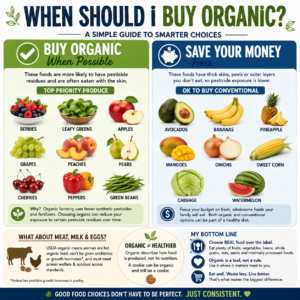
If your food budget allows, you might consider spending your organic dollars on produce that you eat frequently, particularly fruits and vegetables where you eat the skin.
Examples include:
- Berries
- Leafy greens
- Apples
- Grapes
- Peaches
- Pears
- Cherries
- Peppers
- Green beans
Choosing organic versions can help reduce exposure to certain pesticide residues.
However, this does not mean conventionally grown fruits and vegetables are unsafe.
One of the biggest nutritional mistakes we could make would be frightening families away from fruits and vegetables because they cannot afford organic produce.
Eating a conventionally grown apple is better than not eating an apple at all!
Where Can You Save Your Money?
I generally wouldn’t make organic a high priority for fruits and vegetables with thick peels, husks or outer layers that aren’t normally eaten.
Examples include:
- Avocados
- Bananas
- Pineapple
- Mangoes
- Onions
- Sweet corn
- Cabbage
- Watermelon
If conventional versions are less expensive, put the savings toward buying a greater variety of healthy REAL foods.
What About Organic Meat, Milk and Eggs?
Some families choose organic animal products because they care about how animals are raised and fed.
USDA-certified organic livestock must receive organic feed and meet specific requirements concerning medications, animal health, living conditions and outdoor access.
But don’t assume that every package displaying words such as “natural,” “grass-fed,” “cage-free,” “free-range,” “pasture-raised” or “organic” means the same thing. These labels have different definitions and requirements.
Read the package carefully.
Organic Does NOT Automatically Mean Healthy
This may be the most important point.
Food manufacturers know consumers associate the word organic with health.
But you can buy organic:
- Cookies
- Candy
- Potato chips
- Sugary cereals
- Ice cream
- Sweetened beverages
- Snack foods
These foods can still contain substantial amounts of added sugar, sodium, refined carbohydrates, saturated fat and calories.
Don’t allow the word ORGANIC on the front of the package to distract you from the Nutrition Facts label and ingredient list on the back.
Wash Your Produce—Organic or Conventional
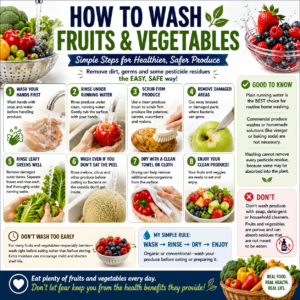
Whether you’re buying organic or conventionally grown produce, wash fresh fruits and vegetables thoroughly under clean running water before eating or preparing them.
Washing can help remove dirt, microorganisms and some surface residues.
You generally don’t need soap or household detergents on your produce.
Don’t Let “Perfect” Get in the Way of Healthy
Food prices matter, especially when families are trying to stretch their grocery dollars.
If your budget allows you to purchase organic foods and that’s important to you, wonderful.
But if organic strawberries cost considerably more than conventional strawberries, please don’t leave the strawberries at the grocery store because you can’t afford organic.
Buy the conventional strawberries. Wash them. Enjoy them.
Our goal should be to get Americans—especially our children—to eat MORE fruits and vegetables, not fewer.
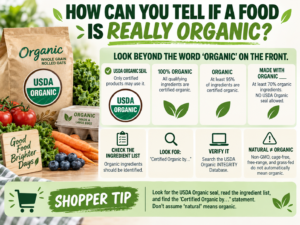
How Can You Tell If a Food Is REALLY Organic?
The easiest way is to look beyond the word “organic” on the front of the package.
For foods sold in the United States:
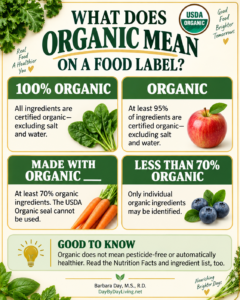
- Look for the USDA Organic seal. Only products meeting USDA organic requirements may legally use it.
- “100% Organic” means all qualifying ingredients are certified organic.
- “Organic” means at least 95% of the ingredients (excluding salt and water) are certified organic.
- “Made with Organic ___” means at least 70% of the ingredients are organic. These products cannot display the USDA Organic seal.
- Check the ingredient list. On products making organic claims, organic ingredients should be identified as organic or otherwise marked as such.
- Look for “Certified Organic by…” Packaged certified-organic products are required to identify the certifying organization on the information panel.
- If you’re suspicious about a product, you can go one step further and verify the farm or business in USDA’s Organic INTEGRITY Database. USDA says this database contains current information about certified organic operations.
One important distinction: “natural” does NOT mean organic. Neither do claims such as “non-GMO,” “cage-free,” “free-range,” or “grass-fed.” Your existing article makes this point well.
SHOPPER TIP” box:
Want to know if it’s really organic? Look for the USDA Organic seal, read the ingredient list, and find the “Certified Organic by…” statement. Don’t assume “natural” means organic.
Use the Dirty Dozen and Clean Fifteen as a Shopping Guide
Each year, the Environmental Working Group analyzes USDA pesticide-testing data and publishes two produce lists:
- The Dirty Dozen identifies produce with the highest pesticide-residue scores. These may be worth buying organic when available and affordable.
- The Clean Fifteen identifies produce with the lowest pesticide-residue scores. Buying these conventionally grown can help stretch your food budget.
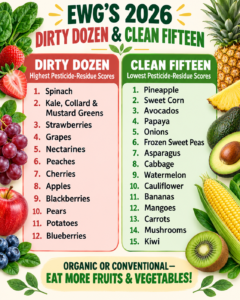
EWG’s 2026 Dirty Dozen
- Spinach
- Kale, collard and mustard greens
- Strawberries
- Grapes
- Nectarines
- Peaches
- Cherries
- Apples
- Blackberries
- Pears
- Potatoes
- Blueberries
EWG’s 2026 Clean Fifteen
- Pineapple
- Sweet corn
- Avocados
- Papaya
- Onions
- Frozen sweet peas
- Asparagus
- Cabbage
- Watermelon
- Cauliflower
- Bananas
- Mangoes
- Carrots
- Mushrooms
- Kiwi
These lists are shopping tools—not “safe” and “unsafe” food lists. They rank produce according to the number, amount and toxicity of pesticide residues detected.
Wash all fresh produce under running water, even when it is organic or has a peel. Washing can remove dirt, bacteria and some surface residue, although it cannot eliminate every pesticide.
Most importantly, don’t let the price of organic food stop your family from eating fruits and vegetables. Eating a conventionally grown apple is better than not eating an apple at all!
Choose REAL food first. Choose organic when it makes sense for your family and your budget.
My Bottom Line
Before worrying about whether everything in your grocery cart is organic, ask yourself:
Am I buying REAL food?
Fill your cart with vegetables, fruits, beans, whole grains, nuts, seeds, eggs, fish, lean meats and other minimally processed foods.
Then, if your budget allows, choose organic selectively where it matters most to you.
I would much rather see a family eating plenty of affordable conventionally grown fruits and vegetables than eating fewer plants because they believe everything has to be organic.
Choose REAL food first.
Choose organic when it makes sense for your family and your budget.
Eat well. Waste less. Live better.
Good food choices don’t have to be perfect—just consistent.
Medical Disclaimer: This information is for education only and is not medical advice. Always talk with your healthcare provider about what is best for your health.
Note: I used ChatGPT for the graphics and pulling this blog together for this topic, but I also check the information carefully to ensure the health information is correct. In order to get the right answers & the development of these health blogs when using ChatGPT effectively, you must know how to pose the correct questions.
This content was generated with assistance from ChatGPT, an AI language model by OpenAI

Barbara Day, M.S., R.D. is a registered dietitian with a Master’s Degree in clinical nutrition. She is the Chief Blog Organizer for www.DayByDayLiving.net
Barbara worked as a research nutritionist with the military’s tri-service medical school collaborating with Department of Defense, National Health Institutes (NIH), and also United States Department of Agriculture (USDA). Barbara worked as a performance nutrition consultant to Navy SEALS’ BUD/S Training Program and West Coast Navy SEAL Teams. Barbara is the former nutrition performance consultant to the University of Louisville Athletic Department.
She is the author of Fast Facts on Fast Food for Fast People and High Energy Eating Sports Nutrition Workbook for Active People used by the University of Louisville, University of Tennessee Lady Vols and the Tennessee football program, the LSU basketball program, the Buffalo Bills, the Cleveland Browns and by the United States Navy SEALs.
Barbara is the former publisher of Kentuckiana HealthFitness Magazine, Kentuckiana Healthy Woman magazine and radio show host of Health News You Can Use and a TV segment on the Local ABC station called Barbara’s Right Bite.
Barbara has over 50 years of experience in promoting healthy lifestyles to consumers. Barbara is a former runner who walks, a spinner, hiker, a pickleball player, a mother and grandmother to 13 grandchildren.
Barbara also serves on the Leadership Team for Moms for America as the Grammy Grizzlies National Group Leader. (www.momsforamerica.us).