

“Turbo cancer” is not an official medical diagnosis. It is a popular term used to describe a cancer that appears unexpectedly, grows rapidly or is discovered at an advanced stage. Doctors use terms such as early-onset cancer, high-grade cancer or aggressive cancer.
There is, however, a genuine and concerning increase in certain cancers diagnosed before age 50.
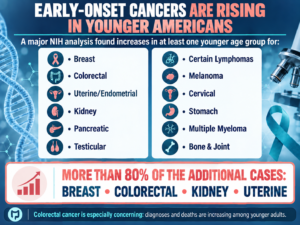
A major National Institutes of Health analysis found increases in at least one younger age group for:
- Breast cancer
• Colorectal cancer
• Uterine or endometrial cancer
• Kidney cancer
• Pancreatic cancer
• Testicular cancer
• Certain lymphomas
• Melanoma
• Cervical cancer
• Stomach cancer
• Multiple myeloma
• Bone and joint cancers
Breast, colorectal, kidney and uterine cancers accounted for more than 80% of the additional early-onset cases identified in the study. Colorectal cancer is particularly concerning because diagnoses and deaths have been increasing among younger adults.
What is Causing the Increase in “Turbo Cancers” in Young People?
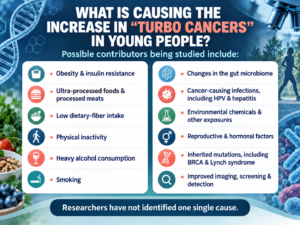
Researchers do not believe there is one simple cause. Possible contributors being studied include:
- Obesity and insulin resistance
• Diets high in ultra-processed foods and processed meats
• Low dietary-fiber intake
• Physical inactivity
• Heavy alcohol consumption
• Smoking
• Changes in the gut microbiome
• Cancer-causing infections such as HPV and hepatitis
• Environmental chemicals and other exposures
• Reproductive and hormonal factors
• Inherited mutations such as BRCA or Lynch syndrome
• Improved imaging, screening and detection
Did Covid-19 Vaccines & Covid-19 Lockdowns Contribute to Turbo Cancer in Young People?
COVID-19 vaccines have not been proven to cause or accelerate cancer. However, pandemic lockdowns increased physical inactivity, unhealthy eating, weight gain and alcohol misuse—established cancer risk factors. Lockdowns also disrupted screenings and medical care, potentially allowing some cancers to be discovered at later stages. These consequences may contribute to the future cancer burden, but researchers have not established that lockdowns caused the current rise in early-onset cancers.
Can Chronic Stress Contribute to “Turbo Cancers”?
“Turbo cancer” is a popular expression used to describe a cancer that appears unexpectedly or progresses rapidly. It is not an official medical diagnosis. Doctors use terms such as early-onset cancer, high-grade cancer or aggressive cancer.
Researchers have documented increases in certain cancers among adults younger than 50—including breast, colorectal, uterine, kidney and pancreatic cancers. Could chronic stress be part of the problem?
Stress has not been proven to directly cause these cancers. However, persistent stress can create physical and behavioral conditions that may influence cancer risk:
- Disrupted or inadequate sleep
• Physical inactivity
• Overeating and weight gain
• Increased alcohol consumption
• Smoking or other unhealthy coping behaviors
• Insulin resistance
• Chronic inflammation
• Changes in hormones, immune function and the gut microbiome
Stress can also cause people to postpone medical appointments, screenings or evaluations of troubling symptoms. This matters because an undiagnosed cancer may continue growing while a person assumes the symptoms are caused by stress.
The prolonged disruption of the COVID-19 pandemic intensified many of these concerns. Lockdowns reduced normal movement, interrupted preventive care and increased isolation for millions of people. Many Americans also reported unhealthy eating, weight gain, greater alcohol use, anxiety and depression.
These consequences could contribute to future cancer risk and later diagnoses—but researchers have not established that stress or lockdowns caused the current rise in early-onset cancers. In fact, increases in several of these cancers began years before the pandemic.
The responsible conclusion is this:
Chronic stress may help create conditions that increase cancer risk or affect cancer progression, but it has not been proven to cause “turbo cancer.”
Managing stress remains an important part of protecting overall health. Prioritize daily movement, restorative sleep, real food, social connection, prayer or meditation, outdoor activity and limited alcohol.
THE BOTTOM LINE
Certain early-onset cancers are genuinely increasing, but “turbo cancer” is not a single new disease—and its causes are still being investigated.
Young people should never ignore persistent rectal bleeding, abdominal pain, changing bowel habits, unexplained anemia or weight loss, a new lump, abnormal bleeding, swollen lymph nodes or unusual fatigue.
Cancer can occur at any age. Persistent symptoms deserve medical attention—not dismissal.
Medical Disclaimer: This information is for education only and is not medical advice. Always talk with your healthcare provider about what is best for your health.
Note: I used ChatGPT for the graphics and pulling this blog together for this topic, but I also check the information carefully to ensure the health information is correct. In order to get the right answers & the development of these health blogs when using ChatGPT effectively, you must know how to pose the correct questions.
This content was generated with assistance from ChatGPT, an AI language model by OpenAI
Barbara Day, M.S., R.D. is a registered dietitian with a Master’s Degree in clinical nutrition. She is the Chief Blog Organizer for www.DayByDayLiving.net
Barbara worked as a research nutritionist with the military’s tri-service medical school collaborating with Department of Defense, National Health Institutes (NIH), and also United States Department of Agriculture (USDA). Barbara worked as a performance nutrition consultant to Navy SEALS’ BUD/S Training Program and West Coast Navy SEAL Teams. Barbara is the former nutrition performance consultant to the University of Louisville Athletic Department.
She is the author of Fast Facts on Fast Food for Fast People and High Energy Eating Sports Nutrition Workbook for Active People used by the University of Louisville, University of Tennessee Lady Vols and the Tennessee football program, the LSU basketball program, the Buffalo Bills, the Cleveland Browns and by the United States Navy SEALs.
Barbara is the former publisher of Kentuckiana HealthFitness Magazine, Kentuckiana Healthy Woman magazine and radio show host of Health News You Can Use and a TV segment on the Local ABC station called Barbara’s Right Bite.
Barbara has over 50 years of experience in promoting healthy lifestyles to consumers. Barbara is a former runner who walks, a spinner, hiker, a pickleball player, a mother and grandmother to 13 grandchildren.
Barbara also serves on the Leadership Team for Moms for America as the Grammy Grizzlies National Group Leader. (www.momsforamerica.us).
Barbara is a volunteer for MAHA Action. (https://www.mahaaction.org/)