
Celiac disease is personal in my family. My son and granddaughter were diagnosed several years ago. My husband also eats gluten-free because he has experienced symptoms over the years, although he has never received a confirmed diagnosis. His symptoms alone cannot tell us whether he has celiac disease or which side of the family carries the genetic susceptibility.
As a registered dietitian, I understood the dietary changes involved. But helping my family put those changes into practice has inspired me to adapt our favorite recipes and share practical information with others.
Whether you have just been diagnosed or are wondering about persistent symptoms, understanding the ABCs is a good place to begin.
A Is for Awareness
Celiac disease is a chronic autoimmune disorder in which consuming gluten damages the small intestine. Gluten occurs naturally in wheat, barley, and rye. The immune reaction can damage the villi—the tiny projections that help absorb nutrients—leading to nutritional deficiencies. Celiac disease is different from wheat allergy and non-celiac gluten sensitivity.[1]
Although we often say “adult celiac disease,” it is the same condition that affects children. It may develop or be recognized in adulthood, including later life. Having the relevant genes increases susceptibility, but does not mean someone will necessarily develop the disease.[1]
Could You Be Missing the Signs?
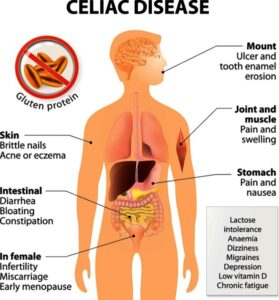
Symptoms can extend beyond an upset stomach. They may include:
- Recurring abdominal pain, bloating, gas, diarrhea, or constipation.
- Persistent fatigue.
- Joint or bone pain.
- Tingling or numbness in the hands or feet.
- An itchy, blistering rash called dermatitis herpetiformis.
- Mouth sores or reproductive problems.
Some people have few symptoms or none at all, yet untreated disease can still cause complications.[2] Unexplained iron-deficiency anemia and low bone density are other reasons to ask about testing.[1]
These symptoms can have many causes. Rather than diagnosing yourself, bring persistent concerns to your healthcare provider.
B Is for Blood Tests Before Changing Your Diet
If you suspect celiac disease, get medical advice before removing gluten. A gluten-free diet can make diagnostic tests less accurate.
Evaluation usually includes blood tests for celiac-related antibodies and, in adults, often an upper endoscopy with small-intestinal biopsies. Symptoms alone—or feeling better after avoiding gluten—cannot confirm the diagnosis.
If you already eat gluten-free, tell your clinician so you can develop an appropriate testing plan. Do not restart gluten on your own just to prepare for testing.
Family history is important. Parents, siblings, and children of a person with celiac disease should discuss testing with their healthcare provider, even if they feel well.[3]
C Is for Consistent Gluten-Free Care
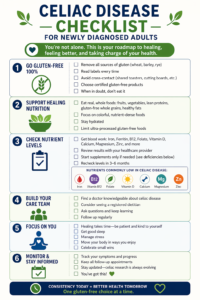
Confirmed celiac disease requires a strict, lifelong gluten-free diet. A registered dietitian experienced in celiac disease can help you plan meals and address nutritional needs.[4]
Build Meals Around Foods You Can Enjoy
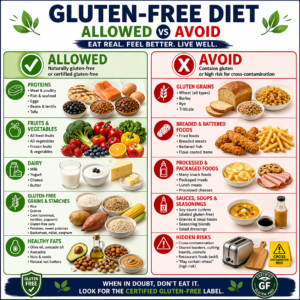
Many nutritious foods are naturally gluten-free when plain and prepared without gluten-containing ingredients:
Food group | Examples |
Vegetables and fruit | Fresh or plain frozen produce, potatoes, sweet potatoes |
Beans and legumes | Beans, lentils, peas |
Protein foods | Eggs, plain fish, poultry, and meat |
Grains and alternatives | Rice, quinoa, corn, buckwheat, millet, sorghum |
Dairy foods | Plain milk and yogurt, if tolerated |
Nuts and seeds | Plain nuts, seeds, and nut butters |
Added sauces, seasonings, breading, and preparation methods can change whether a food is safe.[5]
In my own kitchen, I look for ways to keep familiar family favorites on the menu. Gluten-free pasta, appropriate corn tortillas, and gluten-free cornbread mixes can make recipe adaptations practical. Every ingredient—and the way the food is prepared—still needs attention.

https://daybydayliving.net/?p=3138
Learn Where Gluten Can Hide
Check bread, pasta, crackers, cereals, sauces, soups, marinades, and malt-containing products. In FDA-regulated foods, a “gluten-free” claim requires less than 20 parts per million of gluten. “Wheat-free” does not necessarily mean gluten-free because barley and rye also contain gluten.[6]
Oats deserve special attention: most people with celiac disease can tolerate moderate amounts of gluten-free oats, but ordinary oats commonly have cross-contact with gluten-containing grains. Discuss oats with your care team.[5]
Blue cheese does not automatically need to be excluded; it is usually gluten-free. Check added ingredients, especially in dressings and cheese preparations.[7]
Barcode apps can help you investigate products, but use them as a starting point. Read the current package and contact the manufacturer when information is unclear.
Prevent Cross-Contact
Gluten can transfer into safe food through preparation and handling. Store and prepare gluten-free foods separately as needed, and ask restaurants about ingredients and kitchen practices.[5]
Practical questions include: Does the toaster contain bread crumbs? Is a serving utensil shared with a gluten-containing dish? Does the fryer also cook breaded foods? These details matter when planning a safe meal.
Protect Nutrition and Give Healing Time
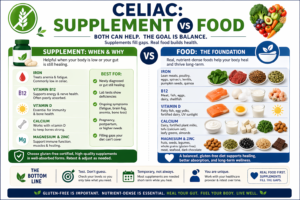
Your healthcare provider may test for deficiencies and recommend supplements based on your needs. Calcium and vitamin D intake and bone-density testing may also need attention. A particular brand or high-dose supplement routine is not necessary for everyone.
Many people feel better within days or weeks, but symptom relief does not establish that the intestine has healed. Follow-up may include antibody testing and sometimes repeat biopsies. Persistent symptoms warrant evaluation for accidental gluten exposure or another condition.[4]
A gluten-free label also does not guarantee a balanced diet. Keep nutrient-rich foods at the center of your meals rather than relying heavily on gluten-free sweets and snack foods.[5]
Glutened While Traveling? Take Care and Adjust Your Plans
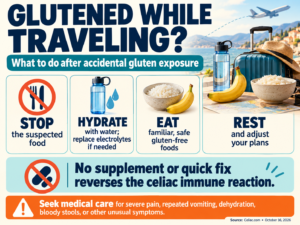
Even careful travelers can have an accidental exposure. Stop eating the suspected food, drink fluids, and choose familiar, safely prepared gluten-free foods as tolerated. Rest and adjust your plans when needed.
There is no proven quick fix that reverses the reaction, and “gluten-digesting” supplements should not be relied upon to protect against intestinal damage. Seek medical care for severe pain, repeated vomiting, dehydration, bloody stools, or other unusually severe symptoms. Do not automatically assume every travel illness is caused by gluten.[8]
Before your next trip, research meal options, pack trusted snacks, and consider accommodations with a kitchenette. An accidental exposure is a setback, not a personal failure.
Keep Family Meals Enjoyable
A diagnosis brings a learning curve, but it does not have to take the enjoyment out of eating together. In our family, adapting favorite recipes has been part of making gluten-free eating workable.
My goal is to help others understand the condition, ask useful questions, and prepare satisfying meals with confidence.
Be your own health advocate: recognize persistent symptoms, seek an accurate diagnosis, and make consistent gluten-free care part of everyday life.
This article was prepared with assistance from ChatGPT and revised to combine my family experience with educational information about celiac disease.
Medical Disclaimer: This information is for education only and is not medical advice. Always talk with your healthcare provider about what is best for your health.
Note: I used ChatGPT for the graphics and pulling this blog together for this topic, but I also check the information carefully to ensure the health information is correct. In order to get the right answers & the development of these health blogs when using ChatGPT effectively, you must know how to pose the correct questions.
This content was generated with assistance from ChatGPT, an AI language model by OpenAI
Sources
Barbara Day, M.S., R.D. is a registered dietitian with a Master’s Degree in clinical nutrition. She is the Chief Blog Organizer for www.DayByDayLiving.net
Barbara worked as a research nutritionist with the military’s tri-service medical school collaborating with Department of Defense, National Health Institutes (NIH), and also United States Department of Agriculture (USDA). Barbara worked as a performance nutrition consultant to Navy SEALS’ BUD/S Training Program and West Coast Navy SEAL Teams. Barbara is the former nutrition performance consultant to the University of Louisville Athletic Department.
She is the author of Fast Facts on Fast Food for Fast People and High Energy Eating Sports Nutrition Workbook for Active People used by the University of Louisville, University of Tennessee Lady Vols and the Tennessee football program, the LSU basketball program, the Buffalo Bills, the Cleveland Browns and by the United States Navy SEALs.
Barbara is the former publisher of Kentuckiana HealthFitness Magazine, Kentuckiana Healthy Woman magazine and radio show host of Health News You Can Use and a TV segment on the Local ABC station called Barbara’s Right Bite.
Barbara has over 50 years of experience in promoting healthy lifestyles to consumers. Barbara is a former runner who walks, a spinner, hiker, a pickleball player, a mother and grandmother to 13 grandchildren.
Barbara also serves on the Leadership Team for Moms for America as the Grammy Grizzlies National Group Leader. (www.momsforamerica.us).
Barbara is a volunteer for MAHA Action. (https://www.mahaaction.org/)