
Prebiotics and probiotics work together to make a health gut microbiome. Since the gut microbiome is the control center for your overall health, creating a healthy gut microbiome is the gateway to being healthy.
Why Are Prebiotics and Probiotics Important?
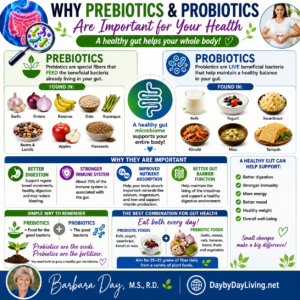
Better Digestion
- Support regular bowel movements
- Help maintain a healthy digestive tract
- May reduce occasional gas and bloating
Stronger Immune System
- About 70% of the immune system is associated with the gut
- Healthy gut bacteria help support immune function
Improved Nutrient Absorption
- Help the body absorb minerals such as calcium, magnesium, and iron
- Support production of certain vitamins
Better Gut Barrier Function
- Help maintain the lining of the intestines
- Support a healthy digestive environment
Support for Overall Health
Research continues to explore links between the gut microbiome and:
- Brain health
- Mood
- Metabolism
- Heart health
- Healthy aging
Simple Way to Remember
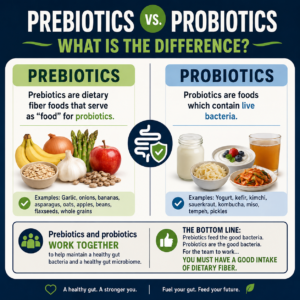
Prebiotics = Food for the good bacteria
Probiotics = The good bacteria
The Best Combination for Gut Health
Eat both every day:
- Probiotic food: Kefir, yogurt, sauerkraut, or kimchi
- Prebiotic foods: Garlic, onions, oats, bananas, beans, and vegetables
What are Prebiotics?
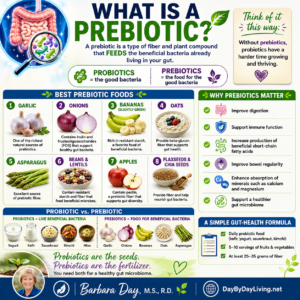
Prebiotic is a food source needed to grow healthy or friendly bacteria in your intestinal tract. Our digestive tract can’t break down prebiotics and eventually reach the colon, large intestine where they can help grow the healthy or friendly bacteria. Prebiotics are found in foods which contain dietary fiber like vegetables, fruits and legumes and beans.
Friendly bacteria then turn the dietary fiber into a short-chain fatty acid called butyrate. Research suggests butyrate may help prevent or treat Irritable Bowel Disease, Crohn’s disease, and colon cancer. However, you need dietary fiber to create butyrate. Most Americans are not getting adequate amounts of dietary fiber due to high intakes of ultra-processed foods. The average American only eating about 16 grams of dietary fiber per day.
The USDA’s Dietary Guidelines for Americans suggest the following amounts of fiber:
- Women under 50: 25 to 28 grams per day
- Men under 50: 31 to 34 grams per day
- Women 51 and older: 22 grams per day
- Men 51 and older: 28 grams per day
Children ages 1 to 18 should eat 14 to 31 grams of fiber per day, depending on their age and sex. Even higher fiber intakes, seen in countries around the world, may significantly reduce chronic disease risk.
What are Probiotics?
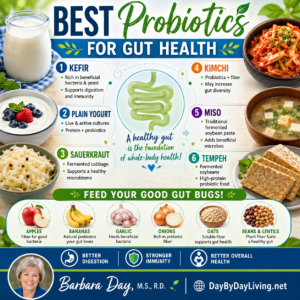
Probiotics are live microorganisms found in certain foods and supplements which are known as beneficial or friendly gut bacteria.
Examples of probiotic and fermented foods which are probiotic in nature include:
- sauerkraut
- kimchi
- kombucha fermented tea
- Tempeh, fermented soybeans
- kefir (dairy and nondairy)
- some types of pickles (unpasteurized)
- other pickled vegetables (unpasteurized)
- Cheese like Swiss, Provolone, Gouda, Cheddar, Edam, Gruyere & Cottage Cheese
- Yogurt which contains live and active cultures like Lactobacillus and Bifidobacterium strains
If you’re going to eat fermented foods for their probiotic benefits, make sure they’re not pasteurized, as this process kills the bacteria.
Some of those foods can also be considered as Synbiotics because they contain both beneficial bacteria and a prebiotic source of fiber for the bacteria to feed on.
What are Synbiotic Foods?
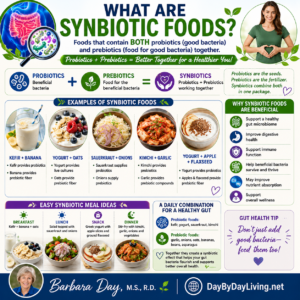
Synbiotic foods are foods or meals that contain both probiotics and prebiotics together.
Simple Definition
Probiotics = beneficial bacteria
Prebiotics = food for the beneficial bacteria
Synbiotics = probiotics + prebiotics working together
Examples of Synbiotic Foods
Kefir + Banana
- Kefir provides probiotics
- Banana provides prebiotic fiber
Yogurt + Oats
- Yogurt provides live cultures
- Oats provide prebiotic fiber
Sauerkraut + Onions
- Sauerkraut supplies probiotics
- Onions supply prebiotics
Kimchi + Garlic
- Kimchi provides probiotics
- Garlic provides prebiotic compounds
Yogurt + Apple + Flaxseed
- Probiotic-rich yogurt
- Apples and flaxseed provide prebiotic fiber
Why Synbiotic Foods Are Beneficial
Support a healthy gut microbiome
Improve digestive health
Support immune function
Help beneficial bacteria survive and thrive
May improve nutrient absorption
Support overall wellness
Easy Synbiotic Meal Ideas
Breakfast
- Plain kefir + banana + oats
Lunch
- Salad topped with sauerkraut and onions
Snack
- Plain Greek yogurt with apple slices and ground flaxseed
Dinner
- Stir-fry with kimchi, garlic, onions, and vegetables
Top of Form
Bottom of Form
The Bottom Line
The Best Combination for Gut Health is to eat both every day using the symbiotic approach: Probiotics are the seeds. Prebiotics are the fertilizer. Synbiotics combine both in one package.
Note: I used ChatGPT for the graphics and pulling this blog together for this topic, but I also check the information carefully to ensure the health information is correct. In order to get the right answers & the development of these health blogs when using ChatGPT effectively, you must know how to pose the correct questions.
This content was generated with assistance from ChatGPT, an AI language model by OpenAI
https://www.healthline.com/health/butyric-acid
https://www.healthline.com/health/food-nutrition/how-much-fiber-per-day
https://www.healthline.com/nutrition/probiotics-and-prebiotics#bottom-line
https://health.clevelandclinic.org/prebiotics-vs-probiotics-whats-the-difference

is a registered dietitian with a Master’s Degree in clinical nutrition. She is the Chief Blog Organizer for www.DayByDayLiving.net
Barbara worked as a research nutritionist with the military’s tri-service medical school collaborating with Department of Defense, National Health Institutes (NIH), and also United States Department of Agriculture (USDA). Barbara worked as a performance nutrition consultant to Navy SEALS’ BUD/S Training Program and West Coast Navy SEAL Teams. Barbara is the former nutrition performance consultant to the University of Louisville Athletic Department.
She is the author of Fast Facts on Fast Food for Fast People and High Energy Eating Sports Nutrition Workbook for Active People used by the University of Louisville, University of Tennessee Lady Vols and the Tennessee football program, the LSU basketball program, the Buffalo Bills, the Cleveland Browns and by the United States Navy SEALs.
Barbara is the former publisher of Kentuckiana HealthFitness Magazine, Kentuckiana Healthy Woman magazine and radio show host of Health News You Can Use and a TV segment on the Local ABC station called Barbara’s Right Bite.
Barbara has over 50 years of experience in promoting healthy lifestyles to consumers. Barbara is a former runner who walks, a spinner, hiker, a pickleball player, a mother and grandmother to 13 grandchildren.
Barbara also serves on the Leadership Team for Moms for America as the Grammy Grizzlies National Group Leader. (www.momsforamerica.us).