
Have you heard the term “biohacking” and wondered what in the world it means?
Biohacking is one of today’s hottest health buzzwords, but the idea isn’t as new as it sounds. At its core, biohacking is simply making intentional choices to help your body function at its best. From eating real food and staying active to getting enough sleep and managing stress, many of the most effective “biohacks” are healthy habits we’ve known about for generations.
Biohacking has become one of the latest buzzwords in health and wellness. You may see people wearing devices that track their sleep, monitoring their blood glucose, experimenting with fasting, taking supplements, using cold plunges, or trying special light therapies—all in an effort to “hack” their biology.
But here’s something I find interesting after more than five decades as a Registered Dietitian: some of the most effective forms of biohacking aren’t new at all.
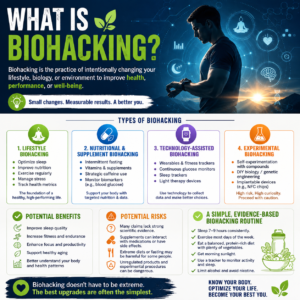
At its simplest, biohacking means making intentional changes in your lifestyle, nutrition, environment, or daily habits in an effort to improve how your body functions. Some people also use technology and personal health data to measure whether those changes are actually working.
You May Already Be Biohacking
If you take a walk after dinner because you know physical activity is good for your health, you are essentially practicing a simple form of biohacking.
If you go to bed at approximately the same time every night because you want better sleep, that’s another example.
If you strength train to preserve muscle as you age, eat more fiber to support your gut microbiome, or spend time outdoors in the morning to reinforce your body’s natural sleep-wake cycle, you are intentionally changing your behavior to influence your health.
We just didn’t always call it “biohacking.”
When Technology Enters the Picture
Today’s biohacking movement often adds another ingredient: data.
Smartwatches and fitness trackers can measure steps, heart rate and sleep patterns. Some people use continuous glucose monitors to see how their blood glucose responds to food, exercise and sleep. Other devices track heart-rate variability, body temperature and other measurements.
This information can sometimes be useful, but more data isn’t automatically better health.
A device can give you numbers. The important question is whether those numbers are accurate, meaningful and useful enough to help you make better decisions.
Food May Be One of Our Oldest “Biohacks”
As a Registered Dietitian, I’m especially interested in what happens when biohacking meets nutrition.
You don’t necessarily need an expensive supplement or complicated eating plan to influence your biology.
Think about what real food can do.
Protein provides amino acids needed for muscle and other tissues. Fiber feeds many of the beneficial microorganisms living in our gastrointestinal tract. Fruits and vegetables provide vitamins, minerals and a wide variety of phytochemicals. Fermented foods can add beneficial microorganisms and fermentation products to the diet.
Our food choices interact with our biology every single day.
That’s one reason I have said for years:
Food is Medicine.
The Gut Microbiome: An Exciting Fronter
One area of modern research that particularly interests me is the gut microbiome—the enormous community of microorganisms living primarily in our gastrointestinal tract.
Scientists are continuing to investigate how these microorganisms interact with digestion, metabolism, immune function and other aspects of human health.
A diverse, fiber-rich diet that includes vegetables, fruits, beans, whole grains, nuts and seeds can provide substrates that beneficial gut microbes use.
This may not sound as exciting as an expensive “biohacking” device, but sometimes the basics are powerful.
What about Fasting, Cold Plunges and Supplements?
This is where we need to separate promising science from marketing hype.
Some biohacking practices have legitimate scientific evidence behind them. Others have limited evidence, and some claims promoted online go far beyond what research has demonstrated.
Supplements are a good example.
A supplement may be useful when someone has a documented deficiency or a particular nutritional need. But taking handfuls of supplements simply because an influencer calls them “longevity hacks” doesn’t guarantee better health. Supplements can have side effects and can interact with medications.
The same caution applies to extreme fasting, experimental compounds and other aggressive approaches.
New doesn’t automatically mean better.
My Favorite Biohacks Don’t Cost Much
If someone asked me where to begin, I wouldn’t start with an expensive gadget.
I’d start with the fundamentals:
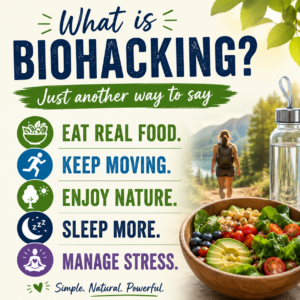
- Eat mostly nutrient-dense, minimally processed foods.
- Include plenty of fiber-rich plant foods.
- Get adequate protein throughout the day.
- Exercise regularly and include resistance training.
- Walk more—and consider taking a short walk after meals.
- Maintain a consistent sleep schedule.
- Spend some time outdoors.
- Manage chronic stress.
- Don’t smoke.
- Limit alcohol.
- Maintain meaningful relationships and stay socially engaged.
These habits aren’t flashy enough to dominate social media, but they have something much more important going for them: decades of scientific research supporting the importance of healthy lifestyle patterns.
Biohacking Should Never Replace Medical Care
There’s another important distinction.
Tracking your sleep, improving your diet or exercising more is one thing. Trying to diagnose or treat a medical condition yourself is something entirely different.
Biohacking shouldn’t become a substitute for appropriate medical care. And anyone taking medications or living with a medical condition should be especially careful about fasting, supplements or other major lifestyle changes.
The Bottom Line
I don’t object to the word “biohacking.” In fact, I think the growing interest in understanding our own biology can be positive.
But we shouldn’t allow clever marketing to convince us that good health requires expensive technology, exotic supplements or extreme routines.
After more than five decades working in nutrition, my philosophy remains remarkably simple:
Eat Real Food.
Be Wise and Exercise.
Get enough sleep.
Take care of your gut.
Keep moving as you age.
And remember that small choices repeated every day can have a much greater impact than the latest health fad.
Maybe the best biohack isn’t really a hack at all.
Maybe it’s consistently giving your body what it was designed to need.
Note: I used ChatGPT for the graphics and pulling this blog together for this topic, but I also check the information carefully to ensure the health information is correct. In order to get the right answers & the development of these health blogs when using ChatGPT effectively, you must know how to pose the correct questions.
This content was generated with assistance from ChatGPT, an AI language model by OpenAI.
Barbara Day, M.S., R.D. is a registered dietitian with a Master’s Degree in clinical nutrition. She is the Chief Blog Organizer for www.DayByDayLiving.net
Barbara worked as a research nutritionist with the military’s tri-service medical school collaborating with Department of Defense, National Health Institutes (NIH), and also United States Department of Agriculture (USDA). Barbara worked as a performance nutrition consultant to Navy SEALS’ BUD/S Training Program and West Coast Navy SEAL Teams. Barbara is the former nutrition performance consultant to the University of Louisville Athletic Department.
She is the author of Fast Facts on Fast Food for Fast People and High Energy Eating Sports Nutrition Workbook for Active People used by the University of Louisville, University of Tennessee Lady Vols and the Tennessee football program, the LSU basketball program, the Buffalo Bills, the Cleveland Browns and by the United States Navy SEALs.
Barbara is the former publisher of Kentuckiana HealthFitness Magazine, Kentuckiana Healthy Woman magazine and radio show host of Health News You Can Use and a TV segment on the Local ABC station called Barbara’s Right Bite. Barbara has over 50 years of experience in promoting healthy lifestyles to consumers. Barbara is a former runner who walks, a spinner, hiker, a pickleball player, a mother and grandmother to 13 grandchildren.
Barbara also serves on the Leadership Team for Moms for America as the Grammy Grizzlies National Group Leader. (www.momsforamerica.us).