
Most of us think of mold as an ugly stain on a bathroom ceiling or a musty smell in a damp basement. But mold is much more than a household nuisance. Public health experts are seeing an increase in mold-related illnesses across the United States, and understanding why can help families better protect their health.
Why are mold-related illnesses becoming a growing concern across America? From water-damaged buildings and flooding to poor indoor air quality and more people with weakened immune systems, several factors may be contributing. Mold can begin growing within just 24–48 hours after water damage.
When my son was renting a house in Boca Raton, Florida, the house he was living in was full of mold. They found out mold was present when they were doing some remodeling with permission by their landlord. He ended up buying a house but was leery of mold because of his past experience. The corrupt House Inspector said the new house did not have any mold but that was not the case. When they started remodeling, there was massive mold. They got really sick from the exposure to mold. Once the mold rehabilitation started, there was mold everywhere. So this blog is personal for me and my family.
Trump HHS Secretary Kennedy’s family experienced significant household mold contamination following flooding, which they believed aggravated illnesses—particularly the children’s allergies and asthma.
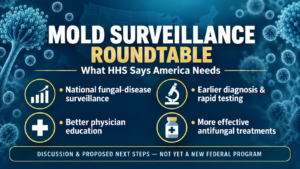
So, mold education about what mold infections symptoms are and effective mold treatments is important to Secretary Kennedy which is why he organized the Mold Surveillance Roundtable and made it a priority for the CDC and Public Health.
Mold Surveillance Roundtable https://www.youtube.com/live/HGASzB29mBU?si=AQYHdml_tgkJjE7i
Mold is a type of fungus that naturally exists both indoors and outdoors. Tiny mold spores are constantly floating through the air, and most healthy people breathe them in every day without becoming ill. Problems arise when mold finds the right conditions to grow indoors or when people with weakened immune systems are exposed to large amounts of mold.
Why Are Mold Infections Increasing Across America?
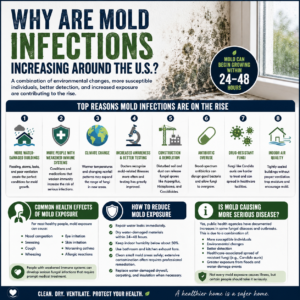
Mold has always been part of our environment, but physicians and public health experts are seeing more mold-related illnesses today than they did just a few decades ago. While healthy people often experience only mild allergy symptoms, mold can cause serious infections in individuals with weakened immune systems.
Why is this happening?
The answer is not just one thing. Several factors are contributing to the increase.
- More Water Damage Means More Mold
Mold thrives anywhere moisture is present.
Across the United States, more homes, schools, businesses, and healthcare facilities have experienced flooding, hurricanes, heavy rains, plumbing leaks, or roof damage. Even a small hidden leak behind drywall can create the perfect environment for mold growth.
The surprising fact is that mold can begin growing within 24 to 48 hours after water damage.
That’s why cleaning up moisture quickly is one of the best ways to prevent mold problems.
- More People Have Weakened Immune Systems
Medical advances have helped people live longer with chronic diseases and survive illnesses that once were fatal. However, many of these treatments suppress the immune system.
People at greatest risk include:
- Cancer patients receiving chemotherapy
- Organ transplant recipients
- People taking immune-suppressing medications
- Individuals with uncontrolled diabetes
- Older adults
- Premature infants
These individuals are more vulnerable to serious fungal infections.
- Changing Weather Patterns
Researchers believe changing temperatures and rainfall patterns may allow certain fungi to survive in areas where they previously were uncommon.
Floods, hurricanes, and prolonged periods of humidity also create ideal conditions for mold growth inside buildings.
- Better Detection
Today’s laboratory testing is much better than it was years ago.
Doctors are identifying fungal infections that may once have been misdiagnosed or never recognized. Increased awareness also means more people seek medical attention when symptoms persist.
- Construction Can Release Fungal Spores
Construction, excavation, and demolition disturb soil and dust that naturally contain fungal spores.
These spores usually do not affect healthy individuals, but they can pose risks for people with weakened immune systems, especially near hospitals and healthcare facilities.
- Antibiotics Can Disrupt the Body’s Natural Balance
Broad-spectrum antibiotics kill harmful bacteria—but they also reduce many of the beneficial bacteria that help keep certain fungi under control.
When that balance is disrupted, fungi such as Candida can sometimes grow excessively.
This is one reason healthcare providers recommend using antibiotics only when medically necessary.
- Drug-Resistant Fungi Are Emerging
Public health officials are closely monitoring several fungi that have become resistant to multiple antifungal medications.
These infections can be difficult to treat and have become an increasing concern in hospitals and long-term care facilities.
- Indoor Air Quality Matters
Modern homes are designed to conserve energy, but tightly sealed buildings can also trap moisture.
Without good ventilation, humidity levels may rise enough to encourage mold growth.
Using exhaust fans, repairing leaks promptly, and maintaining indoor humidity below about 50 percent can help reduce risk.
Common Symptoms of Mold Exposure
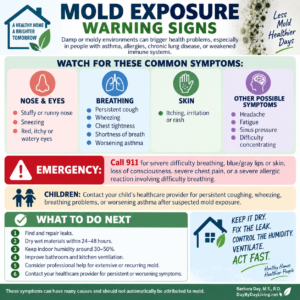
Many people exposed to mold experience symptoms similar to seasonal allergies, including:
- Stuffy or runny nose
- Sneezing
- Coughing
- Wheezing
- Eye irritation
- Skin irritation
- Worsening asthma
Individuals with weakened immune systems may develop more serious fungal infections and should seek medical care if symptoms are persistent or severe.
Protecting Your Family
You cannot eliminate every mold spore from the environment, but you can greatly reduce your family’s exposure by taking simple preventive steps.
- Fix water leaks immediately.
- Dry wet materials within 24–48 hours.
- Keep indoor humidity below 50%.
- Use bathroom and kitchen exhaust fans.
- Replace water-damaged drywall, insulation, or carpeting when necessary.
- Clean small mold problems promptly and safely.
How to Prevent Mold in Your Home
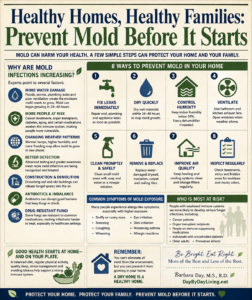
Mold needs moisture to grow, so controlling moisture is the most important step in mold prevention. You cannot eliminate every mold spore from your home, but you can prevent those spores from finding the damp environment they need to multiply.
Keep indoor humidity under control. Aim for an indoor relative humidity of 30–50% when possible. An inexpensive humidity meter, called a hygrometer, can help you monitor levels. Use a dehumidifier in damp basements or other humid areas.
Fix leaks immediately. Check regularly for leaking roofs, pipes, faucets, toilets, refrigerators, washing machines, water heaters, and air-conditioning systems. Don’t ignore small leaks—they can create significant hidden moisture problems behind walls and underneath floors.
Dry wet areas quickly. After a leak, spill, or flooding, begin drying the area immediately. Ideally, water-damaged materials should be dried within 24–48 hours to reduce the likelihood of mold growth.
Use exhaust fans. Run bathroom exhaust fans during showers and for a period afterward. Use kitchen exhaust fans that vent outdoors when cooking. Proper ventilation helps remove moisture rather than allowing it to collect on walls and ceilings.
Watch for condensation. Moisture collecting on windows, pipes, walls, or ceilings is a warning sign that humidity may be too high. Improve ventilation, reduce humidity, and investigate the source.
Keep gutters and downspouts working properly. Clean gutters regularly and make sure downspouts direct rainwater away from your home’s foundation. The ground around the house should also drain away from the foundation rather than toward it.
Inspect basements, crawl spaces, attics, and bathrooms. These areas are especially vulnerable to moisture. Look for water stains, discoloration, peeling paint, warped materials, condensation, and musty odors.
Maintain heating and cooling systems. Replace HVAC filters as recommended and have systems inspected when necessary. Make sure air-conditioning drain pans and lines are draining properly.
Be careful with carpeting in damp areas. Avoid carpeting bathrooms, damp basements, or other areas that frequently get wet. Wet carpet and padding can be difficult to dry completely and may need to be removed after significant water damage.
Respond quickly after flooding. Remove standing water and soaked materials as soon as it is safe to do so. Porous materials such as drywall, insulation, ceiling tiles, and carpeting may need to be discarded if they cannot be thoroughly dried.
Don’t simply paint over mold. Painting or caulking over visible mold does not solve the underlying problem. The moisture source must first be corrected and the mold properly cleaned or damaged material removed.
Know when to call a professional. According to EPA guidance, homeowners can often handle relatively small mold areas—roughly less than 10 square feet—provided the contamination wasn’t caused by sewage or other hazardous water. Larger areas, extensive water damage, recurring mold, contaminated HVAC systems, or situations involving vulnerable household members may warrant professional evaluation and remediation.
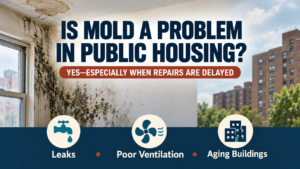
Think MOISTURE first. If you see mold, smell a persistent musty odor, or repeatedly find damp areas, don’t just clean what you can see. Find the source of the moisture and fix it.
A simple rule to remember:
KEEP IT DRY. FIX THE LEAK. CONTROL THE HUMIDITY. VENTILATE. ACT FAST.
Medical Disclaimer: This information is for education only and is not medical advice. Always talk with your healthcare provider about what is best for your health.
Note: I used ChatGPT for the graphics and pulling this blog together for this topic, but I also check the information carefully to ensure the health information is correct. In order to get the right answers & the development of these health blogs when using ChatGPT effectively, you must know how to pose the correct questions.
This content was generated with assistance from ChatGPT, an AI language model by OpenAI
Barbara Day, M.S., R.D. is a registered dietitian with a Master’s Degree in clinical nutrition. She is the Chief Blog Organizer for www.DayByDayLiving.net
Barbara worked as a research nutritionist with the military’s tri-service medical school collaborating with Department of Defense, National Health Institutes (NIH), and also United States Department of Agriculture (USDA). Barbara worked as a performance nutrition consultant to Navy SEALS’ BUD/S Training Program and West Coast Navy SEAL Teams. Barbara is the former nutrition performance consultant to the University of Louisville Athletic Department.
She is the author of Fast Facts on Fast Food for Fast People and High Energy Eating Sports Nutrition Workbook for Active People used by the University of Louisville, University of Tennessee Lady Vols and the Tennessee football program, the LSU basketball program, the Buffalo Bills, the Cleveland Browns and by the United States Navy SEALs.
Barbara is the former publisher of Kentuckiana HealthFitness Magazine, Kentuckiana Healthy Woman magazine and radio show host of Health News You Can Use and a TV segment on the Local ABC station called Barbara’s Right Bite.
Barbara has over 50 years of experience in promoting healthy lifestyles to consumers. Barbara is a former runner who walks, a spinner, hiker, a pickleball player, a mother and grandmother to 13 grandchildren.
Barbara also serves on the Leadership Team for Moms for America as the Grammy Grizzlies National Group Leader. (www.momsforamerica.us).
Barbara is a volunteer for MAHA Action. (https://www.mahaaction.org/)