

Home meal-delivery services have become increasingly popular. Some companies deliver ingredients and recipes that customers prepare themselves. Others provide fully cooked meals requiring only refrigeration, freezing or reheating.
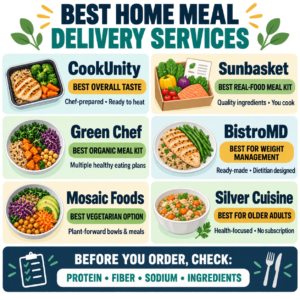
These services can save time, reduce grocery shopping and help older adults remain independent. However, ordinary meal delivery and Medically Tailored Meals are not the same thing.
What Are Medically Tailored Meals?

Medically Tailored Meals, commonly called MTMs, are complete meals designed to support people with serious, chronic or complex health conditions. They are developed using clinical nutrition standards and oversight from registered dietitians or other qualified healthcare professionals.
These meals may be designed for people living with:
- Diabetes
- Heart disease or heart failure
- Chronic kidney disease
- Cancer
- Celiac disease
- HIV/AIDS
- Digestive disorders
- Malnutrition
- Difficulty chewing or swallowing
Unlike a meal simply advertised as “healthy,” an MTM program should match the food’s calories, protein, carbohydrates, sodium, fat, fiber and other nutrients to the patient’s medical needs. The degree of individualization varies among providers, so patients should ask how the menu is selected and whether a registered dietitian reviews it.
For example, someone with diabetes may need controlled carbohydrate portions. A patient with heart failure may require carefully controlled sodium and possibly fluids. Someone with kidney disease may need adjustments to sodium, potassium, phosphorus and protein based on the stage of disease and treatment plan.
That is why a generic “heart-healthy” or “renal-friendly” label is not enough for every patient.
How Are MTMs Different From Meals on Wheels?
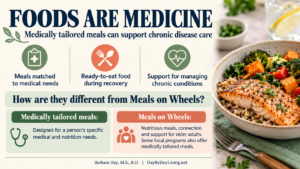
Meals on Wheels provides an invaluable service by delivering nutritious meals and friendly contact to older adults and homebound individuals. Local programs may offer lower-sodium, diabetic or texture-modified choices.
However, most Meals on Wheels meals are designed to meet the general nutritional needs of older adults. They are not automatically individually prescribed Medically Tailored Meals.
MTMs are typically connected to a diagnosed medical condition, nutrition assessment and therapeutic meal plan. Some nonprofit Meals on Wheels programs may provide medically tailored options, but availability differs by community.
Leading Medically Tailored Meal Providers
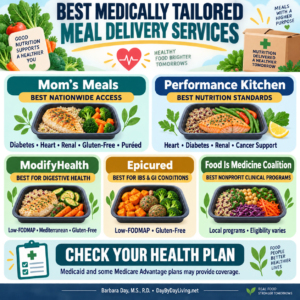
Several organizations provide condition-specific meals for home delivery.
Mom’s Meals offers nationwide delivery with menus for diabetes, heart health, lower-sodium needs, kidney disease, celiac disease, higher protein needs, vegetarian eating and swallowing difficulties. Meals may be purchased privately or provided through certain Medicaid and Medicare Advantage benefits.
Performance Kitchen develops prepared meals for chronic conditions such as diabetes, heart disease, kidney disease and cancer. Its stated nutrition standards emphasize vegetables, fiber, controlled sodium, limited added sugar and the absence of artificial colors and flavors. Availability may depend on insurance participation.
ModifyHealth and Epicured specialize in meals for digestive conditions. Their low-FODMAP and gluten-free options may be helpful for people with IBS or medically diagnosed food intolerances. A low-FODMAP elimination diet should be supervised because it is not intended to remain highly restrictive indefinitely.
Members of the Food Is Medicine Coalition operate nonprofit clinical programs in various communities. These programs may serve people undergoing cancer treatment or living with diabetes, heart disease, kidney disease and other serious illnesses.
Can Insurance Help Pay?
Original Medicare generally does not currently cover routine home meal delivery. Some Medicare Advantage plans offer limited meal benefits following hospitalization, discharge from a skilled nursing facility or diagnosis of certain chronic conditions.
Medicaid waiver programs, Veterans programs, hospitals, health systems and Area Agencies on Aging may also provide coverage or referrals.
Before paying out of pocket, call the number on the insurance card and ask:
“Does my plan cover Medically Tailored Meals for my diagnosis, and which meal providers are in network?”
A Proposed Original Medicare Pilot Program
Congress is now considering legislation that would test whether Medically Tailored Meals should become part of care for certain Original Medicare patients following hospitalization.
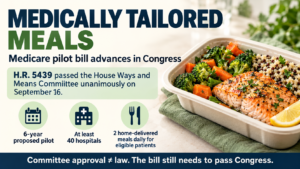
The Medically Tailored Home-Delivered Meals Program Pilot Act—H.R. 5439—passed the House Ways and Means Committee unanimously on September 16, 2026.
That unanimous committee vote is an important congressional milestone, but it is not final passage into law. The bill would still have to complete the legislative process and be enacted before the pilot could begin.
If enacted, H.R. 5439 would establish a six-year pilot program within Original Medicare at a minimum of 40 participating hospitals.
Eligible Medicare patients leaving the hospital would receive:
- At least two medically tailored, home-delivered meals per day—or the equivalent
- Access to medical nutrition therapy
- Nutrition support matched to their serious or complex chronic conditions
The program would focus on patients who have difficulty shopping for groceries or preparing appropriate meals after returning home.
This period following hospitalization can be especially vulnerable. A patient may be weak, taking new medications, coping with dietary restrictions or depending on a caregiver. Sending someone home with instructions to “eat better” is not the same as making appropriate food available.
What Would the Pilot Measure?
The Centers for Medicare & Medicaid Services would evaluate:
- Patient health outcomes
- Hospital use and readmissions
- Patient experiences
- Medicare spending
- Whether the program improves recovery and care after discharge
The legislation requires the pilot to be budget neutral. That means the program’s costs would need to be offset by savings elsewhere in Medicare rather than increasing overall Medicare spending.
The Food Is Medicine Coalition supports the legislation because previous research has associated Medically Tailored Meals with fewer hospital visits, improved quality of life and better management of nutrition-sensitive conditions. However, this pilot would be needed to determine how effectively the approach works within Original Medicare, which patients benefit most and whether any healthcare savings offset the cost of providing the meals.
As a dietitian, I love the idea of these Medically Tailored Meals as a way to help a patient with their medical problem since I strongly feel Food is Medicine, but this could be a very expensive endeavor if taxpayers are going to get the bill and the fraud could be massive unless there are guardrails to prevent it.
What Should Patients Check Before Ordering Meals for Medical Problems?
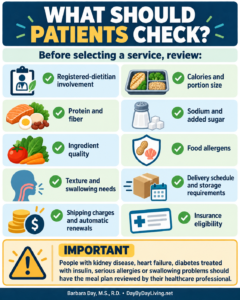
Before selecting a service, review:
- Registered-dietitian involvement
- Calories and portion size
- Protein and fiber
- Sodium and added sugar
- Ingredient quality
- Food allergens
- Texture and swallowing needs
- Delivery schedule and storage requirements
- Shipping charges and automatic renewals
- Insurance eligibility
People with kidney disease, heart failure, diabetes treated with insulin, serious allergies or swallowing problems should have the meal plan reviewed by their healthcare professional.
Food Can Be Part of Medical Care
Medically Tailored Meals are not a replacement for appropriate medication or medical treatment. However, they can support treatment by making it easier for patients to follow the nutrition plan recommended for their condition.
Consistently eating appropriate foods may help improve blood-sugar control, support blood-pressure management, reduce excessive sodium intake, prevent malnutrition and make recovery at home easier. Better nourishment may also help some patients avoid complications that lead to emergency visits or rehospitalization.
The proposed Medicare pilot represents an opportunity to find out whether providing the right food after hospitalization can improve patients’ health while controlling Medicare costs.
If America wants to move from a sick-care system toward a well-care system, nutrition must become a meaningful part of healthcare.
Foods Are Medicine—and the right meal delivered at the right time can make a real difference.
Always talk with your healthcare provider about what is best for your health.
Note: I used ChatGPT for the graphics and pulling this blog together for this topic, but I also check the information carefully to ensure the health information is correct. In order to get the right answers & the development of these health blogs when using ChatGPT effectively, you must know how to pose the correct questions.
This content was generated with assistance from ChatGPT, an AI language model by OpenAI
Barbara Day, M.S., R.D. is a registered dietitian with a Master’s Degree in clinical nutrition. She is the Chief Blog Organizer for www.DayByDayLiving.net
Barbara worked as a research nutritionist with the military’s tri-service medical school collaborating with Department of Defense, National Health Institutes (NIH), and also United States Department of Agriculture (USDA). Barbara worked as a performance nutrition consultant to Navy SEALS’ BUD/S Training Program and West Coast Navy SEAL Teams. Barbara is the former nutrition performance consultant to the University of Louisville Athletic Department.
She is the author of Fast Facts on Fast Food for Fast People and High Energy Eating Sports Nutrition Workbook for Active People used by the University of Louisville, University of Tennessee Lady Vols and the Tennessee football program, the LSU basketball program, the Buffalo Bills, the Cleveland Browns and by the United States Navy SEALs.
Barbara is the former publisher of Kentuckiana HealthFitness Magazine, Kentuckiana Healthy Woman magazine and radio show host of Health News You Can Use and a TV segment on the Local ABC station called Barbara’s Right Bite.
Barbara has over 50 years of experience in promoting healthy lifestyles to consumers. Barbara is a former runner who walks, a spinner, hiker, a pickleball player, a mother and grandmother to 13 grandchildren.
Barbara also serves on the Leadership Team for Moms for America as the Grammy Grizzlies National Group Leader. (www.momsforamerica.us).
Barbara is a volunteer for MAHA Action. (https://www.mahaaction.org/)