
February 13, 2025 – November 11, 2026
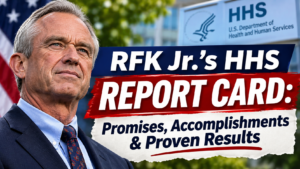
When Robert F. Kennedy Jr. became Secretary of Health and Human Services (HHS), he promised to address America’s chronic disease epidemic, improve the food supply, strengthen preventive healthcare, and restore public trust in federal health agencies.
His Make America Healthy Again (MAHA) agenda has brought increased attention to nutrition, food quality, chronic disease prevention, and healthcare accountability.
But Americans deserve to know the difference between VERIFIED ACTIONS, PROPOSALS, VOLUNTARY COMMITMENTS, AND MEASURABLE RESULTS.
Here is a breakdown of Kennedy’s HHS record and the broader Trump administration’s actions.
PART ONE: VERIFIED ACTIONS UNDER RFK JR.’S HHS LEADERSHIP
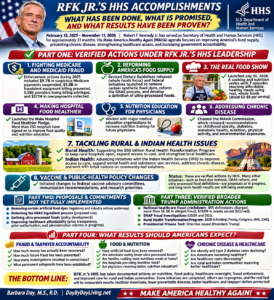
- FIGHTING MEDICARE AND MEDICAID FRAUD, WASTE & ABUSE
Under Kennedy’s leadership, HHS and the Centers for Medicare & Medicaid Services (CMS), headed by Dr. Mehmet Oz, have continued and expanded efforts to identify fraudulent healthcare billing and protect taxpayer dollars.
CMS reported the following enforcement activity during 2025:
- $5.7 BILLION in suspected fraudulent Medicare payments suspended.
- $1.5 BILLION in suspected fraudulent medical-equipment billing prevented.
- 5,586 providers and suppliers losing Medicare billing privileges.
- More than $371 MILLION in Medicare overpayments collected through post-payment reviews.
These are different enforcement measures and should not be added together as total taxpayer savings.
VERIFIED: Enforcement actions, payment suspensions, and recovery activities occurred during Kennedy’s tenure.
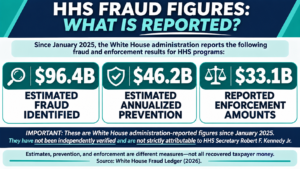
STILL TO BE DETERMINED: How much additional fraud prevention resulted specifically from new Kennedy administration policies rather than longstanding CMS programs.
- REFORMING AMERICA’S FOOD SUPPLY
Kennedy has made food quality and nutrition central HHS priorities.
Actions include:
- Working with USDA to release revised Dietary Guidelines emphasizing real, whole foods.
- Advancing efforts to remove certain petroleum-based synthetic food dyes.
- Initiating reforms to the Generally Recognized as Safe (GRAS) ingredient review process.
- Advancing work toward a federal definition of ultra-processed foods.
- Encouraging food manufacturers to improve ingredients.
VERIFIED: Revised dietary guidance was released and federal food-policy initiatives were launched.
STILL IN PROGRESS: Several ingredient reforms and regulatory changes have not been fully implemented.
- LAUNCHING THE REAL FOOD SHOW — TEACHING AMERICANS TO COOK HEALTHY MEALS!
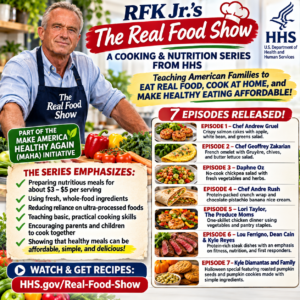
On July 30, 2026, Kennedy launched The Real Food Show, a federal cooking and nutrition education series designed to help American families prepare affordable, nutritious meals.
The program features Kennedy cooking alongside professional chefs, nutrition advocates, and special guests.
The goal is simple:
EAT REAL FOOD! COOK MORE AT HOME! MAKE HEALTHY EATING AFFORDABLE!
The series emphasizes:
- Preparing nutritious meals for approximately $3–$5 per serving.
- Using fresh, whole-food ingredients.
- Reducing reliance on ultra-processed convenience foods.
- Teaching basic cooking skills.
- Encouraging parents and children to prepare meals together.
- Showing families that healthy meals do not have to be expensive or complicated.
SEVEN EPISODES RELEASED:
- Chef Andrew Gruel — Crispy salmon cakes with apple, white bean, and greens salad.
- Chef Geoffrey Zakarian — French omelet with Gruyère, chives, and salad.
- Daphne Oz — No-cook chickpea salad with vegetables and herbs.
- Chef Andre Rush — Protein-packed crunch wrap and banana nice cream.
- Lori Taylor of The Produce Moms — One-skillet chicken dinner.
- Lou Ferrigno, Dean Cain, and Kyle Reyes — Protein-rich steak dishes.
- Kyle Diamantas and family — Halloween pumpkin recipes.
VERIFIED ACCOMPLISHMENT: HHS launched the cooking series and published episodes featuring practical recipes and food preparation demonstrations.
STILL TO BE MEASURED: Whether the series improves Americans’ eating habits or contributes to measurable reductions in chronic disease.
As a Registered Dietitian with more than 50 years of experience, I believe teaching families how to prepare affordable, nutritious meals is one of the most practical ways to promote healthier eating.
You cannot expect Americans to eat healthier if they have never learned how to shop for, prepare, and cook nutritious foods!
Watch the episodes and find recipes:
https://www.hhs.gov/real-food-show/index.html
- MAKING HOSPITAL FOOD HEALTHIER
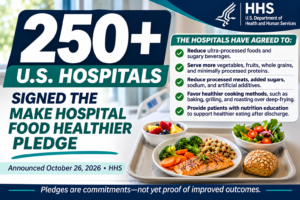
HHS launched the Make Hospital Food Healthier Pledge to encourage hospitals to improve food quality and nutrition education.
By October 2026, more than 250 hospitals had signed the voluntary pledge.
VERIFIED: The program was launched and hospitals committed to participating.
STILL TO BE MEASURED: How many hospitals have fully implemented healthier menus and nutrition programs.
- STRENGTHENING NUTRITION EDUCATION FOR PHYSICIANS
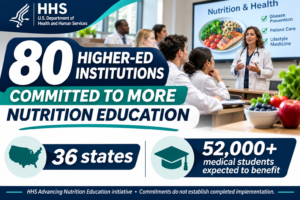
HHS worked with major medical education organizations to increase nutrition education for future physicians.
This initiative recognizes the importance of nutrition in preventing and managing obesity, diabetes, cardiovascular disease, and other chronic conditions.
VERIFIED: Institutional commitments were announced.
STILL TO BE MEASURED: Implementation across medical education programs and improvements in patient outcomes.
- ADDRESSING AMERICA’S CHRONIC DISEASE EPIDEMIC
Kennedy chaired the presidential MAHA Commission, which developed recommendations addressing:
- Childhood obesity.
- Type 2 diabetes.
- Metabolic disorders.
- Nutrition and physical activity.
- Environmental exposures.
- Prevention and management of chronic disease.
VERIFIED: Federal reports, recommendations, and initiatives were released.
STILL TO BE MEASURED: Whether these initiatives produce sustained reductions in chronic disease.
- TACKLING RURAL AMERICA’S HEALTH ISSUES
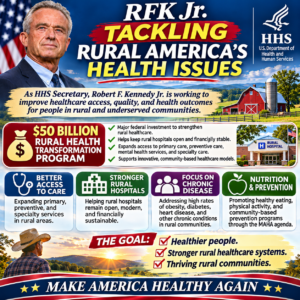
Millions of Americans living in rural communities face significant healthcare challenges, including hospital closures, shortages of physicians and specialists, long distances to medical facilities, and high rates of chronic disease.
Under HHS Secretary Robert F. Kennedy Jr. and CMS Administrator Dr. Mehmet Oz, the federal government is working to address these challenges.
MAJOR INITIATIVE: THE $50 BILLION RURAL HEALTH TRANSFORMATION PROGRAM
Established through legislation signed by President Trump and administered through CMS, this program is designed to invest $50 billion over five years in strengthening rural healthcare.
Major priorities include:
- Helping rural healthcare facilities modernize and remain financially sustainable.
- Expanding access to primary care and specialty services.
- Improving preventive healthcare and chronic disease management.
- Supporting telehealth and innovative community healthcare delivery.
- Strengthening the rural healthcare workforce.
- Improving access to nutrition education and healthier lifestyles.
VERIFIED ACTION: The program was established, and initial funding awards were announced.
STILL TO BE MEASURED: Whether these investments reduce hospital closures, improve access to medical care, and produce healthier rural populations.
CREDIT: President Trump and Congress established the funding program. Kennedy’s HHS and CMS are responsible for its implementation.
- ADDRESSING AMERICAN INDIAN AND ALASKA NATIVE HEALTH ISSUES
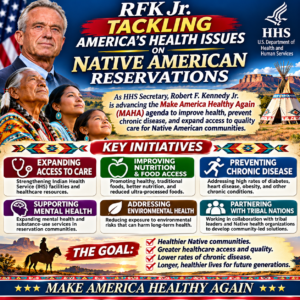
American Indian and Alaska Native communities face serious healthcare challenges, including higher burdens of certain chronic diseases, limited access to medical services in remote areas, shortages of healthcare professionals, and inadequate infrastructure in some communities.
The Indian Health Service (IHS), an agency within HHS, provides federal healthcare services to eligible American Indian and Alaska Native people.
HEALTH PRIORITIES INCLUDE:
- Improving access to primary care, emergency care, and specialty services.
- Addressing diabetes, cardiovascular disease, obesity, and other chronic conditions.
- Supporting mental health and substance-use treatment.
- Improving nutrition and access to healthy, culturally appropriate foods.
- Addressing environmental health concerns, including safe water and sanitation.
- Working with tribal governments to develop locally appropriate healthcare solutions.
VERIFIED: IHS operates under Kennedy’s HHS leadership, and these are established areas of federal and tribal healthcare work.
IMPORTANT DISTINCTION: Many IHS programs existed before Kennedy took office. Their continuation should not automatically be described as a new Kennedy accomplishment.
STILL TO BE DOCUMENTED: Which specific new initiatives, funding increases, facility improvements, or measurable health outcomes can be attributed to decisions made during Kennedy’s tenure.
- CHANGING VACCINE AND PUBLIC-HEALTH POLICIES
Kennedy initiated changes to federal vaccine advisory committees, immunization recommendations, and research priorities.
VERIFIED: Administrative actions and policy reviews occurred.
IMPORTANT: Some changes have faced legal challenges and criticism from major medical organizations. Their implementation and public-health consequences require continued evaluation.
PART TWO: PROPOSALS AND COMMITMENTS NOT YET FULLY IMPLEMENTED
- REMOVING ARTIFICIAL FOOD DYES
HHS and FDA advanced efforts to eliminate certain petroleum-based synthetic food dyes.
Major food companies announced plans to reformulate products.
STATUS: Regulatory actions and voluntary industry commitments are underway. Not every affected product has necessarily been reformulated.
- REFORMING THE GRAS FOOD INGREDIENT PROCESS
HHS proposed stronger federal oversight of ingredients that manufacturers classify as Generally Recognized as Safe.
STATUS: Proposed regulatory reform. A proposal does not have the same legal effect as a finalized rule.
- DEFINING ULTRA-PROCESSED FOODS
HHS and USDA advanced efforts to develop a federal definition of ultra-processed foods.
STATUS: Policy development. A proposed definition is not the same as a completed regulatory system.
- IMPROVING HEALTHCARE AFFORDABILITY
HHS and CMS have pursued hospital price transparency, administrative simplification, and prior-authorization reforms.
STATUS: A combination of existing requirements, new enforcement efforts, and voluntary industry commitments.
STILL TO BE MEASURED: Whether these changes substantially reduce healthcare costs for American families.
PART THREE: VERIFIED BROADER TRUMP ADMINISTRATION ACTIONS
These accomplishments involve multiple federal agencies and should not be credited exclusively to Secretary Kennedy.
- NATIONAL HEALTHCARE FRAUD CRACKDOWN
In June 2026, the Department of Justice announced a national healthcare fraud enforcement operation involving:
- 455 defendants charged.
- More than $6.5 BILLION in alleged fraudulent healthcare claims.
- More than $182 MILLION in assets seized.
VERIFIED: Charges were filed and assets were seized.
IMPORTANT: Alleged fraud is not the same as proven fraud, and criminal charges are not convictions.
CREDIT: DOJ-led operation involving HHS, CMS, HHS Inspector General investigators, and state law enforcement.
- FOOD STAMP FRAUD INVESTIGATIONS
The administration has pursued SNAP fraud investigations and efforts to strengthen eligibility verification.
VERIFIED: Investigations and enforcement actions have occurred.
CREDIT: Primarily USDA, DOJ, and state agencies. SNAP is not administered by Kennedy’s HHS.
- RURAL HEALTHCARE FUNDING
Federal legislation established a $50 billion Rural Health Transformation Program administered through CMS.
VERIFIED: The program was established and initial funding awards announced.
STILL TO BE MEASURED: Long-term improvements in rural healthcare access and patient outcomes.
CREDIT: President Trump, Congress, HHS, and CMS.
- PRESIDENTIAL FITNESS TEST
President Trump directed the return of the Presidential Fitness Test.
VERIFIED: The presidential directive was issued.
STILL TO BE MEASURED: Full implementation and improvements in children’s physical fitness.
CREDIT: President Trump and participating federal agencies.
PART FOUR: THE PROOF IS IN THE PUDDING! WHAT RESULTS SHOULD AMERICANS EXPECT?
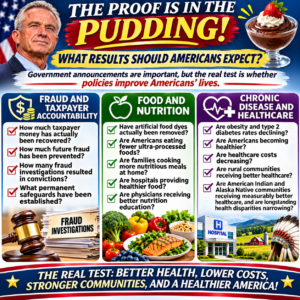
Government announcements are important, but the real test is whether policies improve Americans’ lives.
FRAUD AND TAXPAYER ACCOUNTABILITY
- How much taxpayer money has actually been recovered?
- How much future fraud has been prevented?
- How many fraud investigations resulted in convictions?
- What permanent safeguards have been established?
FOOD AND NUTRITION
- Have artificial food dyes actually been removed?
- Are Americans eating fewer ultra-processed foods?
- Are families cooking more nutritious meals at home?
- Are hospitals providing healthier food?
- Are physicians receiving better nutrition education?
CHRONIC DISEASE AND HEALTHCARE
- Are obesity and type 2 diabetes rates declining?
- Are Americans becoming healthier?
- Are healthcare costs decreasing?
- Are rural communities receiving better healthcare?
- Are American Indian and Alaska Native communities receiving measurably better healthcare, and are longstanding health disparities narrowing?
MY PERSPECTIVE AS A REGISTERED DIETITIAN
During my more than 50-year career, I have worked in clinical nutrition, nutrition research, sports nutrition, preventive healthcare, and nutrition education.
I have always believed that FOOD IS MEDICINE and that preventing chronic disease should be a national priority.
One initiative I particularly appreciate is The Real Food Show because it focuses on practical cooking skills.
Teaching families how to prepare affordable, nutritious meals is something I have promoted throughout my professional career.
I also believe that protecting Medicare, Medicaid, SNAP, and other taxpayer-funded programs from fraud should be a priority regardless of which political party controls Washington.
And I believe that Americans living in rural communities and American Indian and Alaska Native communities deserve access to quality healthcare, regardless of where they live.
But we must distinguish between policies that have been implemented, commitments that remain unfinished, and health outcomes that have actually improved.
THE BOTTOM LINE:
Secretary Kennedy’s HHS has taken documented actions involving nutrition education, food policy, healthcare oversight, fraud enforcement, and rural healthcare initiatives.
The broader Trump administration has pursued additional initiatives through Congress, DOJ, USDA, CMS, and other agencies.
Some accomplishments are completed. Others remain proposals or voluntary commitments.
MAKE AMERICA HEALTHY AGAIN SHOULD BE MEASURED BY HEALTHIER AMERICANS, FEWER PREVENTABLE DISEASES, BETTER HEALTHCARE FOR RURAL AND TRIBAL COMMUNITIES, AND TAXPAYER DOLLARS PROTECTED!
BE BRIGHT & EAT RIGHT!
Medical Disclaimer: This information is for education only and is not medical advice. Always talk with your healthcare provider about what is best for your health.
Note: I used ChatGPT for the graphics and pulling this blog together for this topic, but I also check the information carefully to ensure the health information is correct. In order to get the right answers & the development of these health blogs when using ChatGPT effectively, you must know how to pose the correct questions.
This content was generated with assistance from ChatGPT, an AI language model by OpenAI
Barbara Day, M.S., R.D. is a registered dietitian with a Master’s Degree in clinical nutrition. She is the Chief Blog Organizer for www.DayByDayLiving.net
Barbara worked as a research nutritionist with the military’s tri-service medical school collaborating with Department of Defense, National Health Institutes (NIH), and also United States Department of Agriculture (USDA). Barbara worked as a performance nutrition consultant to Navy SEALS’ BUD/S Training Program and West Coast Navy SEAL Teams. Barbara is the former nutrition performance consultant to the University of Louisville Athletic Department.
She is the author of Fast Facts on Fast Food for Fast People and High Energy Eating Sports Nutrition Workbook for Active People used by the University of Louisville, University of Tennessee Lady Vols and the Tennessee football program, the LSU basketball program, the Buffalo Bills, the Cleveland Browns and by the United States Navy SEALs.
Barbara is the former publisher of Kentuckiana HealthFitness Magazine, Kentuckiana Healthy Woman magazine and radio show host of Health News You Can Use and a TV segment on the Local ABC station called Barbara’s Right Bite.
Barbara has over 50 years of experience in promoting healthy lifestyles to consumers. Barbara is a former runner who walks, a spinner, hiker, a pickleball player, a mother and grandmother to 13 grandchildren.
Barbara also serves on the Leadership Team for Moms for America as the Grammy Grizzlies National Group Leader. (www.momsforamerica.us).
Barbara is a volunteer for MAHA Action. (https://www.mahaaction.org/)