
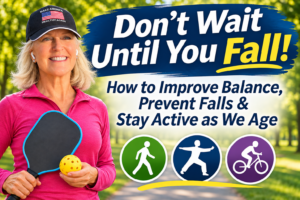
Why I’m Making Balance a Priority at 76
I love playing pickleball, walking, and riding my spin bike! Staying physically active has always been an important part of my life.
But lately, I’ve noticed that sometimes I feel a little unsteady on my feet, especially when moving sideways. And frankly, that’s unsettling!
At 76, I have no intention of giving up the activities I love. However, because I have osteoporosis, I recognize that a fall could result in a serious fracture and potentially threaten the active, independent lifestyle I’ve worked so hard to maintain.
So, rather than waiting until I fall, I’ve decided to be proactive and do something about it NOW!
One of the best steps I took was to see a physical therapist who evaluated my balance and developed a personalized program to improve my strength, stability, coordination, and confidence.
While arranging the appointment, I decided to research which exercises can help improve balance, strengthen the muscles that keep us steady, and reduce the risk of falling.
What I discovered is information that every older adult should know!
My goal isn’t simply to prevent falls. It’s to stay strong, active, independent, and confident enough to keep doing everything I love for many more years!
WHY DOES OUR BALANCE CHANGE AS WE AGE?
Balance is much more complicated than simply having strong legs.
Our ability to remain upright depends on several systems working together:
- Muscles: Strong legs, hips, ankles, and core muscles help stabilize our bodies.
- Inner ear: Our vestibular system helps us maintain equilibrium.
- Vision: Our eyes provide information about our surroundings.
- Nervous system: Our brain coordinates information from our eyes, ears, muscles, and joints.
- Reaction time: Our ability to respond quickly when we stumble or lose our balance.
- Joint mobility: Flexible ankles, knees, and hips help us adjust to changing positions.
As we age, these systems can become less efficient. However, balance problems are not always caused by aging. Medication effects, low blood pressure, nerve problems, and inner-ear conditions can also contribute.
New or worsening balance problems deserve medical evaluation, even in people who exercise regularly.
WHY FALL PREVENTION IS SO IMPORTANT
According to the CDC, more than one in four Americans ages 65 and older reports falling each year.
Falls can cause fractures, head injuries, hospitalization, and loss of independence.
For those of us with osteoporosis, preventing falls is especially important because weakened bones are more vulnerable to fractures.
A hip fracture can have life-changing consequences, including reduced mobility and prolonged rehabilitation.
But here’s the encouraging news:
Many falls can be prevented, and balance can often be improved through targeted exercise!
7 EXERCISES TO HELP IMPROVE BALANCE
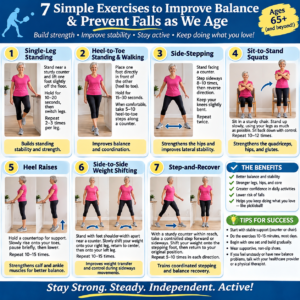
These exercises target the muscles and movement patterns that help us remain steady.
Because I sometimes feel unsteady moving sideways, I’m particularly interested in exercises that strengthen my hips and improve lateral stability.
- Single-Leg Standing
Stand beside a sturdy countertop and lift one foot slightly off the floor.
Hold for 10–20 seconds, then switch legs. Repeat two or three times on each side.
Benefit: Improves standing stability and control.
- Heel-to-Toe Standing and Walking
Place one foot directly in front of the other, with the heel touching the opposite toe.
Hold for 15–30 seconds. As your balance improves, practice taking a few heel-to-toe steps alongside a counter.
Benefit: Improves coordination and challenges balance.
- Side-Stepping
Stand facing a sturdy countertop.
Take 8–10 small steps sideways, then return in the opposite direction.
Keep your knees slightly bent and your movements controlled.
Benefit: Strengthens the hips and improves sideways stability, especially important for pickleball!
- Sit-to-Stand Exercises
Sit in a sturdy chair with your feet flat on the floor.
Stand up slowly, using your legs as much as possible, then sit back down with control.
Repeat 8–12 times.
Benefit: Strengthens the quadriceps, hips, and glutes.
- Heel Raises
Hold a countertop for support.
Slowly rise onto your toes, pause briefly, and lower your heels.
Repeat 10–15 times.
Benefit: Strengthens the calves and ankles.
- Side-to-Side Weight Shifting
Stand with your feet shoulder-width apart near a sturdy counter.
Slowly transfer your weight onto one leg, return to the center, and shift to the other leg.
Repeat 10–15 times.
Benefit: Improves weight transfer and lateral balance.
- Step-and-Recover Exercises
Stand beside a sturdy countertop.
Take a controlled step forward or sideways, transfer your weight, and return to your original position.
Repeat 5–10 times in each direction.
Benefit: Improves coordinated stepping and movement control.
IMPORTANT: These are starting exercises, not a substitute for a personalized balance assessment. Anyone experiencing unsteadiness should use stable support and avoid exercises that could cause a fall. A physical therapist can help determine which movements are appropriate.
REACTIVE BALANCE: LEARNING HOW TO RECOVER WHEN WE STUMBLE
One of the most important aspects of fall prevention is something called reactive balance.
Reactive balance is our body’s ability to respond when we unexpectedly lose stability.
Think about stepping off an uneven curb, tripping over a rug, or quickly changing direction during pickleball.
Traditional balance exercises help us remain steady.
Reactive balance training helps us recover when something unexpectedly throws us off balance.
Physical therapists can use supervised stepping and controlled balance challenges to improve these responses.
Because I have osteoporosis, I would want this type of training supervised rather than attempting unexpected pushes, slips, or challenging balance drills on my own.
TAI CHI: A GENTLE WAY TO IMPROVE BALANCE
Another activity that caught my attention is Tai Chi.
Tai Chi is a traditional Chinese mind-body exercise that combines slow movements, controlled weight shifting, posture, concentration, and gentle breathing.
Research suggests that Tai Chi can improve balance and reduce falls among many older adults.
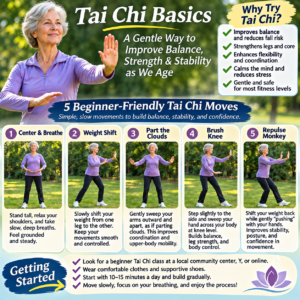
Five Beginner Tai Chi Movements
- Center and Breathe
Stand comfortably with feet shoulder-width apart, relax your shoulders, and breathe slowly.
This encourages posture and body awareness.
- Side-to-Side Weight Shifting
Slowly transfer your weight from one leg to the other while keeping your movements smooth and controlled.
This is particularly useful for improving lateral stability.
- Parting the Clouds
Gently sweep your arms outward and upward in flowing movements while maintaining an upright posture.
This encourages coordination and upper-body mobility.
- Brush Knee
In a simplified beginner version, gently step forward or slightly sideways while sweeping one hand across your body near knee level.
This helps develop coordination and controlled weight transfer.
- Repulse Monkey
In a beginner adaptation, slowly shift your weight backward while extending one hand forward.
Start without stepping backward until your balance improves.
How Often Should We Practice Tai Chi?
Beginners might start with 10–15 minutes several days per week and gradually increase their practice.
A qualified beginner instructor can help teach proper movements and adapt exercises for physical limitations.
For me, Tai Chi offers something different from spinning, walking, and pickleball: focused practice in controlled movement and balance.
Because I have recently developed unsteadiness, I would begin with supported movements and professional guidance.
DON’T FORGET STRENGTH TRAINING!
Muscle strength is one of our greatest assets for maintaining mobility and independence as we age.
Unfortunately, adults gradually lose muscle mass and strength with advancing age, especially without resistance training.
This can contribute to sarcopenia, an age-related condition involving reduced muscle strength and muscle mass.
Four muscle groups are particularly important for balance:
- Hip muscles: Help control sideways movements.
- Quadriceps: Support standing, walking, and climbing stairs.
- Calves and ankles: Help make small adjustments that keep us upright.
- Core muscles: Support posture and trunk stability.
Strength training at least twice weekly can help maintain these muscles.
And remember, cycling and spinning are excellent cardiovascular activities, but they don’t replace standing balance exercises or resistance training.
NUTRITION: MY SPECIAL AREA OF INTEREST!
As a Registered Dietitian with more than 50 years of experience, I know that nutrition is another important part of maintaining muscle strength and protecting our bones.
Protein
Adequate protein supports muscle maintenance and recovery, particularly when combined with strength training.
Older adults should pay attention to both their total daily protein intake and the quality of protein-rich foods they eat.
Calcium and Vitamin D
Calcium and vitamin D are essential for bone health.
For women over 50, the recommended calcium intake is generally 1,200 mg daily from food and supplements combined.
Adults over 70 generally need 800 IU (20 mcg) of vitamin D daily, although people with osteoporosis may need individualized recommendations based on their medical evaluation and treatment.
High-dose vitamin D supplementation should not be used simply as a fall-prevention strategy.
Vitamin B12
Vitamin B12 deficiency can cause nerve damage, numbness, and difficulty walking.
Older adults are more likely to have problems absorbing vitamin B12 from food.
Hydration
Dehydration can contribute to dizziness, weakness, and low blood pressure.
Eat Real Food!
A nutrient-dense diet containing adequate protein, vegetables, fruits, dairy or fortified alternatives, legumes, nuts, and other minimally processed foods supports overall health.
Good nutrition helps build the foundation for stronger muscles and healthier bones.
10 WAYS TO MAKE YOUR HOME SAFER
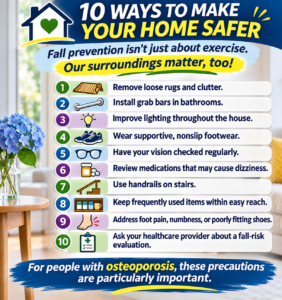
Fall prevention isn’t just about exercise.
Our surroundings matter, too!
- Remove loose rugs and clutter.
- Install grab bars in bathrooms.
- Improve lighting throughout the house.
- Wear supportive, nonslip footwear.
- Have your vision checked regularly.
- Review medications that may cause dizziness.
- Use handrails on stairs.
- Keep frequently used items within easy reach.
- Address foot pain, numbness, or poorly fitting shoes.
- Ask your healthcare provider about a fall-risk evaluation.
For people with osteoporosis, these precautions are particularly important.
HOW MUCH EXERCISE DO WE NEED AS WE AGE?
The CDC recommends that adults 65 and older include three types of physical activity:
- Aerobic exercise: At least 150 minutes of moderate-intensity activity weekly, as tolerated.
- Muscle strengthening: At least two days per week.
- Balance activities: Regular exercises that challenge balance safely.
For people with an increased risk of falling, structured balance and functional training several days weekly can be especially beneficial.
The goal is not to perform difficult exercises immediately.
Start safely, practice consistently, and gradually improve.
MY PERSONAL PLAN FOR STAYING ACTIVE AT 76
I’ve decided to make balance training a regular part of my exercise routine, just as I’ve made cardiovascular exercise an important part of my life for decades.
My priorities are to:
- Arrange an evaluation with a healthcare professional and physical therapist to understand why I’m feeling unsteady.
- Begin gentle, supported strengthening and balance exercises that are appropriate for me.
- Explore beginner Tai Chi for coordination and controlled movement.
- Continue appropriate aerobic exercise and resistance training.
- Protect my bones through nutrition, osteoporosis treatment, and fall prevention.
- Return to pickleball when my balance has been evaluated and I can move confidently and safely.
I’m especially interested in improving my ability to move sideways because that’s such an important part of pickleball.
And I want to continue playing for many more years!
THE BOTTOM LINE: DON’T WAIT UNTIL YOU FALL!
Aging doesn’t mean we have to stop doing the things we love.
But it does mean we need to pay attention when our bodies tell us something is changing.
For me, noticing occasional unsteadiness has been a reminder that balance deserves the same attention as cardiovascular fitness, muscle strength, and nutrition.
With osteoporosis, I don’t want to wait until a fall causes a fracture before taking action.
I want to be proactive.
I want stronger legs, better coordination, improved stability, and greater confidence.
Most importantly, I want to remain active and independent for as long as possible!
Whether you’re 65, 75, 85, or beyond, it’s worth taking steps to improve your strength and balance.
DON’T WAIT UNTIL YOU FALL TO START WORKING ON YOUR BALANCE!
STAY STRONG. STAY STEADY. STAY ACTIVE. STAY INDEPENDENT!
Medical Disclaimer: This information is for education only and is not medical advice. Always talk with your healthcare provider about what is best for your health.
Note: I used ChatGPT for the graphics and pulling this blog together for this topic, but I also check the information carefully to ensure the health information is correct. In order to get the right answers & the development of these health blogs when using ChatGPT effectively, you must know how to pose the correct questions.
This content was generated with assistance from ChatGPT, an AI language model by OpenAI
SOURCES & FURTHER READING
- Centers for Disease Control and Prevention: Older Adult Falls and Fall Prevention — https://www.cdc.gov/falls/
- CDC: Physical Activity Basics for Older Adults — https://www.cdc.gov/physical-activity-basics/
- National Institute on Aging: Exercise and Physical Activity — https://www.nia.nih.gov/health/exercise-and-physical-activity
- National Center for Complementary and Integrative Health: Tai Chi — https://www.nccih.nih.gov/health/tai-chi-what-you-need-to-know
- U.S. Preventive Services Task Force: Falls Prevention in Community-Dwelling Older Adults, 2024.
- Bone Health & Osteoporosis Foundation — https://www.bonehealthandosteoporosis.org/
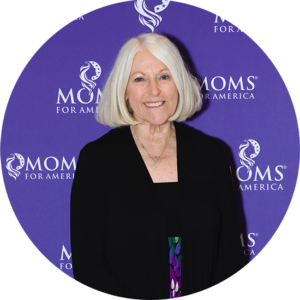
Barbara Day, M.S., R.D. is a registered dietitian with a Master’s Degree in clinical nutrition. She is the Chief Blog Organizer for www.DayByDayLiving.net
Barbara worked as a research nutritionist with the military’s tri-service medical school collaborating with Department of Defense, National Health Institutes (NIH), and also United States Department of Agriculture (USDA). Barbara worked as a performance nutrition consultant to Navy SEALS’ BUD/S Training Program and West Coast Navy SEAL Teams. Barbara is the former nutrition performance consultant to the University of Louisville Athletic Department.
She is the author of Fast Facts on Fast Food for Fast People and High Energy Eating Sports Nutrition Workbook for Active People used by the University of Louisville, University of Tennessee Lady Vols and the Tennessee football program, the LSU basketball program, the Buffalo Bills, the Cleveland Browns and by the United States Navy SEALs.
Barbara is the former publisher of Kentuckiana HealthFitness Magazine, Kentuckiana Healthy Woman magazine and radio show host of Health News You Can Use and a TV segment on the Local ABC station called Barbara’s Right Bite.
Barbara has over 50 years of experience in promoting healthy lifestyles to consumers. Barbara is a former runner who walks, a spinner, hiker, a pickleball player, a mother and grandmother to 13 grandchildren.
Barbara also serves on the Leadership Team for Moms for America as the Grammy Grizzlies National Group Leader. (www.momsforamerica.us).
Barbara is a volunteer for MAHA Action. (https://www.mahaaction.org/)