
For 42 years, I was a competitive runner, completing countless 5Ks, 10Ks, half-marathons, and marathons. Nine years ago, foot surgery forced me to stop running and become a walker. Letting go of running was incredibly difficult—not only physically, but mentally and emotionally as well.
Walking may not give me the same exhilarating endorphin rush I experienced as a runner, but it keeps me off the couch, moving, and enjoying the outdoors at 76. Spending time walking outside also gives me fresh air and sunlight, which can support the body’s natural production of vitamin D. Most importantly, walking reminds me that although the way I move has changed, I haven’t stopped moving forward.
Benefits of Walking
There’s lots of health benefits to walking. You need a good pair of shoes and off you go. I started running after my first baby. I had a c-section and for the first time in my life, I was overweight. I was a registered dietitian and was returning to work since my husband was in dental school and I was our sole supporter. I did not want to be overweight advising my patients on losing weight unless I WALKED THE TALK.
I remember I could barely run a block without a painful side stitch. I would walk then run then walk. I worked up to running more and more.
But the same thing goes with walking. Start with shorter distances and then build up. For years I ran without music but once I added music, I loved running even more! When I am walking, I listen to my playlists: dance music, Christian music, and spinning music.
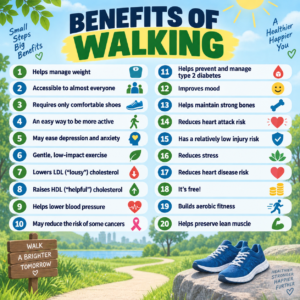
Benefits of Walking
- Helps with weight management
- It’s accessible to everyone
- Don’t require special equipment just shoes
- One of the easier ways to get more active
- Reduces symptoms of depression and anxiety
- It’s a low impact exercise
- Lowers low-density lipoprotein (LDL) cholesterol (the ‘Lousy’ cholesterol)
- Raises high-density lipoprotein (HDL) cholesterol (the ‘helpful cholesterol)
- Lowers blood pressure
- Reduces some cancers
- Helps reduce risk & aids with the management of types 2 diabetes
- Improves mood
- Helps maintains strong bones
- Reduces the risk of heart attack
- Less likely to lead to injuries
- Reduces stress
- Reduces the risk of heart disease
- You don’t have to pay for it
- Builds aerobic fitness
- Helps maintain lean muscle tissue
https://www.mayoclinic.org/healthy-lifestyle/fitness/in-depth/walking/art-20046261
https://www.health.harvard.edu/staying-healthy/5-surprising-benefits-of-walking
https://healthy.kaiserpermanente.org/health-wellness/healtharticle.benefits-of-walking
https://www.womenshealthmag.com/fitness/a64516114/benefits-of-walking-for-health/
https://www.everydayhealth.com/fitness/reasons-walking-is-good-for-your-health/
https://www.runnersworld.com/beginner/a65996198/health-benefits-of-daily-walking/
Where Can You Walk
It’s easy and convenient to walk in your neighborhood but there are lots of places you can walk. I love walking in a park or on a hiking trail. Finding a place where you love to walk will help keep you walking.
As the weather changes, you may have to change where and when you walk. When I was a runner, I would run in the rain, when it was very cold, never in a lightning storm or on ice but I have to admit, it’s harder for me to walk when the weather is really cold outside. When the weather doesn’t cooperate outdoors, I also have a treadmill, spin bike and an elliptical at home.
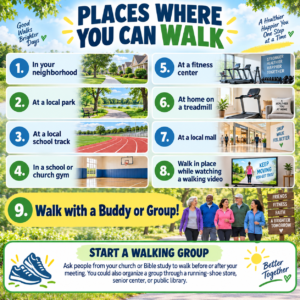
Places Where you Can Walk
- In your neighborhood
- At a local park
- At a local school track
- In a local school or church gym
- At a fitness center
- In your home on a treadmill
- At a local mall
- Watching a walking video & walk in place
Walking with a Buddy or Group
Personally, I rarely ran with a buddy or group because of my crazy schedule. I had kids and a husband who worked a lot so I had to specifically pick the times and places I could run. But I was internally motivated. If you are a novice walker, having a buddy to walk with or a group to walk with, they can help keep you motivated to keep walking.
If you belong to a church, you could help organize a Walking Group at your church so you can have buddies to walk with. You could ask you Bible Study group to walk before or after your group meets. Or you could also organize a walking group through your local running shoe store, senior center, or public library.
How Many Steps Should You Take Every Day for Your Health
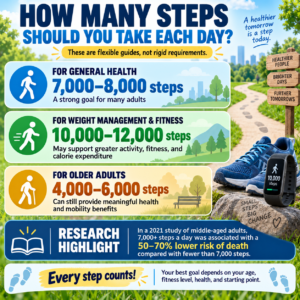
The number of steps needed per day to stay healthy can vary depending on your age, fitness level, and health goals*.
However, here’s a general breakdown based on research:
For Basic Health Maintenance:
- 7,000–8,000 steps per day is typically enough for most adults to maintain general health and reduce the risk of early death.
- A 2021 study in JAMA Network Open found that people who walked 7,000+ steps/day had a 50–70% lower risk of mortality compared to those who walked fewer.
For Weight Loss or Improved Fitness:
- 10,000–12,000 steps/day may be needed if your goal is weight loss or increasing cardiovascular fitness.
- The “10,000 steps” goal became popular from a 1960s Japanese marketing campaign but has since been supported by some modern studies as a good target for active lifestyles.
For Older Adults:
- 4,000–6,000 steps/day can still provide significant health benefits, especially for reducing risk of chronic disease or improving mobility.
*From: ChatGPT.
Exercise is Medicine: Be Wise and Exercise for Your Healt
To say Exercise is Medicine is an understatement and needs to be stressed more. In fact, Exercise is important for both physical and mental well-being.
Exercise is one of the most effective, low-cost ways to improve your quality of life and extend your lifespan. Even small amounts make a big difference over time. But you have to make exercise daily a priority along with the idea that Food is Medicine as well.
https://www.healthline.com/nutrition/10-benefits-of-exercise
https://www.mayoclinic.org/healthy-lifestyle/fitness/in-depth/exercise/art-20048389
https://www.health.harvard.edu/exercise-and-fitness/exercise-fitness
Research suggest regular exercise can:
- Reduce mortality and the risk of recurrent breast cancer by 50%.
- Lower the risk of colon cancer by over 60%.
- Reduce the risk of developing Alzheimer’s disease by approximately 40%.
- Reduce the incidence of heart disease and high blood pressure by approximately 40%.
- Lower the risk of stroke by 27%.
- Lower the risk of developing type II diabetes by 58%.
- Be twice as effective in treating type II diabetes that the standard insulin prescription and can save $2250 per person per year when compared to the cost of standard drug therapy.
- Can decrease depression as effectively as Prozac or behavioral therapy.
- Research shows that a low level of physical activity exposes a patient to a greater risk of dying than does smoking, obesity, hypertension, or high cholesterol and for older men, regular exercise can decrease the risk of death by 40%.
- Active individuals in their 80s have a lower risk of death than inactive individuals in their 60s.
- Adults with better muscle strength have a 20% lower risk of mortality (33% lower risk of cancer specific mortality) than adults with low muscle strength.
- A low level of fitness is a bigger risk factor for mortality than mild-moderate obesity. It is better to be fit and overweight than unfit with a lower percentage of body fat.
- Regular physical activity has been shown to lead to higher SAT scores for adolescents.
- In an elementary school setting, regular physical activity can decrease discipline incidents involving violence by 59% and decrease out of school suspensions by 67%
Exercise prevents or can help manage many health problems
- Stroke
- Metabolic Syndrome
- High Blood pressure
- Type 2 Diabetes
- Depression
- Anxiety
- Many types of Cancer
- Arthritis
- Falls
https://daybydayliving.net/?p=3812
Medical Disclaimer: This information is for education only and is not medical advice. Always talk with your healthcare provider about what is best for your health.
Note: I used ChatGPT for the graphics and pulling this blog together for this topic, but I also check the information carefully to ensure the health information is correct. In order to get the right answers & the development of these health blogs when using ChatGPT effectively, you must know how to pose the correct questions.
This content was generated with assistance from ChatGPT, an AI language model by OpenAI
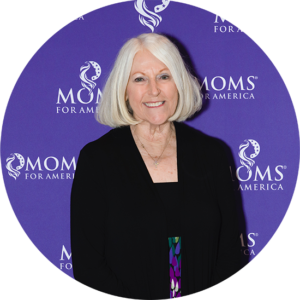
Barbara worked as a research nutritionist with the military’s tri-service medical school & worked as a performance nutrition consultant to Navy SEALS’ BUD/S Training Program and West Coast Navy SEAL Teams. Barbara is the former nutrition performance consultant to the University of Louisville Athletic Department. She is the author of Fast Facts on Fast Food For Fast People and High Energy Eating Sports Nutrition Workbook for Active People used by the University of Louisville, University of Tennessee Lady Vols and the Tennessee football program, the LSU basketball program, the Buffalo Bills, the Cleveland Browns and by the United States Navy SEALs.
Barbara is the former publisher of Kentuckiana HealthFitness Magazine, Kentuckiana Healthy Woman magazine and radio show host of Health News You Can Use. Barbara has over 60 years of experience in promoting healthy lifestyles to consumers. Barbara is a former runner who walks, a spinner, hiker, a pickleball player, a mother and grandmother to 13 grandchildren.
Barbara also serves on the Leadership Team for Moms for America as the Grammy Grizzlies National Group Leader. (www.momsforamerica.us).